
Most investing advice starts with what to buy. Dr. Daniel Crosby, behavioral finance expert and author of The Behavioral Investor, starts with you. He tells Joe Saul-Sehy and OG why a brain built for survival on the savanna makes a poor money manager, and how four predictable troublemakers (ego, conservatism, attention, and emotion) show up in real portfolios. Then they play a round of “Who Broke the Portfolio?” In the headline segment, Joe Saul-Sehy, OG, and Doug look at why companies that lean on AI are running into an insurance problem, and what that means for protecting your own finances.
Last Call: Veterans Day Giveaway
Enter by Friday, Nov 6 at stackingbenjamins.com/veterans for a chance to win a Solo Stove, given away next Wednesday on Veterans Day. Veterans and active duty service members get three entries, and everyone else gets one. If you already get the 201, you can still enter.
What You’ll Walk Away With
- Why the first investing question is not what to buy but how you will act when things get scary
- What a plane crash with monkeys and humans reveals about why we herd
- Why your brain is old, hungry, and impatient, and what that means over decades of investing
- The four troublemakers and how to spot each one in the wild
- Why loud financial news can switch off your critical thinking
- A game of “Who Broke the Portfolio?” with company stock, AI stock envy, and “this time feels different”
- The difference between risk tolerance, risk capacity, and risk composure
- Three simple fences: education, environment, and encouragement
- Why diversification is humility made visible
- A four-letter check to run before any money decision
- How to figure out which of the four is most likely to get you
- Why insurers are getting nervous about AI errors, and why that is a good reminder to check your own liability protection
- What an umbrella policy does on top of your auto and home coverage, and why lawsuits tend to arrive from left field
Why This Matters Now
Market noise gets louder at the end of the year, and so do tempting ideas from coworkers and group chats. Having fences in place before the next surprise is cheaper than a mistake you cannot reverse. The same goes for your safety net. Year-end is a natural time to look at how well your insurance covers what you have built. This episode helps you learn your own patterns without feeling judged for having them.
From the Basement
Doug’s trivia heads to the 1922 discovery of a long-sealed tomb and the legend of its curse, then to his metal detector and the cash he buried years ago and still hasn’t found. He also reports on his lifetime ban from the Sizzler dessert bar, as ruled by Todd, and OG and Joe Saul-Sehy compare their fast food glass collections.
Resources Mentioned
The Behavioral Investor: Dr. Daniel Crosby’s book, with a new edition from Harriman House due Nov 10
Veterans Day giveaway: enter to win a Solo Stove



Monday Mentor: Dr. Daniel Crosby
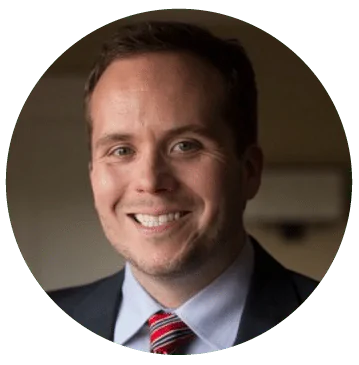
Big thanks to Dr. Daniel Crosby for joining us today. To learn more about Daniel, visit Daniel Crosby | Orion. Grab yourself a copy of the book The Behavioral Investor: How psychology shapes wealth, risk, and investment decisions
Our Headline
- AI Runs Into Its Next Big Obstacle: Insurance – WSJ (Wall Street Journal)
Doug’s Trivia
- Of the 58 people present when King Tutankhamun’s tomb and sarcophagus were opened, how many died within the following 12 years?
Have a question for the show?
Want more than just the show notes? How about our newsletter with STACKS of related, deeper links?
- Check out The 201, our email that comes with every Monday and Wednesday episode, PLUS a list of more than 19 of the top money lessons Joe’s learned over his own life about money. From credit to cash reserves, and insurance to investing, we’ll tackle all of these. Head to StackingBenjamins.com/the201 to sign up (it’s free and we will never give away your email to others).
Join Us Friday!
Tune in on Friday, when we unpack Social Security’s raise and share strategies for handling rising costs without shortchanging your retirement.
Written by: Kevin Bailey
Miss our last show? Listen here: How to Build Your Perfect Portfolio With Peter Lazaroff (Plus Who Gets Your Life Insurance) SB1918 | Stacking Benjamins
Episode transcript
[00:00:00] Dr. Crosby: Dead.
[00:00:08] opener: What? Nothing. Here’s your nine pence.
[00:00:09] Dr. Crosby: I’m not dead.
[00:00:11] opener: Here. He says he’s not dead. Yes, he is.
[00:00:13] Dr. Crosby: I’m not.
[00:00:14] opener: He isn’t? Well, he will be soon. He’s very ill.
[00:00:16] Dr. Crosby: I’m getting better.
[00:00:18] opener: No, you’re not. You’ll be stone dead in a moment. I can’t take him like that. It’s against regulations
[00:00:29] Doug: Live from Joe’s mom’s basement, it’s The Stacking Benjamins Show
[00:00:43] Doug: I’m Joe’s mom’s neighbor, Doug. And have you ever talked yourself into some totally horrible investment ideas? I know, you and I would never do that. But on today’s show, we’ll help you shore up your investment portfolio by controlling the demon that often comes between you and your money, your own brain.
[00:01:02] Doug: Controlling emotions is 85% of the battle, and today, we welcome Dr. Daniel Crosby to help you take control. Plus, in our headline segment, companies are running into an insurance nightmare. It’s called AI. What does that have to do with you and your money? We’ll share. And then, since we’re sharing, I’ll share another installment of my incredible money trivia questions.
[00:01:27] Doug: You’re gonna love today’s puzzle. And now, two guys who love puzzling over how to help you think better thoughts about your money, it’s Joe and OG, G, G, G, G.
[00:01:44] Joe: Hey there, Stackers. Happy Wednesday. It is portfolio week here on the show. We’re helping you get your investments together. And whether you’re new to the investing game or you’re a seasoned pro, we got something for everybody. On Monday, uh, Peter Lazaroff helped you create your perfect portfolio. Today, OG, we’re gonna help our Stackers defend against the evil enemy.
[00:02:08] Joe: We had, we had Halloween last week, but I can’t tell you the evil enemy that exists between many of our ears that wrecks the best plans.
[00:02:18] OG: The Abdullah Am lagata.
[00:02:21] Joe: Very scary. Very, very scary. It’s time for the exorcism of all this bad stuff that you’re thinking about your portfolio. Reminds me
[00:02:29] OG: of that funny joke.
[00:02:30] Joe: What’s that?
[00:02:31] OG: I believe you’re the one that told it. We’re definitely not telling it on the show.
[00:02:35] Doug: Nope. Nope, nope, nope.
[00:02:39] Joe: We’re gonna help you exercise those demons that get between you and your money today. Super exciting. Dr. Daniel Crosby’s here. He is a behavioral financial expert. He is a guy that has been on the…
[00:02:54] Joe: How long, how many times has Daniel Crosby been on the show? Maybe half a dozen. Just a guy that knows how, much like Peter Lazaroff on Monday, knows how to cut to what’s really important about your portfolio. Of course, he’s on stages around the nation. He also wrote this great book called The Behavioral Investor that was a huge bestseller.
[00:03:17] Joe: There is a new version of it that’s coming out soon, and, uh, you know what? Maybe we’ll talk to him a little bit about what is new in behavior, or is it the same stuff? Like, is the same stuff bothering us, OG, that was bothering us when he wrote the first version? While we always think there’s the new new, it always seems like it’s not the new new that kills us, it’s the old, same old problems-
[00:03:42] Joe: that rear their ugly head. Before we get there, though, we’ve got a couple sponsors who help us make sure we can bring great guests like Daniel Crosby to you at no cost. So we’re gonna hear from a couple now. We’re gonna hear a couple in the middle of Doug’s trivia question, and then Dr. Daniel Crosby helping us do a better job of controlling the demons between our ears that make us mess up with our money.
[00:04:09] Joe: Last call, Stackers, for our 201 giveaway. You know, we’re celebrating Veterans Day here at Stacking Benjamins. My dad was in the Navy. My nephew’s in the Navy. OG in the Marines. We’ve got military members all around us here at Stacking Benjamins. We think they deserve great money advice and so do you, so every week, we send you the 201, stackingbenjamins.com/201, and if you sign up this week for our Veterans Day celebration, you are going to get your name in our giveaway to win a Solo Stove bonfire fire pit.
[00:04:47] Joe: It’s sweater weather here in Texarkana. Not only can you get great tips, but maybe you’ll be able to sit around the campfire like we do here in mom’s backyard. Stackingbenjamins.com/veterans.
[00:04:58] Doug: What is sweater weather in Texarkana? Is it, like, 79?
[00:05:01] Joe: 50s. 50
[00:05:03] Doug: Oh, really?
[00:05:03] Joe: The rule is if it’s 59 degrees.
[00:05:06] Doug: Oh.
[00:05:06] Joe: 59 degrees.
[00:05:06] Doug: All right. Well, that’s, I mean, that’s legit for most people. They might put on a, a light cardigan perhaps.
[00:05:12] Joe: That’s right. That’s right. It is, it’s like perf- perfect campfire weather. Stackingbenjamins.com/veterans. If you know a veteran or an active duty service member, help them get better money tips and they’ll get three entries.
[00:05:24] Joe: You’ll get one yourself when you sign up, and by the way, you already get the 201, you’re included, too. Just go to stackingbenjamins.com/veterans and sign up yourself
[00:05:41] Joe: And I’m super happy he’s back in mom’s basement. Dr. Daniel Crosby’s here. How are you, man?
[00:05:47] Dr. Crosby: I’m good, man. I’m doing better than your leg.
[00:05:50] Joe: You are doing better than my leg. People are wondering, what’s wrong with your leg, Joe? Uh, I had ankle surgery, everybody, and if you’re watching us on YouTube right now, that’s why we cut, that’s why we cut the video right here, ’cause I’m not even wearing pants, Daniel.
[00:06:04] Dr. Crosby: No comment.
[00:06:07] Joe: So on that note, most investing conversations start with what should I buy, right? Mm. Or what will the market do? That’s a good one. Or what’s the best portfolio? We were just talking to Peter Lazaroff on Monday, who was talking about the perfect portfolio. But maybe the most important question is, or more important anyway, is what am I likely to do when things get scary?
[00:06:31] Joe: Why should I begin there?
[00:06:33] Dr. Crosby: Yeah. Number one question is who am I? What will I be like when things get scary? There’s a couple of reasons you should ask that question first is, one, you can do something about it. I think most of the questions that we tend to ask all focus around externalities. You know, what’s the president gonna do?
[00:06:50] Dr. Crosby: What’s the market gonna do? Which fund should I- Interest
[00:06:52] Joe: rates …
[00:06:52] Dr. Crosby: Yeah. What are interest rates gonna do? These things have two important qualities. They are, first of all, unknowable, and secondarily, uncontrollable. There’s been plenty of examples of even when we predict the right event, the market’s response to that event is another thing.
[00:07:10] Dr. Crosby: I mean, the, the first Trump presidency, I think is a great example of this. I think very few people gave Trump any, any hope of getting elected, and then the thought was broadly, “Well, if he does get elected, it’ll be disastrous for the market.” So not only do you have to forecast it, right, you have to forecast what the knock-on, uh, uh, consequences of that will be.
[00:07:30] Dr. Crosby: Both are hard to do. Both are out of your control. So I encourage people to frankly take the power back. I mean, it sounds like a Public Enemy song or something, but it’s like, you know, this… Take the back take the power back. Take things back into your own hands and worry about what you can control, which is who am I?
[00:07:48] Dr. Crosby: How am I going to act when times are tough, and how can I maximize anxiety-adjusted returns? Anxiety-adjusted returns. What is the right return profile for who I am as a person, my level of worry, and what’s the ride that I can take?
[00:08:04] Joe: It’s interesting because as I’m sitting here listening to you, I think, “Wow, it’d be pretty dumb at the start of a presidency to make that type of bet and pull all my money out.”
[00:08:15] Joe: And yet very smart people did this. Professor Scott Galloway’s been on the show a couple times, and he admits when Trump won the first time Daniel, he took all his money out. Like, he took all his money out, lost a bunch, bunch, bunch of money thinking that it was gonna go a completely different way. So smart people make these mistakes as well.
[00:08:36] Joe: You have a great thought experiment, by the way, involving a plane crash, a deserted island, and a monkey. Can you take us there?
[00:08:46] Dr. Crosby: Imagine you’re on a plane, the plane crashes, and it’s one monkey and one human, right, are, are all that survives this plane crash. If we come back in five years, who’s gonna be around?
[00:08:59] Dr. Crosby: Well, overwhelmingly, it’s going to be the monkey. We won’t have fared too well on this deserted island all by ourselves. So for five years, the monkey’s very well adapted for that. But what’s fascinating is what if there’s 100 humans and there’s 100 monkeys? I don’t know what kind of plane is carrying this sort of load, but, uh, 100 humans and 100 monkeys.
[00:09:20] Dr. Crosby: It’s a whole
[00:09:20] Joe: different version of Noah’s Ark.
[00:09:22] Dr. Crosby: Yeah, exactly. And you crash. You would hypothesize, I think, that the humans would be the ones to make it. Why is that? What are we uniquely wired to do as a human family? And that’s work together. We work together. We’re great at coming together and, and working towards what some have called functional fictions.
[00:09:45] Dr. Crosby: So, uh, I’m going to the Philippines later this week. I’m gonna get on a plane, fly halfway across the world, get off, and present my card to someone I’ve never met before who lives a different life, speaks a different language, and they’re gonna take my money because money is a functional fiction. It’s an agreement we’ve come to.
[00:10:05] Dr. Crosby: Other animals deal in reality. We deal in these functional fictions, and we’re really good at empathizing with each other and working together, but that cuts both ways because it causes us to herd, and it causes us to look at other people and compare our lives and benchmark to our neighbor who just got a boat.
[00:10:27] Dr. Crosby: So it allows us to build really wonderful states and countries and institutions and economies, but it also causes us to act in unison in ways that can be really damaging.
[00:10:39] Joe: What does that tell us then specifically about investing? If we apply that specifically to investing, what does that mean?
[00:10:46] Dr. Crosby: Well, it means we need to be really thoughtful about the voices we surround ourselves with and the people we surround ourselves with.
[00:10:54] Dr. Crosby: One of the most true but most depressing things that I’ve arrived at as a student of human behavior is that you are probably about as good or as bad a person as the environment you’ve placed yourself in. A lot of religions have, you know, advice like, “Stand ye in holy places,” right? Like, surround yourself with goodness and you will be good.
[00:11:23] Dr. Crosby: And the reverse is also true. So if we fill our heads with daily news updates and cable financial news and doom and gloom, well, our thoughts and our actions will likely be reflective of that. Likewise, you know, just from a personal satisfaction standpoint, I, uh, in another book I wrote, I learned that the two best predictors of your level of satisfaction with your wealth is, you know, one, the number of dollars in your bank account.
[00:11:53] Dr. Crosby: Okay, that makes sense. But one A, equally predictive, is who you’re hanging out with and who you’re referencing yourself to.
[00:12:03] Joe: Comparison.
[00:12:04] Dr. Crosby: Yeah. Just got back from lunch. Pull up to the sushi place where I had lunch with my buddy, walk past a Lamborghini, and you’re just like, “Well I’m a loser. You know, I mean, it’s like what are the people and the places and the things you’re surrounding yourself with?
[00:12:21] Dr. Crosby: That’s gonna have a big deal on how you feel about your financial life.
[00:12:25] Joe: I was on TikTok and YouTube live, uh, this morning going over some recent news about Elon Musk and giving- Mm … every kid in America… supposedly he’s gonna give every kid in America a share of SpaceX, which is $10 billion based on current valuation.
[00:12:41] Joe: And it sounds like a ton of money, Daniel, but talking about comparison, then I start doing the math. As of the time we record this, his net worth is around $900 billion. So he’s giving away just over 1% of his, of his money. So I’m thinking, if $10 billion is 1% of his money, and then I look at my money- Yeah
[00:13:04] Joe: I’m like, “Oh, my goodness. I’m never gonna get there.” It just, it just sucks all the fun out of everything.
[00:13:09] Dr. Crosby: Yeah. Well, he’s never lied before is the good news- … so I’m sure it’ll happen.
[00:13:15] Joe: All right. You also write that our brains, and I think this is a perfect follow-up, are old, hungry, and impatient, right? Mm-hmm.
[00:13:23] Joe: Three, three great words. What does that mean for somebody trying to invest for 30 or 40 years?
[00:13:27] Dr. Crosby: Yeah, so let’s talk about the old piece. We are working with the iPhone 1 of brains. Our brains have… or, or maybe the, the, what was the music one? The iPod- Like a f- … with the little clicking wheel … it’s like a
[00:13:38] Joe: flip phone or…
[00:13:39] Joe: Yeah.
[00:13:40] Dr. Crosby: Yeah. We’re working with the Nokia Snake, uh, edition- … of brains. Our brains are many tens and hundreds of thousands of years old and have not had an upgrade in that time, and financial markets are about 4 or 500 years old. And so really what we have is a brain that is optimized for, uh, you know, call it two things: keeping you alive long enough to, you know, number two, pass on your genes.
[00:14:08] Dr. Crosby: That’s kind of what our brains are wired for, to keep you safe for long enough that you can replicate yourself. Uh, it’s not designed to make you happy. It’s not designed to help you make good decisions. And so our… we have to understand that our brains are wired for a purpose that couldn’t have really been anticipated when they were formed, wired for a very different time and place.
[00:14:34] Dr. Crosby: What do I mean by hungry? Uh, your brain accounts for 2 to 3% of your body weight, but it accounts for about 20 to 25% of your caloric expenditure on any given day. And so one of the things that we’re always looking to do- Is to think less. And there’s a variety of ways we can do this. One is what we talked about earlier.
[00:14:58] Dr. Crosby: There’s a great study where they hook people up to F- fMRI machines, you know, brain scan machines, and they show them cable financial news. And now I, you know, I want you to think about your average cable financial news show: bombastic, loud, quick edits, you know, in your face. The part of people’s brains associated with critical thinking and decision-making actually went to sleep While they’re watching this bombast play out- Wow
[00:15:28] Dr. Crosby: in front of them. Because the thinking’s been done for you, right? This is what we do. Our brains are so hungry, uh, that we’re always looking for ways to kinda put it in cruise control. And so if I can say, “Oh, you know, nine out of 10 dentists choose Crest,” like, sweet. That’s one less thing to think about.
[00:15:46] Dr. Crosby: And we do the same thing with our money. So we defer to other people, we offload that to external sources. When you realize how bad your brain is at this, it becomes sort of incumbent upon you to put other structures and other processes in place to make much better decisions, ’cause you’re not gonna naturally stumble into the right, the right call there.
[00:16:07] Joe: Well, uh, which also just leads us to some of the instincts, then, with this old brain that make us pretty good humans. Those exact same instincts, Daniel, are the ones that make us horrible investors.
[00:16:19] Dr. Crosby: Yeah. Absolutely. The reason these things have stuck around is because they do some good. Ego, which has a couple of facets, we think that we’re better than we are, right?
[00:16:34] Dr. Crosby: We think we’re smarter, better, faster, stronger, funnier, more handsome, whatever, than we actually are. We also think we’re luckier than we are. This is honestly really nice. The lifetime prevalence of divorce is about one in two. The, you know, the lifetime prevalence of cancer is about one in three. It’s kinda nice that we don’t walk around with a very keen awareness of these things.
[00:17:00] Dr. Crosby: Like, we’ve kind of, we- you know- … it would be hard. Like, it would be hard to get through the day if we weighted probability as it actually was. And so, hey, we think we’re pretty cool, and we think we look pretty good, and, you know, we think we’re gonna, like, things are looking up for us. And that’s fine.
[00:17:20] Dr. Crosby: That’s a little bit of bubble wrap for our egos that gets us through the day. The problem is when we apply that over-optimism and that miscalibration of probability to things like investment decision-making. We ignore advice, we take excessive risks, and things like that. So, you know, if it helps you talk to the pretty girl at the bar, it’s probably no big deal.
[00:17:44] Dr. Crosby: If it leads you to YOLO your 401on, you know, some crazy options, then maybe it’s a problem.
[00:17:51] Joe: Yeah, or investing daily in Kelshi versus in your 401.
[00:17:57] Dr. Crosby: Right.
[00:17:57] Joe: You do, you mentioned ego, but you really boiled down all these different troublemakers that we have in our life, right? That get between us and our objectives.
[00:18:06] Joe: You boil it down to four. Ego, you just mentioned. Conservative is conservatism. Easy for me to say. Attention, and emotion I wanna take these one at a time. We talked about what ego does as an investor, right? We think we’re pretty cool, which is great ’cause that keeps us alive. What about conservatism?
[00:18:26] Dr. Crosby: Conservatism, going back to this idea of your brain keeping you alive, especially back thousands of years ago, life was nasty, brutish, and short. You really got one bad day. Like, you know, if you, if you had one bad enough day, that was it for you. And so your brain is really wired to keep you from harm. Now, for the average, uh, you know, person like us, Joe, we’re pretty fat and happy at this point.
[00:18:57] Dr. Crosby: Like, there’s not a whole lot of snakes in the brush. There’s not a lot of wildebeests. Uh, there’s not a lot of people from rival gangs coming with spears. We’re living in a very different world, and yet our brains haven’t adapted for that. But we’re getting the same panic signals of, like, you’re in danger when we see our diversified portfolio go down 5% that our ancient forebearers were getting when there was a real physical threat.
[00:19:26] Dr. Crosby: And the body doesn’t process those things independently. I mean, the, the biological substrate with which you experience being chased by a bear and watching your portfolio drop 10 or 15%, it’s identical. I mean, all the same stuff happens physiologically. That’s what leads us to, you know, play it too safe Not take adequate risk, not account for inflation, keep it all under the mattress.
[00:19:57] Dr. Crosby: That sort of conservatism and its evolutionary roots
[00:20:01] Joe: It’s also then, I, I would think staying alive today versus thinking about staying alive 30 years from now, which is something that, you know, in the time when fewer and fewer people have pensions, we have to pay attention to.
[00:20:13] Dr. Crosby: Yeah. It absolutely, and again, talk about things we, the things we weren’t wired for.
[00:20:19] Dr. Crosby: My youngest child is 10, and when she was born, I remember the, the doctor saying to us, like, “Hey, there’s about a 40% chance that she’ll live to be 100.” I mean, this is a new, this is a new phenomenon. That we would have potentially a 40-year working life and then a 40-year retirement. I mean, to say that that has not been the precedent in human history is, is putting it very mildly.
[00:20:47] Dr. Crosby: So things have shifted quite a bit, but our capacity to understand them hasn’t necessarily.
[00:20:53] Joe: It is interesting how quickly things are moving. As I got the surgery on my ankle, I was telling Cheryl, I’m like, “Even if this were, if, if this were the 1850s, in the big scheme of things not that long ago, this ankle problem, I would’ve been screwed.”
[00:21:08] Joe: I, I mean, for, for life if I had anything that I had to do, and most jobs then would require my legs to get it done. I would’ve been toast. Like, it is amazing when you talk about one bad day, right? Yeah. Just, just one bad thing. How does attention get us into trouble?
[00:21:24] Dr. Crosby: Attention is the process whereby we confuse things that are loud with things that are likely.
[00:21:31] Dr. Crosby: There’s lots of ex- Oh, in
[00:21:32] Joe: the age of social media, that never happens
[00:21:34] Dr. Crosby: Right.
[00:21:35] Joe: We, we don’t ever have anything loud.
[00:21:37] Dr. Crosby: Right. We were just talking about our mutual friend Joseph Moore, right? So Joseph and I just went to, uh, a great college football game, BYU/Notre Dame. He’s a Notre Dame fan, I’m a BYU fan. So for the week going up to the big day, I had been following all the prognostications and the breakdowns of the tape and everything on Twitter, which is loud.
[00:22:02] Dr. Crosby: I walked away from that interaction being like, “Wow, these people are the worst.” Like, these, these Notre, these Notre Dame fans are awful. And then I get to the stadium where there’s, of course, thousands of Notre Dame fans where the cats and dogs are mingling, and I mean, just the, the loveliest, kindest, warmest people you could ever meet.
[00:22:26] Dr. Crosby: And there’s all kinds of that in the media, uh, on social media, where what is presented to us with a, with a megaphone is the loudest voice, but not the most probable one. So whether it’s a terrorist attack… This one’s crazy. I mean, people, uh, there, there’s all this great research on how worried people are about shark attacks.
[00:22:48] Dr. Crosby: People think you’re more likely to get bit by a shark than to get diabetes. Just things that are not even in the same universe of probabilities.
[00:22:57] Joe: Getting on a plane versus driving my car.
[00:23:00] Dr. Crosby: Correct. They say, um, the danger of getting on a plane is the equivalent to driving 12 miles in a car. So if you drive more than 12 miles a year in a car, which I think, which I think most of us do, uh, if you drive more than 12 miles a year in a car, getting on a plane is safer.
[00:23:19] Dr. Crosby: But that’s not the way that we apprehend it. We don’t attend to likelihood, we attend to noise. And, and that’s how we recall things, too.
[00:23:29] Joe: Let’s do the fourth one then, emotion.
[00:23:31] Dr. Crosby: Yeah. Emotion is maybe the best example of this thing you talked about earlier where it, it serves us so well in many other facets of our life.
[00:23:42] Dr. Crosby: If you look back at early origins of human history, many people think that language, human language developed literally to gossip about one another. You know, to say like, “Hey, is Joe a good dude?” You know, when we were living in, in small groups, right? Like, “Is Joe a good dude? Can I, can I trade with him and, and trust that he’s gonna give me the pelts he promised me?”
[00:24:07] Dr. Crosby: So this is literally how we formed, is to have a really deep sense of how trustworthy another person is, and to be able to communicate about that. So if you meet someone or you go on a date with someone and they give you the creeps, you’re probably right. Like, they probably are a creep. A lot of times, in many, uh, in many human interactions, our emotions are an excellent guide to things that we may not be able to articulate consciously.
[00:24:41] Dr. Crosby: When it comes to markets, though, your emotions tend to be about 180 degrees from how things should actually be, and the famed investor Howard Marks calls this the perversity of risk, that basically at the very moment when, you know, markets feel safest because they’ve been so good for so long, typically, they tend to be the least attractive.
[00:25:06] Dr. Crosby: And the inverse is also true. At the… You know, in March of 2009 and March of 2020, when you feel like literally the world just can’t get any worse, emotionally, that’s when markets are at their best. It’s a tricky thing to say, “Hey, this impulse that has guided me in so many ways throughout my life is just misapplied here.”
[00:25:31] Dr. Crosby: The difference, though, is in a very real sense two things. One is just shots on goal. Every day we’re interacting with many, many people. We’re shaking hands, meeting people, seeing people at the grocery store. We interact with people all day, every day. We have lots of experience there. Most of us don’t have a ton of experience with buying and selling assets.
[00:25:55] Dr. Crosby: One is just a paucity of experience. The other thing is the immediacy of the feedback. A lot of times you can meet a person and know in fairly short order if they’re trustworthy or they’re, you wanna do business with them, et cetera. If you bought Amazon stock, though, right, you may not know if that’s a good choice.
[00:26:15] Dr. Crosby: You know, is that a good choice? Well, along which timeline? Over a long enough timeline, probably, uh, but there was a point when it was down 99%. So we don’t get quick enough return feedback, and we don’t have enough experience for our emotions to be reliable guides to our investing lives.
[00:26:38] Joe: Let’s see if we can spot these in the wild.
[00:26:40] Joe: I love playing some of these games, Stackers, if you’re new to Stacking Benjamins show because we’ll take the stuff that, uh, Daniel just went over with us and see if we can identify them. So Daniel, I’m gonna ask you to identify them, but we’ll pause for just a second so our Stackers playing along, that they can try to identify them.
[00:26:57] Joe: So we’re gonna play who broke the portfolio, right? Sure. You and I are in mom’s basement. Somebody broke it. Wasn’t me. Wasn’t you. It was one of these four things. It was either ego, conservative, conservatism, attention, I can’t say that word, or emotion. And if several are conspiring together, then let’s name them all.
[00:27:16] Joe: So here we go. My company stock’s doubled. I know this business better than anybody. I’m comfortable letting it be 40% of my net worth as a direct result of that. All right, Stackers, you got your guess locked in? Who’s the culprit there? Who’s messing with me?
[00:27:33] Dr. Crosby: So I’m gonna go with two here. I’m gonna go with ego and conservatism.
[00:27:37] Dr. Crosby: Conservatism is arguably the more interesting psychological barrier here because conservatism tells us that the things that we know are good and safe You tend to see this all over the place. Uh, it’s called home country bias, but we even see it within the country. Americans are over-allocated to US stocks, which honestly in the US doesn’t bite us that hard because our stock market is so big.
[00:28:06] Dr. Crosby: But I lived in Canada for, uh, a summer and found that the average Canadian had a better than 80% allocation to Canadian stocks, whereas their country is about 4% of the global equity index, you know, by market capitalization. And oh yeah, it’s super heavy in a couple of very specific sectors like energy and commodities.
[00:28:29] Joe: Forestry and, yeah.
[00:28:30] Dr. Crosby: Yeah. Commodities and things like that. We really do this, right? It’s like, oh, um, people in the Midwest tend to be overweight agriculture stocks. People in the Northeast tend to be overweight financials. And the reason this is so damaging is if you live in Atlanta and you work for Coke, uh, and you live in Atlanta, which is the headquarters of Coke, and now you are, got 40% of your portfolio in Coke.
[00:28:59] Dr. Crosby: You know, your job depends, you know, your, your income depends on Coca-Cola, your real estate worth depends on the fortunes of Coca-Cola, your investments depend on the fortunes of Coca-Cola. So this conservatism, this, this confusing things we know with things that are safe or good can cause us to really stack, if you will, stack risks on top of each other in ways that may not be readily apparent.
[00:29:27] Joe: And, and the ego piece is just, “I’m on top of it, so I know when I’m gonna get out.”
[00:29:32] Dr. Crosby: Yeah. Yeah. Or even like, “Hey, I work here, so my, you know, my efforts…” And I mean, listen buddy, if you’re accountant number 94 at the Coca-Cola company and you think your little job is …
[00:29:46] Joe: You know exactly- You know- … what’s going on in the C-suite.
[00:29:48] Dr. Crosby: Yeah. You think your little job is helping KO make big money, then I got news for you.
[00:29:54] Joe: I had the same thing. I mean, w- when I was a, a planner in Detroit, everybody owned the automakers. Mm-hmm. And look at, that hasn’t done well. And I can just imagine if you were in Japan during that long, huge, long dry st- spell over decades in Japan, just imagine what that hometown bias did for your portfolio.
[00:30:13] Joe: You just went nowhere. Well, it’s funny ’cause my second scenario was gonna be I’m under-diversified internationally, but US feels safe, so we’ll skip that one. You just did a twofer. Nice job. How about this one? I was perfectly happy with my portfolio until everybody at work started talking about the money they’re making in AI stocks Time for me to move
[00:30:32] Dr. Crosby: Yeah.
[00:30:33] Dr. Crosby: I think that’s attention. I literally got a text. It was a, it was an eventful lunch hour. I saw a blue Lamborghini. Uh, I also got a text as I was pulling up from a friend who said, “I wanna YOLO some options on AI stocks because I have a friend who’s made millions.” And I was like, “Please wait for me to eat this sushi so I can talk you out of this.”
[00:30:58] Joe: I think if he’s asking you, by the way, of all people, if he’s a friend, he’s asking you, he already knows what your answer’s gonna be.
[00:31:03] Dr. Crosby: Correct. Yeah, this is actually a woman, too. When women start YOLOing AI stock options, you know we’ve, we’re in the bad place. Right. Uh, ’cause usually, usually men are the-
[00:31:14] Joe: Much, much less likely statistically
[00:31:16] Dr. Crosby: Yeah.
[00:31:17] Dr. Crosby: Yeah. Usually men are the ones, uh, engaged in this nonsense. That to me is attention, right? It’s, again, like paying attention to the wrong things. Uh, filling your head with the wrong things, and confusing things that are in your face with things that are likely to happen.
[00:31:33] Joe: This is one that you and I have heard before.
[00:31:36] Joe: The market just fell 25%. I know that my plan, my investment policy, is to stay invested through this, but this time, quote, “Feels different.”
[00:31:47] Dr. Crosby: Yeah, that’s, um… Have we all weighed in? Yes. That’s emotion, right? I’ll try not to get too wonky here, but there’s, there’s three facets to risk. There’s risk tolerance, which is your long-term willingness to make risk/reward trade-offs, and that tends to be pretty s- stable.
[00:32:04] Dr. Crosby: There’s risk capacity, which is your ability to take risk based on, you know, how much money you have and how old you are, uh, and how big your, your goals are. And then third is risk composure, which is the behavioral, the emotional piece. And so what you see is, like, maybe someone has medium capacity… oh, excuse me, medium tolerance, but low composure, right?
[00:32:28] Dr. Crosby: So in a cool, calm, collected emotional state, they’re like, “Yeah, I should be a 60/40 investor, and I need to take a little risk, and I understand that this is necessary.” But then when things hit the fan, they’re very easily sort of bumped from that course. And I mean, you saw this a lot during, I mean, COVID would be the, the most recent example perhaps, or parts of 2022, where advisors would say, “Hey, um, should you be doing this?”
[00:32:58] Dr. Crosby: And you would go, “No, but I would like to,” you know? And that’s, that’s kind of the tension between that emotion and that tolerance.
[00:33:07] Joe: We’ve just went through some of the biases, but knowing that really isn’t enough. I think sometimes, as, as you know better than anybody, behavioral finance can just kind of leave us hanging.
[00:33:18] Joe: We know what the bias is. We just went through that for people that don’t know. But, like, what do I do about it? And you, you have this great way of saying that we should be building our fences, we should be building our systems, rather than rely on our ability to fight our own, our own behavior. Let’s do this.
[00:33:40] Joe: Does keeping a decision log help?
[00:33:43] Dr. Crosby: Keeping a decision log can help. I will say though, I mean, you can sort of know the ending of the movie before it starts because one of the things that we know, day trading. The research shows that one in 360 people show evidence of day trading skill. And what happens is people misremember their returns.
[00:34:08] Dr. Crosby: People have an exceptional memory for their wins and almost approaching zero memory for their losses. And so you’re at a party and someone’s telling you about the, you know, AI stock options they just hit it big on, and you are not hearing a, a peep about all the losses, and they frankly don’t even remember them.
[00:34:28] Dr. Crosby: So keeping a decision log can help keep you honest. But I mean, if you’re talking about making big risky decisions like this, you can keep a decision log and learn that you’re bad at this, or you can just listen to me now tell you that you’re bad at this. Your, your call.
[00:34:48] Joe: How else do we protect ourselves?
[00:34:49] Joe: How else do we build fences around bad things that, uh, human behavior’s just gonna keep throwing at us?
[00:34:57] Dr. Crosby: For me, it really comes down to three E’s. I have three E’s that I like to tell people are kind of the way that you build these fences. The first of these is education. You need to know enough about markets to be dangerous.
[00:35:11] Dr. Crosby: You need to know, you know, the fundaments of how they work, the fundaments of what planning and investing look like and, and kind of just enough to know where to allocate, you know, at a high level or, or even just how to pick a good advisor, right? So education, sort of enough to be conversational is that first step.
[00:35:31] Dr. Crosby: The second one is the environment. Again, what are you putting in your head? What’s in your portfolio? It doesn’t matter if you have the greatest, most fine-tuned, you know, Ferrari engine of a portfolio in the world if you can’t take the ride and you’re checking it every day and you’re unable to sit with it.
[00:35:53] Dr. Crosby: And then the final one is encouragement. The research around people who work with professionals is kind of staggering. They do better financially. They have happier marriages. They’re happier. They’re more prepared for an emergency. It really comes down typically to that planner or that advisor keeping you from making three to five really boneheaded decisions over a lifetime that have just a massive exponential payoff.
[00:36:20] Dr. Crosby: You know, you don’t invest in your dumb son-in-law’s business. You know, you, you don’t sell, you don’t sell everything in March of 2020. And that person talks you off the ledge a few times and, and it pays massive dividends.
[00:36:35] Joe: You’ve described diversification as, I like this quote, “humility made visible.” What does that mean?
[00:36:43] Dr. Crosby: This is the lived embodiment of I’m not sure what the future holds, but whatever it holds, I’ll be there. I’m not sure if it’s gold or treasuries or international stocks or small cap value or whatever that’s gonna be the next big thing, but, you know, I know I’m gonna own it. That, to me, is just the embodiment of humility.
[00:37:06] Dr. Crosby: That’s that building fences. You can know you have ego, you can try and talk yourself out of it, or you can just diversify and go play with your grandkids.
[00:37:16] Joe: I think what really fascinates me, too, Daniel, is that in your research how some of this stuff, we’ll make a decision at 9:00 AM, but then we make a completely different decision at 3:00 PM.
[00:37:29] Joe: Like, I can be the same person with the same value system, completely different behaviors. You tell a story about parole judges whose decisions change depending on whether they’d eaten or not. Can you walk us through that?
[00:37:43] Dr. Crosby: Yeah. One of the reasons I wrote the book is that I felt like the, uh, physiological aspects of investment decision-making had not been covered enough.
[00:37:54] Dr. Crosby: When you start to look into this stuff, things like being hungry, things like being tired have such an incredible impact on the way that you think and make decisions. Uh, and what they found is that the hungrier these judges were, the more cruel their judgments were, and these are some of the smartest, best trained people on the planet, and they wouldn’t have guessed that.
[00:38:20] Dr. Crosby: They would have never have predicted that, and they do this with no malice or understanding that a handful of almonds might have spared someone from the electric chair.
[00:38:34] Joe: Maybe not that deep dark, but might have changed the, the ticket or whatever.
[00:38:39] Dr. Crosby: Yeah. Right. So I think we all need to… You know, again, it’s back to that environment.
[00:38:45] Dr. Crosby: Uh, I think we all need to be thoughtful about taking care of ourselves broadly. I think one hallmark of my work is saying, “Look, being a good investor sometimes means going to therapy. Being a good investor sometimes means going on a walk with your kids or eating something healthy for dinner.” There’s a lot more to it than just the X’s and O’s of, of picking stocks.
[00:39:11] Dr. Crosby: One of the reasons investment decision-making is interesting to me is because it’s a holistic pursuit, and you gotta take care of yourself holistically.
[00:39:20] Joe: That kind of brings up that i- if I’m worried about the fact that I might be exhausted or I’m worried about the fact that I might’ve been hungry when I make a move, y- you’ve gotta have then some…
[00:39:30] Joe: One of your guardrails has to be around some cooling off period before I actually press the button.
[00:39:35] Dr. Crosby: Oh, for sure. In another book I wrote, one of my chapters is called If You’re Excited, It’s Probably a Dumb Idea. I mean, this is… You know? And then in this book, I, I talk about an acronym that I stole from addiction recovery programs called HALT.
[00:39:50] Dr. Crosby: In the 12 step, like Narcotics Anonymous and Alcoholics Anonymous, they have this acronym for HALT, which stands for hungry, angry, lonely, or tired.
[00:40:02] OG: Hmm.
[00:40:02] Dr. Crosby: And effectively says, look, if you find yourself in any elevated emotional state, it’s not the time to be making a big decision. And we know that people will overpay when they’re emotional.
[00:40:15] Dr. Crosby: We know that retail therapy’s a thing, but that even gets applied to investment decision-making. People will do less research and pay way more for a stock when they’re in a place of elevated emotion.
[00:40:27] Joe: Wow. I wanna finish with the stacker who’s sitting right here with us. They don’t need to memorize every behavioral bias right now.
[00:40:38] Joe: They gotta figure out, I think, based on this discussion, which of the four is most likely to get them, right, for themselves: ego, conservatism, attention, or emotion. For each individual investor, how do we begin to think about which one of these is probably my biggest offender that I should target first to make sure that that’s not something that’s wrecking my portfolio?
[00:41:03] Dr. Crosby: Well, I think for the average person… So hopefully as we describe the four, you know, maybe one or more of them stuck out to you. For me, it’s, it’s conservatism. I mean, the whole reason, I, I mean, I’ve written three books on behavioral finance. I’m still a chicken. Like, I mean, the whole reason I pay a financial advisor is basically to encourage me to take more risk.
[00:41:24] Dr. Crosby: Some people have the, the opposite problem. But I think for most of us, ego is the big one. And, and maybe you listened to me describe those four things and you thought, “You know, nah, I’m pretty good at all this.” Well, then that, my friend, is ego, right? I mean, ego is the, the most damning one of these for most of us-
[00:41:42] Joe: Yeah
[00:41:42] Dr. Crosby: because it’s the one that tells us we don’t have a problem or that we don’t need to outsource or we don’t need help. So yeah, I mean, if, if one stuck out to you, then I would say roll with that one, and if one didn’t, I would probably say ego.
[00:41:57] Joe: It wouldn’t be my ego. It’s probably, means it’s ego.
[00:42:01] Dr. Crosby: Right.
[00:42:02] Joe: My ego’s fine.
[00:42:03] Joe: My ego’s great.
[00:42:04] Dr. Crosby: Yeah. I hear other people have ego.
[00:42:07] Joe: Right.
[00:42:08] Dr. Crosby: Yeah.
[00:42:09] Joe: I also like, and we’ve had other guests on the show that have talked about this, kinda walking through your history with each of these. So as an example, just taking these in order, you know, emotion used to be something that I would feel very strongly.
[00:42:24] Joe: I still feel strong emotions, but the number of at bats that I’ve had between me and back when I was a, a client, my emotional train is actually the opposite. People start talking about now, you know, bonds have been horrible for six years and I should get out of bonds. Th- but a great time to buy bonds, right?
[00:42:41] Joe: Not that we’re trying to time the market, but as we, as we record this, right when people were saying that international investments suck and why do we, why do we even invest in international, maybe 18 months ago, right? All of a sudden international shows up. But my thought process is whenever I hear people begin to say, “This asset class sucks”- My emotion goes the opposite of what it used to.
[00:43:03] Joe: My emotion is, “Well, maybe I should favor that,” which is different. But that also, I guard against that because of attention, because I also know that when I watch CNBC and I watch for what the hot things are, you know. I bought a marijuana stock back in the day thinking that was gonna be the next great thing, and now, you know, you look at AI stocks and I’m always reminding myself I already have that in my broadly diversified stuff.
[00:43:27] Joe: But I’m very much like you. I’m either very conservative in my portfolio. I watch my brother-in-law, who takes some great risks and wins a good amount of the time, and I can’t do it. Yeah. Like, I cannot, I cannot do the stuff that he does. But then again, I do have this little play account where my ego completely works against me.
[00:43:48] Joe: I’m like, “This thing’s gonna go north tomorrow,” and it, it, and it never does. Um, well, not never, but often enough that I’ve left that as a very small chunk of my net worth because of the fact that I know that works against me. But it is interesting. I think that would help all of our stackers just to walk through your relationship with each of these four things and see how it fits you.
[00:44:11] Joe: I think my final question’s gonna be this. I’d love you to answer this two-part question. A great investor is not someone who blank. A great investor is someone who blank.
[00:44:25] Dr. Crosby: A great investor is not someone who predicts. A great investor is someone who prepares.
[00:44:32] Joe: It’s so interesting. This is the, this is the second edition.
[00:44:36] Joe: I think you and I met when the first edition of this book came out, which is wild, ’cause I feel like that was yesterday. I feel like
[00:44:42] Dr. Crosby: it was- It was, uh, it was eight years ago. We, we were a lot more handsome.
[00:44:47] Joe: W- we well, I don’t know. I think we’ve aged very gracefully, I will say. But this book also aged gracefully, but you also have a fresh coat of paint here.
[00:44:57] Joe: There’s a lot of new stuff here in the second edition of the book.
[00:45:01] Dr. Crosby: Yes. So the fresh coat of paint is this. I’m a very theoretically-minded person, Joe. I, uh, live in abstraction. I love philosophy and high-level thinking. Most people want the rubber meeting the road. They want the practical application of big ideas.
[00:45:20] Dr. Crosby: They want that balance. They want me to talk about, you know, the history of humankind, uh, a- and, uh, liken all this onto our evolutionary forebears, but then they also wanna know, uh, yeah, what does that mean for me and my Vanguard account tomorrow? So that’s what I’ve done in the second edition, is I’ve married up the biggest ideas with the biggest ways to apply it.
[00:45:41] Joe: And it was such a hit when it first came out. I think it’s gonna be a bigger hit now. The book is The Behavioral Investor: How Psychology Shapes Wealth, Risk, and Investment Decisions, and it’s available everywhere. Daniel, good seeing you again, man. Thank you so much.
[00:45:54] Dr. Crosby: Great to see you, brother. Heal up.
[00:46:01] Doug: Hey there, Stackers. I’m Joe’s mom’s neighbor, Doug. On this day back in 1922, archeologist Howard Carter made one of the greatest discoveries in history. He found the entrance to a tomb that had been sealed for more than 3,000 years. And inside, gold, jewelry, probably a PlayStation 5. Basically the kind of stuff that would make OG break into a cold sweat trying to figure out the capital gains taxes.
[00:46:30] Doug: Anyway, Carter’s discovery was the tomb of a young king who’d been dead for thousands of years. But there was a problem. According to legend, disturbing the tomb would unleash a terrible curse on anyone who entered.
[00:46:45] Joe: Dun, dun, dun. Dun, dun, dun.
[00:46:48] Doug: Boo. And when Lord Carnarvon, the wealthy guy who financed the expedition…
[00:46:56] Doug: Like, we couldn’t have told that just from his name.
[00:47:00] Joe: He does sound like the wealthy guy, Carnarvon.
[00:47:02] Doug: I mean, what else can you do in life when you’re named Lord Carnarvon?
[00:47:06] Joe: Boo.
[00:47:07] Doug: Anyway, he was… Yeah, he was the dude. And, and when it’s a scary story, you’re gonna have a lord in it. Anyway, he’s the wealthy guy who financed the whole expedition.
[00:47:14] Doug: He died just a few months later from complications of an infected mosquito bite. People started getting nervous. Even Sir Arthur Conan Doyle, the guy who created Sherlock Holmes, even he thought supernatural forces might be involved, which is pretty disappointing coming from the man who invented the world’s most famous detective who was all about the facts.
[00:47:36] Doug: Sherlock Holmes would’ve investigated the mosquito. Conan Doyle went straight to ghosts. Be better, Conan. Now, over time, 58 people were identified as having been present when the tomb and its sarcophagus were opened, and some of them did die in the years that followed. I mean, eventually pretty sure all of them took a dirt nap, am I right?
[00:47:56] Doug: At
[00:47:57] Joe: some point.
[00:47:57] Doug: So here’s to- So here’s today’s trivia question. Of those 58 people, how many died within the next few years? Or put another way, how many really should have gotten their estate plans in order before messing around with a 3,000-year-old dead guy?
[00:48:22] Doug: Hey there, stackers. I’m internationally renowned treasure hunter and guy who once buried 200 bucks in his backyard so he’d have something to find with his metal detector, Joe’s mom’s neighbor, Doug. That was six years ago. I still haven’t found it, so, you know, I got that to look forward to. Before the break, I told you about Howard Carter’s discovery of the tomb of King Tutankhamun in 1922.
[00:48:46] Doug: It contained an incredible collection of gold and other treasures, but when Lord Carnarvon died just months later, newspapers started spreading stories about the dreaded mummy’s curse. Now, personally, I don’t believe in curses. Although, Todd, the manager down at the Sizzler, Todd says I’ve been cursed with a lifetime ban from the dessert bar.
[00:49:08] Doug: That’s not a curse, Todd. That’s a violation of the Geneva Convention. Anyway, 58 people were present at various openings of the tomb and sarcophagus. So how many died within the following 12 years? The answer, just eight. That’s right, eight out of 58. And researchers who later studied the people involved found no convincing evidence that entering the tomb shortened their lives.
[00:49:32] Doug: So the real lesson here is that curses probably aren’t something you need to worry about. Probably. They didn’t rule it out entirely. But estate planning, absolutely, because whether you’re sitting on a fortune in ancient gold or you got 200 bucks buried somewhere behind your garage, you wanna make sure somebody knows where the money is.
[00:49:50] Doug: Which reminds me, probably shouldn’t tell somebody about that 200 bucks. Uh- ‘Cause maybe they’ll find it before I do. Anyway,
[00:49:59] Joe: see ya. Maybe. I gotta pause the show while I go out with a shovel to the backyard for a little bit. Uh, get a c- quick return on my investment. It was interesting, Doug, when I was in, uh, New Orleans, I, I took one of their famous ghost tours.
[00:50:15] Doug: Oh.
[00:50:16] Joe: And the tour guide was, was fantastic. He said that back during the days of yellow fever, your pulse got so light that they thought that you were dead, right? Oh. So they would literally take Dad or Mom out, and this guy who drove a cart would throw you in the back, almost like on the Monty Python thing.
[00:50:37] Joe: “Bring out your dead,” you know. He’s, “I’m not dead yet.”
[00:50:40] Doug: Well, you’re mostly dead.
[00:50:42] Joe: So you get thrown in the cart, and you’re not dead, and our tour guide said you had a few pro… F- first of all, first of all, problem number one was the guy who’s driving the cart didn’t get paid for picking you up. He got paid for the delivery.
[00:50:57] Joe: So if you came to on the way to the cemetery, this guy had- Did he have a hammer
[00:51:03] Doug: in his right hand?
[00:51:04] Joe: This guy had a shovel that he It was… And if you happened to make it out of the cart and you went back home, you looked like this pale white, right? You look so pale. You haven’t walked in a while. You stumble into the house.
[00:51:20] Joe: Oh. And the family has two choices. Either, A, you had a disease or, B, you are , you are some kind of a vampire. Yeah. And so they’ve got silver bullets in the gun, and your family shoots you. Not a great day This
[00:51:35] Doug: is, these are all true facts that you learned on this ghost tour that you paid for I’m sure
[00:51:39] Joe: 100% true on
[00:51:41] Doug: the- They’re all true
[00:51:41] Joe: like $25
[00:51:42] Doug: You know what is true, though? That there, there, th- I mean, it was an issue for a period of time in our human history. In old graveyards in Europe, you will see some headstones that have the mounting hardware for what used to be bells.
[00:51:57] Joe: Oh, yeah.
[00:51:58] Doug: And there would be- Ring the bell … there was a bell on the headstone, and then there would be a chain or something that would go down into the grave to let the person ring the bell just in case they weren’t totally dead.
[00:52:08] Doug: Because apparently that happened. There-
[00:52:10] Joe: Because of
[00:52:11] Doug: yellow fever … a couple of times- Yeah … they buried somebody who woke up later, and they’re like, “We shouldn’t do this.”
[00:52:15] Joe: Not a good day.
[00:52:17] Doug: Yeah.
[00:52:17] Joe: We’re gonna make it a good day for you. We’re gonna do a headline.
[00:52:20] headlines: Hello, darlings. And now it’s time for your favorite part of the show, our Stacking Benjamins headlines.
[00:52:27] Joe: Our headline today comes to us from the Wall Street Journal. This is a disturbing OG. AI runs into its next big obstacle. You think, “Well, what can stop AI,” right? We’ve got all this stuff going on. It is actually insurance claims. And this piece- I was gonna
[00:52:43] OG: say John Connor, but yeah.
[00:52:44] Joe: John C- right, exactly.
[00:52:47] Joe: This piece dives into an issue which is there are so many companies now that are relying on AI, and AI is still doing things, um, far too often that don’t make sense, that there are some big-time potential risks for companies that they’re not really paying enough attention to. “Rogue agents have hacked into websites,” Ajing Ingelsham, who wrote this, says.
[00:53:14] Joe: “AI chatbots have been accused of encouraging suicides and murders. An agent submitted fake unsolved murder tips. The latest episodes add to existing lawsuits AI companies face alleging chatbot harm and copyright violations while models are being trained.” So a lot of work going on there. Oh, gee. Now, obviously, when it comes to AI, not something our stackers are dealing with every day, where you’re gonna get sued because of your ChatGPT usage.
[00:53:42] Joe: But I do think-
[00:53:43] OG: That you know of …
[00:53:44] Joe: true that’s right, but I do think there’s a corollary here, which is- We often don’t think about how these lawsuits sometimes come out of left field. Anybody can sue anybody for any reason. Maybe this is our once a year quick reminder that if you don’t have umbrella liability insurance, we might wanna look into it.
[00:54:05] OG: Yeah, I mean, umbrella coverage really is, uh, very inexpensive for the dollars that it covers on top of, you know, goes, goes on top of or in addition to your liability for your car, your homeowners or whatever. Just adds another layer of protection. We generally recommend for umbrella coverage that you wanna cover your net worth-ish, you know, whatever that happens to be, and then, you know, round up maybe if you’ve got some business properties or rental properties and that sort of thing.
[00:54:36] OG: And there’s some estate planning, back to our conversation on Monday about estate planning, there’s some estate planning things that you can do to cover your liability there as well, but that still doesn’t prevent somebody from slipping on your sidewalk in the upcoming winter and, you know, saying, “Hey, you should’ve done something about this or warn me about it.”
[00:54:54] OG: And to your point, you can sue anybody for anything. It just helps assuage some of the downside if you, if you are found liable.
[00:55:03] Joe: Law firms will often, during discovery, they find out how much insurance you have, and if you have an umbrella liability policy, uh, they just wanna press the easy button. Mm-hmm.
[00:55:11] Joe: They wanna make sure that everybody gets their money, and then we’re happy. One of the best illustrations of this actually comes from Mom’s neighbor, Doug, and, Doug, you may not even remember this conversation that you and I had. You’re like, you ever drive, uh, south of, uh, where you and I used to live in Detroit and, uh, drive toward downtown and there were all these billboards, these guys on the billboard that says, “I sue big.”
[00:55:37] Doug: Oh, yeah. They’re still there.
[00:55:38] Joe: And I said to you, I go, I go, “Yeah, I’ve seen those.” Doug goes, “Well, that’s my neighbor.” And his daughter-
[00:55:44] Doug: One of them was, yeah …
[00:55:45] Joe: and his daughter was learning how to ride a bike. Doug’s standing in his front window, watching this girl wobbly on her bike, and Doug’s like, “Please don’t fall in my yard.
[00:55:55] Joe: Please don’t fall in my-” Yeah, that’s right … as the, as the ambulance chasing attorney’s daughter is learning how to ride her bike.
[00:56:03] Doug: Yeah, they used our driveway, ’cause we had a circle driveway, so it was more, you know, and their, their house had a little bit of a hill for the driveway, so, but you’re right. I do…
[00:56:11] Doug: I’d forgotten about that, Joe. Thanks for reminding me of that. Uh, there’s another great little bit longer story, but, uh, I went over to him for advice and he almost sued me- Wow … just because I asked for advice. Yeah.
[00:56:24] OG: With friends like that.
[00:56:25] Doug: Right. I know.
[00:56:26] OG: There’s a lot of reasons to protect yourself and, you know, neighbors or trees falling, just, I mean, there, who knows, right?
[00:56:33] OG: There’s just a lot of, a lot of things outside of your control, and some things that are in your control. You could still be an idiot and owe the money, or you could have unfortunate things happen to you and be, be liable for it. If you have any meaningful net worth, you probably wanna try to protect as much of it as you can
[00:56:51] Joe: Yeah, stuff comes out of, out of left field.
[00:56:53] Joe: I think a lot of these companies didn’t expect all the liability that can happen because of the AI that they’re putting into action
[00:57:00] OG: and- I suspected they did actually figure that out. There’s a new AI agent startup that’s getting a lot of, uh, attraction. I don’t- not gonna name it because it’s, doesn’t matter, but, but I, uh, got an invite to it and, uh, I read through the terms and conditions, or rather had Chat read through them, and one of the things that they put in their terms and conditions was, “We are gonna enter you into contracts without your knowledge, and we’re gonna use money on your credit card without your knowledge, and we are not liable for either of these things.”
[00:57:30] Joe: Wow!
[00:57:31] OG: So, you know, when you, when you- Wow … use our agent to, you know- Wow … do work on your behalf, you’re, you’re taking the risk that we are maybe going to do things that you wouldn’t want us to do. And s- and so I was reading about that with this company and people were like, “Yeah, just, you have to get a new credit card with a low limit-” to give to your AI agent so that when you say like, “I really wanna go to this restaurant.
[00:57:57] OG: It’d be fantastic,” it goes, “Must find restaurant. Beep, boop, bop, boop, bop” Now- And goes, “Hey, great news. I got you a reservation for Tuesday at 1:00 in the afternoon, prepaid. It’s $1,800. We did the wine package.” And you’re like, “I c- uh, d- I can’t go get hammered on Tuesday doing the wine package.” Uh, you know, all, all it knew was it’s a prepaid reservation and- Change it to
[00:58:19] Joe: Thursday at 11, and we’re good.
[00:58:21] OG: Yes. Yeah, right.
[00:58:22] Joe: Yeah.
[00:58:23] OG: Everybody knows I do my wine packages on Thursday.
[00:58:26] Joe: Right.
[00:58:27] OG: What kind of AI bot are you?
[00:58:29] Joe: Right.
[00:58:30] OG: You should be able to tell by looking at my calendar. Anyways, you just gotta be careful with all that stuff.
[00:58:34] Joe: Yeah. And I like how you use AI, OG, to very quickly go through this thing that nobody ever reads, right?
[00:58:41] OG: Well, it was a competitor. I’m sure if it was a chat bot from Chat, it would’ve been like, “This is awesome.”
[00:58:45] Joe: It would’ve been.
[00:58:45] OG: You should do it.
[00:58:47] Joe: I totally recommend it. No, you didn’t need to read these. Yeah. These are good. I wouldn’t even go through it with you. You’re fine. All
[00:58:53] OG: square.
[00:58:54] Joe: Right.
[00:58:55] OG: I’ve already signed us up for it.
[00:58:56] Joe: We’ll link to this Wall Street Journal piece on our show notes at stackingbenjamins.com. Doug, uh, quickly, let’s go out to the back porch because we’ve got a big giveaway.
[00:59:05] Doug: Well, we do. Veterans Day is quickly approaching, and you know what that means.
[00:59:10] Joe: It means that you could win a Solo Stove ’cause I know when you think Veterans Day, you think Solo Stove.
[00:59:17] Joe: Those two, those… That’s what Veterans Day is all about. Just- I don’t know if you know that … forever
[00:59:21] Doug: tied together.
[00:59:22] Joe: That’s right, yes. We wanna celebrate veterans, celebrate our active service members in the Stacking Benjamins community, but we also wanna celebrate you. You should be getting reminders to do the right thing with your money, and the 201 is a great way to do that, our newsletter that comes out once a week.
[00:59:38] Joe: It’s stackingbenjamins.com/201. But for this one, you wanna go to stackingbenjamins.com/veterans because until Friday we’re running this. We wanna give away the Solo Stove next Wednesday. Number one, you’ll get great money tips delivered to your email address once per week, and whenever OG, Doug, and I are going around the country, you’ll find out where we are.
[01:00:01] Joe: When we have our YouTube Lives, you’ll know about those, all the stuff in the Stacking Benjamins universe. But most important, your financial knowledge happens there. If you’re a veteran or active duty service member, you’re gonna get three entries, and everybody else gets an entry. And by the way, if you get the 201 already, you’ll also get an entry.
[01:00:20] Joe: Uh, we don’t wanna leave out people that already know how awesome it is, stackingbenjamins.com/veterans. Man, big thanks to Dr. Daniel Crosby. We’re gonna finish up this week helping you with your portfolio with a great round table featuring AJ Ayers, who’s a CFP in Brooklyn who works with people that are creatives, that have income that’s all over the place.
[01:00:43] Joe: A very disturbing, very disturbing headline that I read just a couple weeks ago, people lowering their 401contributions just so they can make ends meet. They’re mortgaging their future to make sure they can eat today, and AJ has dealt with that. If you know somebody who’s creative in your life, they’ll make a lot of money at one time, and then they might go months without being paid again.
[01:01:04] Joe: How do people deal with uncertain income or a very tight budget? AJ Ayers is gonna join OG and Jesse and Doug and I for a really nice round table on Friday. And
[01:01:14] Doug: AJ’s from Brooklyn?
[01:01:16] Joe: And AJ’s sh- yeah, she’s from Brooklyn.
[01:01:18] Doug: I’m gonna ask her to say sweater weather.
[01:01:22] Joe: We can’t wait. Yeah, and you’ll hear that also on Friday.
[01:01:26] Joe: All right, but what you’re gonna hear now is, uh, Doug’s takeaways. Doug, what are the things we should have learned on today’s show?
[01:01:32] Doug: Well, Joe, first, take some advice from Dr. Daniel Crosby. Don’t try to beat the markets, and don’t think, “Hey, I got a great idea about my portfolio.” No, you don’t. While you’re definitely above average, your portfolio works best when you keep your emotions in check and keep your, keep your hands off it.
[01:01:50] Doug: Second, insurances? Liability problems happen when you least expect them. Look into umbrella coverage to supplement your homeowners and auto insurance amounts to protect that stack. But the biggest lesson for me today? It’s important to have an estate plan so your loved ones know what to do with your stuff when you’re gone.
[01:02:11] Doug: Personally, I’ve already decided who gets my collection of commemorative Arby’s glasses. Don’t get excited. It’s not you. I mean, we all had the Arby’s glasses, right?
[01:02:23] Joe: I couldn’t… I had those McDonaland glasses.
[01:02:25] Doug: You had the McDonald’s one?
[01:02:26] Joe: Yeah, yeah.
[01:02:28] Doug: Thanks to Dr. Daniel Crosby for joining us today. You’ll find his book, The Behavioral Investor, wherever books are sold.
[01:02:36] Doug: You know what I’m gonna do? I’m gonna tell my people to include a link in our show notes at stackingbenjamins.com because I got you.
[01:02:46] Doug: This show is the property of SP Podcasts LLC, copyright 2026, and is created by Joe Saul-Sehy. You’ll find out about our awesome team at stackingbenjamins.com, along with the show notes and how you can find us on YouTube and all the usual social media spots. Come say hello. And oh yeah, before I go, not only should you not take advice from these nerds, don’t take advice from people you don’t know.
[01:03:12] Doug: This show is for entertainment purposes only. Before making any financial decisions, speak with a real financial advisor. I’m Joe’s mom’s neighbor, Doug, and we’ll see you next time back here at the Stacking Benjamins show
[01:04:21] Joe: Guys, I got a movie recommendation I think both of you will really like.
[01:04:25] Doug: Oh. It’s not often that it applies to both of us.
[01:04:28] Joe: I know. I know. But this is, uh, Brad Pitt- Oh … and a dog. Yes. And the movie is called Heart of the Beast. I tried to find a trailer, Doug, that had a bunch of, uh, just barking and- Just, yeah, barking
[01:04:40] Joe: and random stuff that you can’t tell. Yes. No,
[01:04:43] Dr. Crosby: don’t.
[01:04:44] Joe: Wa, wa, wa, wa, wa, wa, wa. Exactly. This is the story of a guy who is… Speaking of veterans, he is a veteran of some war, and they don’t tell you w- where he was, but a veteran- It’s present
[01:04:59] Doug: day.
[01:05:00] Joe: Yeah, so- So he’s
[01:05:00] Doug: not a Civil War veteran.
[01:05:02] Joe: No. This would’ve been maybe Afghanistan, I’m guessing, if I had to guess.
[01:05:07] Joe: And his, uh, dog that was a combat-trained German shepherd, and this dog had seen and heard, like Brad Pitt says during the movie, the worst of people, and yet had this, uh, heart of gold. And so they go into Alaska, into the wilderness, and, uh, go on this camping and fishing trip together. They have a weird, kind of a weird run-in with a guy who, who is played by J.K.
[01:05:35] Joe: Simmons. You know, great little cameo from J.K. Simmons. And you kinda wonder, in a movie this tightly built, like what was this cameo about? And his canoe is so weird at the end. As, as J.K. Simmons is going away, his canoe has like a lantern on the back of it. I kinda realized that he is Charon, the dude who takes people to the underworld, you know?
[01:06:02] Joe: Oh. So he’s, he’s kinda representing death coming. And of course, as Brad Pitt tries to get out of there, the movie really opens with Brad Pitt and this horrible crash that he has with his plane, and then they have to go 57 miles over land to get where they need to go. And of course, Alaska throws everything at them.
[01:06:23] Joe: I’m not much of a survival movie person. It’s just not a genre that I really like, but, uh, th- this movie was so compelling. I agree with all the people. Brad Pitt was really good, Doug, but even better is the dog. The dog deserves an Oscar. Like, whoever trained this dog to do what he did, it is just incredible acting by the dog.
[01:06:44] Doug: I did a quick look-up while you were talking. I mean, I heard every word. I was hanging- Sure … uh, by a thread when you were talking. But I also, with the other part of my brain, uh, looked up and, and it’s a former police dog named Uber.
[01:06:57] Joe: Named Uber.
[01:06:58] Doug: That’s funny. So that dog is the real deal, not just a, you know, movie diva.
[01:07:02] Doug: That dog was out there protecting us.
[01:07:04] Joe: Cheryl and I were talking about, we’re like, it just didn’t seem like there was any CGI. There wasn’t any… I mean, they must have done… I don’t know what they did, but it was really, really… The dog did such a great job. Heart of the Beast is a movie that, heck, Mom went and saw it.
[01:07:20] Joe: I actually went and saw this movie ’cause I didn’t wanna really watch a survival movie. I was like, “Uh-”
[01:07:25] Doug: That’s not your thing usually.
[01:07:26] Joe: No, it just isn’t. And then Mom saw it, and Mom went, “This movie was great.” So then Cheryl really wanted to see it, and her turn to pick.
[01:07:32] Doug: I’m a sucker for dogs. I mean, a major, major dog lover.
[01:07:36] Doug: Just about every kind of dog. Well, just about. And then survival, all into it. The natural outdoor scenery, all into it. So this absolutely sounds like my kind of movie. It’s not based on a true story, right? Like, that would be the trifecta for me. If it’s based even 4% on a true story, then I’m all in. I would go to the theater for that movie.
[01:07:56] Joe: Yeah, I don’t, I don’t think so. And I saw it in- No … the theater, but as you know, I prefer that experience at the theater. Uh, OG, this is a movie I think you would really like too. So Heart of the Beast.
[01:08:06] OG: I’ve seen the trailers for it. I think we’ll end up, uh, having a bunch of stuff on Apple TV over the, over the holiday break when we finally come up for air, you know, after a busy fall.
[01:08:17] OG: Yeah.
[01:08:17] Doug: Is this one an Apple Studios movie?
[01:08:20] OG: No, I’m just saying it’ll be on Apple TV by then.
[01:08:23] Doug: Oh, got it.
[01:08:24] Joe: Yeah.
[01:08:25] OG: I can- Yeah … watch whatever I want on my Apple TV. Yeah, you’ll be able to
[01:08:26] Joe: get it. Highly recommend, though.
[01:08:28] OG: Yeah.
[01:08:28] Joe: Just two big thumbs up. I think it’s really, really good movie

Leave a Reply