The traditional life plan, learn, work for four decades straight, retire once and for all, was built for a much shorter life than many of us are actually going to live. Lynda Gratton, London Business School professor and bestselling author of The 100-Year Life, has spent years studying what happens when that old blueprint stops matching reality. Her answer isn’t a bigger retirement number. It’s a completely different way of thinking about how work, rest, learning, and relationships fit together across a much longer stretch of time, and what that means for how you actually fund it.
What You’ll Walk Away With
- Why a single, long block of retirement often backfires, and what tends to happen to people’s sense of purpose and friendships when it does
- The “weaving” framework: eight threads, four about staying productive and four about nurturing yourself, that Gratton argues need ongoing attention throughout life, not just at the end
- Why a “flexibility fund” might matter more than a traditional retirement account for anyone planning to take real breaks, sabbaticals, or career pivots along the way
- A simple four-option framework (stay, switch, scale back, or sail away) for deciding what to do when a chapter of work stops feeling right
- Why the fastest way to burn out is neglecting the “nurture” side of life, and why neglecting the “productivity” side leaves you financially fragile instead
- A genuinely useful reframe on AI: not a threat to outrun, but a reason to double down on the specifically human parts of work and life
Why This Matters Now
Longer lifespans sound like good news until you realize the traditional financial and career plan never accounted for them. A forty-year runway to retirement followed by thirty-plus years of doing nothing structured often turns out to be less fulfilling, and harder to fund, than a life built with more transitions built in along the way. Planning for that kind of life means thinking further ahead than most retirement calculators do, and building in the flexibility to actually use the extra years well, not just survive them.
From the Basement
A Dolly Parton headline turns into a genuinely sharp personal finance lesson: how she turned down Elvis, kept the rights to “I Will Always Love You,” and built Dollywood, her literacy program, and her entire business empire on the exact same core talents rather than chasing unrelated ventures. Old-school diversification, but the boring kind that actually works.
Resources Mentioned
The 100-Year Life by Lynda Gratton and Andrew Scott — the original million-copy bestseller that started this line of research
Living the 100-Year Life by Lynda Gratton — Lynda’s book, workbook, and free diagnostic on the eight life threads
Life Threads podcast — Lynda’s eight-episode podcast series exploring each thread



Our Mentor: Lynda Gratton
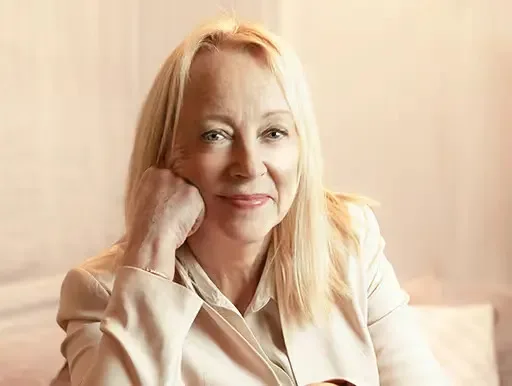
Big thanks to Lynda Gratton for joining us today. To learn more about Lynda, visit Lynda Gratton. Grab yourself a copy of the book Living the 100-Year Life: How to build a career that lasts and a life you love
Our Headline
- Money lessons from Dolly Parton (multiple news outlets)
Doug’s Trivia
- J.C. Penney’s first name was James, but what did the “C” stand for? He adds the hint: “It’s OG’s favorite C-word.
Have a question for the show?
Want more than just the show notes? How about our newsletter with STACKS of related, deeper links?
- Check out The 201, our email that comes with every Monday and Wednesday episode, PLUS a list of more than 19 of the top money lessons Joe’s learned over his own life about money. From credit to cash reserves, and insurance to investing, we’ll tackle all of these. Head to StackingBenjamins.com/the201 to sign up (it’s free and we will never give away your email to others).
Other Mentions
Join Us Friday!
Tune in on Friday when we ask whether it’s ever time to graduate from boring index funds and explore what else might deserve a place in your portfolio.
Written by: Kevin Bailey
Miss our last show? Listen here: Can You Retire With $500,000? $750,000? A Million? (SB1898) | Stacking Benjamins
Episode transcript
[00:00:00] opener: You know, I don’t understand this podcasting thing. How come you boys can’t have those keg parties and chase the girls like all the other nice boys do? Y’all are nerds
[00:00:16] Doug: Live from Joe’s mom’s basement, it’s The Stacking Benjamins Show
[00:00:31] Doug: I’m Joe’s mom’s neighbor, Doug, and let’s say you retire early and live to be, oh, I don’t know, 130 years old. What will you do with your time? Today we’re talking to longevity and wellness expert Linda Gratton about retooling your retirement. Maybe it’s time to throw away the old way of envisioning your life.
[00:00:50] Doug: In our headline segment, you’ve heard all the Dolly Parton tributes, but what lessons can we learn from Dolly that help you with your money? We’ve got a bundle. And then I’ll share the biggest bundle of joy this podcast ever produced, my trivia. And now two guys who I had to interrupt from singing I Will Always Love You so we could actually start recording, it’s Joe and oh, J- J- J- G.
[00:01:19] Joe: If you’ve never heard OG’s singing voice, you don’t know what you’re missing
[00:01:23] OG: I would clearly sing Jolene
[00:01:26] Joe: But not I Will Always Love You?
[00:01:28] OG: And isn’t that Whitney Houston?
[00:01:30] Joe: That is… Well, we’ll talk about that song, ’cause that is a song written by Dolly Parton. Oh. And there’s a great story about how that song came about.
[00:01:38] Joe: So fantastic, OG. How are you on this glorious Wednesday in the middle… We’re in the middle of September already. It’s crazy.
[00:01:47] OG: And it’s still 105. It is . We’re just so happy to be participating in fall. When we moved to Texas, everybody said there’s four seasons like everyplace else. There’s almost summer, summer, still summer, and Christmas, and we are in the still summer season of our Texas.
[00:02:02] Joe: In Texarkana, I usually call it almost summer, oh God no, more oh God no, and then fall.
[00:02:10] OG: Yeah, we don’t get fall. Yeah. You- Go from face of the sun to 40 and raining.
[00:02:15] Joe: Yeah, not good. Well, the good news is we’re inside, we’re in the basement, we’re feeling all cozy, and we’re ready to go. We got Lynda Gratton upstairs talking to Mom.
[00:02:24] Joe: She is an amazing woman. Doug called her a longevity and wellness expert, w- which is all true because of really what she focuses on, but in truth, she is an organizational theorist looking at how people work inside organizations better. And the reason this is important, OG, is that she has done a lot of work on this idea of checking out, dis- psychologically checking out.
[00:02:54] OG: I’m sorry, what were you saying? I checked out.
[00:02:56] Joe: Yeah, exactly. But, but when you, when you check out from society, in other words, you decide that you wanna retire at 40, what does that do to you? And she has done a lot of work about how we atrophy, and so she talks about how valuable it is to be a part of the workforce.
[00:03:12] Joe: And if you’re gonna be a part of the workforce, how do you do that? Well, then she started looking into the future. And when we look into the future, OG, you’ve seen this with a mentor, uh, Dan Sullivan, talking about longevity and how important it is to really look at your work with your eye on the prize of maybe we’re gonna live to be much older than 100 years old.
[00:03:32] Joe: It completely- Mm-hmm … changes the way you think about retirement when you think you might live to be 140.
[00:03:37] OG: Uh, yeah. Yeah, it does. It’s a, it’s an interesting thought exercise, for sure.
[00:03:41] Joe: So she is a management consultant and professor of Management Practice and Organizational Behavior at the London Business School.
[00:03:49] Joe: She’s also the founder of HSM Advisory, a global research and advisory practice bridging academia and business. She is somebody I was super excited said yes that she would talk to us, because as people that have known us for a long time know, there’s definitely value in finding your place in work, and, uh, Lynda is probably the person who could talk to this the most, so I can’t wait to have that discussion with her.
[00:04:17] Joe: We’re gonna have that in just a moment, but we have a couple of sponsors who help us keep making podcasts for you at the cost of zero. We’re gonna hear from them now, and then Linda Gratton joining us in the basement
[00:04:38] Joe: Well, Stackers, most of us inherited a fairly simple life plan. You go to school, you choose a career, you work for maybe several decades, and then you retire, and you try not to pull your hamstring walking from the retirement party out to the parking lot, right? But that plan was built for a shorter life.
[00:04:56] Joe: Linda Gratton has spent years studying what happens when many of us live into our 90s or perhaps reach 100, and that sounds exciting. It also sounds complicated, expensive, and like significantly more time for us to make some really questionable decisions. Linda, welcome to Mom’s Basement. How are you?
[00:05:17] Lynda: I’m very happy to be in Mom’s Basement.
[00:05:19] Lynda: Thank you, Joe.
[00:05:20] Joe: Well, before we talk about what to do with those years, let’s talk about longevity. How real is the possibility that many of us are gonna live far longer than our parents or our grandparents expected?
[00:05:32] Lynda: Well, there’s a very strong possibility, Joe, and I think that we all need to bear that in mind.
[00:05:37] Lynda: We all need to imagine that we’re going to live to 100. And then, of course, we may not, but for me, that’s what I’m teaching my executives, my MBA students, imagine you live to 100, ’cause the probability is that you might.
[00:05:53] Joe: I remember some of the research from people like Ken Dychtwald talked about this, uh, Gail Sheehy had some extensive research about living to be 130.
[00:06:02] Joe: Like, this is not wishful thinking. This is a distinct possibility.
[00:06:06] Lynda: Well, 10 years ago, Andrew Scott, who’s an economist, so he wrote all the finance bit, uh, I’m a psychologist, wrote The 100-Year Life, and it really put out the whole story about the probability that you’d live to 100, what it meant for your finances, and more than a million people around the world read that book, and it became a pretty influential book.
[00:06:25] Lynda: And what we basically showed is that if you think you’re going to live to 100, then you have to think seriously, as your listeners do, about how to finance that. And, you know, either you save a lot, 20% from the moment that you start working, which I’m sure all of your listeners are doing, Joe. Or you’re prepared to retire at 60 on a very low income from those 40 years, or you work longer.
[00:06:51] Lynda: And Andrew and I, as an economist, as a psychologist, said, “Actually, you need to think about working longer.” We said into your 70s. I think it might even be pushing into our 80s now. So for me, the question is, well, how do you do that?
[00:07:05] Joe: Yeah. No, it is interesting, and I love what you said in the beginning pages of this, uh, current work that you have.
[00:07:13] Joe: If that was the roadmap, this is the workbook, right? I think you said something like that.
[00:07:17] Lynda: Yes, that’s exactly right. So, so what The 100-Year Life did is that people read the book, especially in Japan and China, and they said, “Okay, yeah, now I’m sort of getting it.” But 10 years later, they’re saying, “Okay, how do we actually do it?”
[00:07:30] Lynda: What do I do And that book, Living the 100-Year Life, is about how you actually do it.
[00:07:35] Joe: Let’s dive into that, though. We hear 100-year life, and part of us thinks that sounds wonderful, as I said earlier. Part of us thinks, “I can barely manage the current number of years.” So what should excite us, Lynda, and what should concern us?
[00:07:48] Lynda: Well, we should be excited about the possibility of living a long life. You know, there’s so much we can do. And my invitation to you is to think about your career or your working life not so much as a, a ladder that, you know, you’re using all your energy to get up, and if you don’t get up, you fall off.
[00:08:06] Lynda: But rather, think about yourself as a weaver weaving your life. And I think when you do that and you think about weaving your life, there’s so many things you could put into it. So rather than having that great big chunk of retirement at the age, you know, retiring at 60, dying at 100, let’s say, that 40, 30, 40 years.
[00:08:24] Lynda: Why not reallocate that so that you take time out right the way through your life to do the things you love to do? Why not, instead of chunking education at the beginning of your life, reallocate it, again, right the way through your life so that you can relearn? So this creates a pattern that’s a lot more complex than anything we’ve seen before.
[00:08:45] Lynda: And of course, you have to think about funding that pattern, and I know that that’s what your listeners are gonna be thinking about right now.
[00:08:52] Joe: Well, and I know that the economic side is not your strong suit, so I think laying this foundation of what we’re looking for. And I love the fact that, Lynda, this now becomes more experimental, right?
[00:09:02] Joe: It becomes more playful, which I love as well. ‘Cause I think if we solve for happiness, being more playful I think makes us more happy. But when you looked at the traditional plan versus the weaving you’re now talking about, what parts of the traditional plan just stop working altogether? You’re like, “You know what?
[00:09:19] Joe: We gotta get rid of this.” There’s things that you hear in the zeitgeist where you’re like, “You know what? We gotta throw that away.”
[00:09:25] Lynda: Well, I would throw so much of it away, actually. First, number one, throw away the idea that you and your educated ones. You have to learn right the way through your life.
[00:09:32] Lynda: Number two, throw away the idea that you just work non-stop for 30 or 40 years. Nobody wants to do that. Throw that away. And number three, throw away the idea of a long block of retirement. All the evidence shows it’s not good for you. You get bored. Unless you’re this sort of an incredible person who has lots of things, your friendships start breaking down.
[00:09:53] Lynda: And actually embrace the idea that work can be great, that you actually, you can meet amazing people, you can do incredible things. And so we should be also be focusing on finding work that we love. And, and in a way, that’s what The Weave is about. It’s saying you can weave all of these threads together, and from it, it means that you have more choices.
[00:10:14] Lynda: And I would say if there’s one thing I would say to the people who are listening today, it would be that what you want to do is optimize for optionality. You want to create a life that you always have choices, and the threads, half of them are about how do you stay productive, half of them are about how do you nurture yourself.
[00:10:34] Lynda: Those are the threads that help you build optionality. Choices.
[00:10:38] Joe: Well, and that’s fascinating because tying that into the part that we’re good at here, I mean, that says build that cash reserve account. A friend of ours calls it a, uh, screw you boss fund. Yeah. You know, where I can tell my boss to take a hike whenever I want.
[00:10:53] Lynda: Well, I would actually give it another name. I would call it either a flexibility fund or a transitional fund, and what it says is, “I’m going to take time off. I want to have a fund that gives me time to start my own business, that gives me time to retrain for something, that gives me time to have a six-month sabbatical, that gives me time to start something entirely new, that gives me time to spend time with my aging parents.”
[00:11:17] Lynda: So mine isn’t a screw you fund, mine is a I want to have a great life fund, and to do that, I need that. I need that fund to manage the transitions, actually, Joe.
[00:11:28] Joe: Well, I like your optimistic framing much better than her, her kind of crusty, like, take a hike boss. So the challenge is not merely living longer, it’s building this life.
[00:11:38] Joe: As we talk about weaving, that’s about changing, renewing, and holding meeting across all these years.
[00:11:44] Lynda: Yeah.
[00:11:45] Joe: I thought that we were going to then dive into specifically the future and how do we do that, but your framing begins with three guiding questions, the first of which is, who am I? Why do you start with who am I?
[00:11:59] Lynda: Well, you know, if you’re weaving a long life, Joe, you have choices and, and the fund is going to help you to make those choices. But actually, to know what choices to make, you need to know who you are. And knowing who you are, I think, has got three ways that we learn about who we are. The first is we think about our heritage, you know, how we grew up, our grandparents, our parents, our early years, because they really have a huge impact on who we are.
[00:12:30] Lynda: The second is our personality. And then the third is how the work we’ve already done already shapes us. Let me just give you an example of that. You know, heritage. I come from… And you’ll see some of the stories in my book. The book does have stories in it. You know, I come, as it turns out, from a long history of washing women, and most of them in the First and Second World War lost their husbands.
[00:12:51] Lynda: They had big families, and they turned to washing. And I grew up in a family with no money at all. We weren’t poor, but we just had no money. You maybe know those sorts of families. No cash. And that really has determined my life, you know, how I think about money, how I think about what I want. So that heritage really impacts us.
[00:13:10] Lynda: And then character. You know, I tend to be more introverted than extroverted, so actually, although I can teach, I also love spending time on my own writing. And then work. I have two sons. One of them went into venture capital in the US, actually, and one of them is a radiologist. And actually, as I’ve seen them working, I’ve seen how that work has shaped them.
[00:13:32] Lynda: So if we ask ourselves, who are we now, then the question we want to ask is, well, where did I come from? What’s my sort of personality? And also, what has shaped where I already am? Because all of us, we think that we shape work. We don’t. Work also shapes us.
[00:13:48] Joe: It’s so interesting when you introduce this concept because then, of course, I start looking at my own heritage and my own stories, and I think about these phrases that we tell ourself, like, you know, work hard and don’t complain can come from our heritage.
[00:14:03] Lynda: Yes. That’s me, Joe. But I think… Um, I love that. My mother was always said, “Don’t make a fuss.” That was the English way of saying it. “Don’t make a fuss.” And that’s been my mantra ever since.
[00:14:15] Joe: You have a wonderful story, by the way, about a blue cake tin that was always waiting when you came home from school. I love this story.
[00:14:24] Joe: Could you tell that, and also what you eventually realized that that tin represented about your mother and the way she believed that life should be lived that maybe passed on to you?
[00:14:33] Lynda: Well, so many people who are listening to this will remember their mums and being a child, and I came from a typical 1950s family, you find them right across the US, where Mum was a homemaker and Dad worked.
[00:14:48] Lynda: And Mum was really keen on homemade stuff. We had no convenience food at all in the house, and every day when I came back from school, there was a blue cake tin waiting for me which actually had two tiers. The bottom was biscuits and the top was a cake. I still have a huge cake fetish, by the way, which is understandable.
[00:15:07] Lynda: And I guess, you know, the reason I brought that up, Joe, is that lots of us women are working. You know, the majority of women now work, and so that meant I didn’t bring up my kids like that, and they never had a blue cake tin when they came home. And I think that that’s why part of the threads I talk about, two threads are about those relationships, you know, about intimacy and friendship.
[00:15:31] Lynda: Because, you know, in terms of the thread of intimacy that goes through all our lives, work really impacts our relationship with our children and with our partners, and that relationship also impacts work. So as a working mother, I’ve always worked, so I didn’t bring up my kids in the way that my mum brought up her kids, and that was something I think all women of ev- I mean, lots of your listeners are thinking, “Yeah, I needed to come to terms with that.”
[00:15:56] Lynda: And I, I said in the book, I just consider myself a good enough mother. That was, I was good enough. I did my best.
[00:16:04] Joe: But what’s interesting is, when I read that I also thought, you know, how many of these things that we buy, we make these buying decisions all the time. And your mom bought the blue cake tin, which was as much about her view of life as it was anything, and I start looking around my house- Yeah
[00:16:20] Joe: and it just made me wonder, are our houses, as we’re looking for these clues about who we are and what we believe, do we just merely need to look around us at the things that we’ve surrounded ourself with?
[00:16:31] Lynda: Well, novelists, I’m reading a book at the moment by a novelist who writes about how do you write, and she says, “Every time you go into somebody’s house, every object is screaming at you and telling you, ‘Look at me, look at me.
[00:16:42] Lynda: This is who this person is.'” So, you know, there are those three questions, but that one is a really important one. And interestingly, Joe, I’ve just finished a pilot where I asked a whole bunch of executives to spend 10 weeks with the book over, you know, a couple of hours every week, going through all the sort of exercises and tools I have in the book.
[00:17:02] Lynda: And actually, all of them, including one of them was a bank, an investment bank. The executives spent three weeks asking that question, “Who am I?” And when I asked them at the end, “What did you find most useful?” They said, “You know, when we started, we asked, ‘Why are we starting here?’ And now we really appreciate it, ’cause we realize that the new form of life we’re all living has got a lot of choices in, and if you wanna make good choices, you need to know who you are and why you’re making those choices.”
[00:17:31] Joe: We have these things that we’re choosing between and areas that we’re deepening as we’re weaving our life. So we have these strands, some of which are ones that we haven’t explored enough, like maybe who we are, for those executives. There may be other ones that we’ve explored a lot. Do we s- start off in our exploration by making these strands that are strong stronger?
[00:17:57] Joe: Do we start off with our strengths, or do we look at the areas where they’re frayed and maybe need to be tightened and put back together?
[00:18:03] Lynda: Well, you know, gosh, these is great questions, Joe. So we are moving on actually to the second. I invite my readers to ask three questions. So the first question is, who am I?
[00:18:12] Lynda: The second question is, where am I now? And that’s where the metaphor of the weave comes in. ‘Cause you say, “Hang on, I’m a weaver. I’m weaving my life. Where am I now?” And I’m suggesting that there are eight threads that hold your life together. Four of them help you to be productive, and four of them help you to nurture yourself.
[00:18:30] Lynda: And the reason that I’ve got both, Joe, is that, you know, if you just really develop your productivity threads and don’t do anything with your nurture threads, then you burn out And you see that a lot. Some of your listeners are feeling that. But similarly, if you spend all your time, you know, strengthening your nurture threads and don’t strengthen your productivity threads, you become very fragile.
[00:18:54] Lynda: At the age of 50, you can’t get a job because there’s nothing you do that anybody wants to buy right now. And of course, all of us are in competition with AI, so that’s a heavy sell.
[00:19:03] Joe: Oh, because you thought, we talked about this earlier, all of your training was at 20 years old, and you haven’t kept up.
[00:19:10] Lynda: Yeah, you have to keep up.
[00:19:11] Lynda: So, you know, you have to do your productivity, you know, build your skills, think about how you use technology, think about how you cooperate with each other, think about how you build wisdom and knowledge. So those are those productivity threads. So to answer the question, Joe, which is where do you start?
[00:19:27] Lynda: What I suggest to people is that they first of all look at all eight of them and just get a sense of which is fragile and which is strong. And, and in fact, I have a free diagnostic that you can go to. It’s on my website, www.livingthehundredyearlife.com, which is actually wonderful, Joe, and I recommend all your readers do it.
[00:19:44] Lynda: It’s free. It’s, it’s wonderful. We’ve got, had thousands of people doing it already. And at the end of it, I’d suggest take a cup of coffee and look at that diagnostic and ask yourself probably three questions. Question number one: what is the strongest of my threads? And usually people aren’t surprised by the one.
[00:20:04] Lynda: The second is, what’s the weakest? And the third is, what intrigues me the most?
[00:20:13] Joe: I should have brought mine with me because I took it a few days ago.
[00:20:16] Lynda: Oh, yes, you should have done.
[00:20:19] Joe: And I don’t have it in front of me, but I, I found it so fascinating that in a couple areas to your point, they were foundational, and in many they were renewing, which is interesting ’cause I was renewing in areas where I’m currently excited.
[00:20:31] Lynda: Oh, yes. Exactly.
[00:20:33] Joe: And then the place where I was fragile was my blind spot, was truly my blind spot. And
[00:20:37] Lynda: do you remember what that was, Joe?
[00:20:39] Joe: I don’t, and that’s what’s- I mean,
[00:20:40] Lynda: I’ll tell you what it was probably.
[00:20:41] Joe: I’m still blind to it, Linda. I’m still blind.
[00:20:43] Lynda: If we’re doing a probability check, I would say it’s probably calm because-
[00:20:48] Joe: It is.
[00:20:49] Joe: It 100% was. Yes. Yes, ’cause I go from task to task to task.
[00:20:53] Lynda: Yeah, you do.
[00:20:54] Joe: And I have trouble finding the calm spaces.
[00:20:56] Lynda: I can see that just from what you do. So that’s one, and actually we’re now building enough data, Joe, to realize that. So that’s why when I said calm, I’ve seen the data coming in, so I know that, that that’s currently the most common weakest thread.
[00:21:12] Lynda: And why that’s so worrisome and problematic is, do you remember I said earlier that in this new life that we’re weaving, we have to make a lot of choices? Well, making a good choice requires you to stand back and think and review, and unless you have calm in your life, you just don’t have the time. And so giving yourself the gift of time to reflect, to think, to imagine what you want to be…
[00:21:39] Lynda: I don’t mean to say, “What am I going to be in 10 years’ time?” Nobody knows the answer to that, and you’d be foolish if you thought you did. But nevertheless, just to give yourself time to imagine, yeah, who you could be, who you are now. So that for me is really important. By the way, I don’t think that people need to make massive changes.
[00:21:59] Lynda: I, in the book, and I feel it even more powerfully now, just talk about small actions and experiments, just the thing you’ll do tomorrow. So like with you, Joe, I’d say to you, “Why don’t you just take half an hour off tomorrow? Why don’t you just walk to work tomorrow? Or why don’t you, you know, do whatever you was promising yourself to do?”
[00:22:17] Lynda: Just give yourself half an hour. That’s all.
[00:22:20] Joe: There’s so many side threads there too about social media in our lives. And also, you know, as you’re speaking, Linda, I’m also thinking that just thinking about all of these threads, there could be some fairly standard financial decisions that you make that aren’t right for you when you are examining your weave versus what other people are weaving in their life.
[00:22:42] Lynda: Yeah. No, I agree, and that’s why when I was pr- preparing to talk to you, Joe, and I… As you said at the beginning, I’m not a finance expert. I do actually run a small company, so I have some slight feelings about cashflow and so on. I did like the idea of this flexibility fund, which is to say, you know, put money aside for the transitions that you want to make so that you can start your own business, and you can take a s- a short sabbatical.
[00:23:07] Lynda: And really think about that at the age of 35, 45, 55, 65. You know, just every 10 years ask yourself, “Do I need to make a transition, and how am I gonna pay for that?” So I think the financing i- is sort of fascinating, and when the first book was published, quite a lot of insurance companies got in touch with me and said, “Is there a different model here?”
[00:23:28] Lynda: I guess there probably is. I, I guess that someone is going to be repackaging our insurance and, and savings so that it fits with this flexibility fund.
[00:23:37] Joe: Oh, that’s interesting.
[00:23:38] Lynda: Should have trademarked it right now, Joe.
[00:23:43] Joe: You speak a lot on the productivity side. Let’s go there. Mastery, cooperation, knowing, and amplifying are f- four terms we need to get comfortable with.
[00:23:53] Joe: But let’s talk specifically about knowing. If I think now my career may span 50 years, it may have all these different threads, how do we keep expanding what we know without feeling like I’m permanently back in school?
[00:24:07] Lynda: Oh, no, knowing is about curiosity, Joe. Yes. It’s not about being at school at all. It’s about being open to the world.
[00:24:15] Lynda: So for me, knowing has got two sides to it. The first is about knowing yourself, and that’s sort of what we spoke of earlier. And the second is about knowing the world around you. Everyone’s talked so much about AI and, and people have said to me, “Well, what’s special about being a human, and what would you say to your kids?”
[00:24:32] Lynda: And I would say, “Really push curiosity.” And for me kn- the thread of knowing is about curiosity. And that’s why the thread of adventure is so potentially interesting because you learn, you’re curious through adventure. So for me, knowing really is one of the things that keeps us human.
[00:24:50] Joe: You like starting side businesses for the same reason.
[00:24:54] Lynda: I always have a side business going, Joe. Always.
[00:24:59] Joe: But I think it makes it really interesting because, you know, early in my career I thought side businesses were a distraction, that if you spent that same time just getting better at that core task. But the older I get, the more I realize that core task changes, and a side business can help you adventure off and learn a bunch of new skills without the thread that you have with your core pursuit.
[00:25:21] Lynda: Yeah, I absolutely agree. And for those of you who are thinking, “Oh, I don’t want to do a side business, I want to stay in my same company,” that’s also fine. Because actually in a way companies have side businesses. You know, you could work in another part of the business or in a different function or take on a project that, you know, someone’s asked you to do.
[00:25:36] Lynda: So in fact, actually if you look at companies, we think of them as monoliths, but they’ve also got really exciting things happening. And sometimes just jumping into those is a way of really learning and a way of pivoting because the challenge of AI is so much of our jobs will go, and we just need to learn how to pivot.
[00:25:56] Lynda: I mean, my pivot is about living a 100-year life, but the pivot is also living the 100-year life at a time of astonishing technological developments.
[00:26:07] Joe: Which brings us to, if you’re going into new areas, this idea of cooperation, right? We often talk about careers as though success comes from our own individual talents or hustles, as people call it.
[00:26:19] Joe: What do we miss when we overlook our ability to work deeply with other people?
[00:26:24] Lynda: Well, we miss the opportunity to really speed up. We miss the opportunity of diversity. Let me give you an example. You know, The Hundred Year Life was my most successful book by a long way. I mean, a million copies is, is an astonishing feat, frankly, and it was good because I wrote it with an economist.
[00:26:44] Lynda: It was a cooperative venture. I couldn’t have written that on my own. I… And neither could he. But the combination of the diversity of my mindset, I’m trained as a psychologist, so his mindset, he’s trained as an economist. When we brought our minds together, we suddenly went, “Oh my God,” you know? When we think about assets as tangible and intangible assets and blah, blah, blah, and we riffed for a year before we even began to write that book.
[00:27:07] Lynda: And w- looking back at my own life, and listeners, I suggest you do the same, just think of the times when you’ve worked with somebody when you’ve said, “Wow, that really was exciting. I learnt something new. I heard something I hadn’t thought before.” That’s not to say that everything we have to do, we have to do with others.
[00:27:24] Lynda: You know, I wrote this book on my own. I was really happy to write it on my own, actually. So it’s not to say that we need to cooperate all the time, but there will be times, particularly if we want to pivot, when being with people who are different than us, different ages, different nationalities, is just an astonishing gift to us.
[00:27:43] Joe: It is so exciting. One of my favorite places- on earth is Austin, Texas
[00:27:49] Lynda: Oh.
[00:27:50] Joe: But it’s because, Linda, about what you’re talking about, all the fusion that exists in that town, these diverse points of view, the uniquely Texas with, in some areas, Asian cooking or, you know, combining Mexican flavors with things.
[00:28:05] Joe: It’s fantastic, and this fusion, I feel like what you’re saying is we think about ourself as a chef, right? One of these chefs playing with different foods.
[00:28:13] Lynda: Yeah, there’s a wonder- I’ve got my stories sort of running through the book. Please don’t think it’s a memoir. It’s not, but there are 20 or, 15 to 20 little stories, 500 words.
[00:28:22] Lynda: One of them is the story of cooperation is the story of a chef because I’m in my house in Spain and I happen to be finishing a book which was about cooperation called Hotspots, and I happened to bump into somebody who is a chef who specializes in chocolate.
[00:28:37] Joe: Oh, that would suck. That’d be a horrible career.
[00:28:39] Joe: Chocolate, I couldn’t do it.
[00:28:40] Lynda: Yeah, we actually made- … a box of chocolates that tasted of cooperation. So I had this idea that cooperation has these different elements, and each chocolate tasted… I mean, look, honestly, did anybody make any money out of this project? No, they certainly did not. But honestly, it was so much fun because when people read the book, they got the box of chocolates.
[00:29:02] Lynda: And as I described each element of cooperation, like, you know, you’ve got to have trust and you’ve got to have diversity, and they ate the chocolate that tasted of that.
[00:29:11] Joe: Oh, that’s cool.
[00:29:12] Lynda: Yeah. I mean, it’s just so much fun, and I do think, you know, and this is why finance can sort of get it wrong really, life is about adventure and fun.
[00:29:20] Lynda: Of course you need the money side of it. Of course that’s crucial, but that’s not going to get you. Just as being incredibly healthy isn’t gonna make a great life. You just end up being a really healthy person. Well, so what? What are you gonna do with your time?
[00:29:33] Joe: It is interesting because the more you speak, the more we talk about using money as fuel.
[00:29:38] Joe: There’s gonna be times when I want to take a course or I wanna go visit a region or, or make chocolates with the chef or whatever that is, and I need to have enough money available at the right time to be able to do those things. I wanna talk on one more thing about productivity, which is the idea of amplifying, because you mentioned AI, right?
[00:29:58] Joe: Using technology and AI and being able to work around it, like how do we use these tools to increase our reach, the things that we’re able to do, without allowing them to flatten the parts of us that are uniquely human?
[00:30:12] Lynda: Yeah. Well, that’s a, something we’re all wrestling with, and those of us who are parents see it in our own children as well, and I know we’re all really anxious about that.
[00:30:20] Lynda: Let me give you my perspective on that. Right now, large language models, AI, if you’re skilled, will increase your productivity by six times. Not 60%, six times. So the first question I would say to everyone is, if you can do that, what are you doing with that extra time you’ve created? Now, most people are saying, “Oh, I’m just gonna do more.”
[00:30:42] Lynda: No, no, no. Use that extra time to allocate some of those resources to your other threads. You know, to spending time with a friend, to spending more time with your partner, to learning something new. So that’s the first thing. Don’t let it suck in all your time, because you’ll never, ever weave the life that you want to.
[00:31:02] Lynda: The second thing is that what AI invites us to do is to become more human, because AI is not human. It can pretend to be human, but it isn’t a human. So then you have to say, “Well, what is being human?” And of course, there is the analytical part of being good at judging, good at making choices, good at making decisions, but I think there’s another part as well, Joe, which is about adventure and stories.
[00:31:28] Lynda: You know, the stories that you and I have just talked about, like the blue cake, AI couldn’t have written that. Now, it could of course… If it’s, you know, ingested my books, which it had, it’ll be able to spit it out again. But it, it’s not gonna be able to tell a story that has a sense for me and a sense for you.
[00:31:44] Lynda: So, you know, how we gather stories in our life, how we have adventures, how we become more ourselves. You know, as one of the people I spoke to in the book said to me, “You know, Linda, what AI does is it makes everything average, so that if you want to be different from AI, you need to be more yourself.” Even if that means being a bit weird or a bit odd, that’s what humans are.
[00:32:07] Joe: It’s fascinating. I’m finding that so much in my own use of AI, that I become more comfortable with it when I boss it around. Yeah. When, when it bosses me around, I come up with average ideas. But when I’m like, “No, no, no, no, I wanna think more about this area,” AI can’t do that. It takes my input to make that happen.
[00:32:25] Lynda: I agree. You know, people say AI hallucinates. Well, that makes it sound as if it’s this incredible thing. It’s not. It just makes mistakes. These are just mistakes. These are not hallucinations. And so when I use it, when my students use it, I just use it as if it’s, you know, an undergraduate working with me or maybe a PhD student.
[00:32:44] Lynda: And it gets quite a lot wrong, but it’s fast and-
[00:32:48] Joe: It’s, it’s excited all the
[00:32:49] Lynda: time … well, it’s telling me how marvelous I am, and who- Right … who doesn’t need that in their life, Joe?
[00:32:55] Joe: That was the best thing you’ve said so far, Linda.
[00:32:56] Lynda: Oh, absolutely. That was amazing. That’s the best. That’s the best thing you’ve ever wr- Hang on, you said that to me just five minutes ago.
[00:33:02] Lynda: I
[00:33:03] Joe: know. It just gets better every four seconds.
[00:33:05] Lynda: Yeah.
[00:33:06] Joe: I had a question all the way through this project, which was this: It’s Monday morning, and our stacker just is rolling out of bed and goes, “You know what? I can’t do this for another 20 years.” And as you mentioned earlier, we all recognize that feeling, right?
[00:33:23] OG: Mm-hmm.
[00:33:24] Joe: The harder thing I think is distinguishing between I need a job redesign- Or I need a career reinvention, maybe a full reinvention of career, or that chapter, Linda, is simply finished, and it’s time to embark on a whole new adventure. How do I begin to parse those three options?
[00:33:45] Lynda: Well, I think it’s a mistake just to sort of bet everything on a single option.
[00:33:50] Lynda: What I think we can do as we roll out of bed is to ask ourselves… And again, I’m gonna come back to the thread analogy, ’cause I think it’s such an important analogy here, is to ask ourselves, “Where am I standing right now?” And if, for example, you’re realizing that you’re doing the same job over and over again, and you’re really bored with it, then my guess is your thread of mastery is pretty low, is pretty frail.
[00:34:14] Lynda: So you have to ask yourself, “What could I do right now to change that?” And in the book, and in fact in all my teaching as well, I really focus on small actions that you can take. I don’t think any of us do these massive, “Oh, tomorrow I’m gonna wake up and be a Buddhist monk.” I think what happens is you take an action.
[00:34:32] Lynda: So you might say, “Okay, well, maybe I’m interested in changing jobs. Well, why don’t I start talking to somebody who’s got the sort of job that I might like? So perhaps I’ll have coffee tomorrow with somebody, and I’ll just talk to them about what they do, not to get a job, but just to hear what they’re saying.”
[00:34:47] Lynda: Or maybe you’re saying, “You know, I really need to increase my skills, so why don’t I talk to my boss and say, ‘Look, are there jobs around or projects that I could do to increase my skills?'” So I guess what I’m saying, Joe, is that when you think about it, you know, as a huge thing, it’s completely terrifying, and even listening to you, I felt anxious, and I bet lots of your listeners did.
[00:35:08] Lynda: “Oh my God, I don’t know. What am I gonna do?” What I would say is break it down. Ask yourself, “What am I going to focus on now?” But then the other thing I would say is also ask yourself how you’re spending your time. There’s a lot of difference between people in this world, and I realize that some people are born with, you know, just a lot more opportunities than others.
[00:35:29] Lynda: But there’s one thing we’ve all got. We’ve all got 24 hours a day, and how we allocate that time is something that we can think about. And I would say the threads really reflect on how you’re allocating your time, and you can make a really big difference. So if, for example, you look at the last few days and you’ve allocated three hours a day scrolling through social media, one of the questions you might want to ask yourself is, “Which thread did I strengthen by doing that?”
[00:35:59] Lynda: And if the answer is no threads- Then you have to ask yourself, “Why am I doing that?” Now, I know that’s an easy thing. So the thread of friendship, for example, we know from research that it only takes six minutes. It’s only a six or eight-minute conversation with a friend to start strengthening that. You know, it’s not that you have to go on holiday with them or spend every evening with them.
[00:36:22] Lynda: Speaking to them on the telephone or however you’re doing it, six minutes makes a real difference, and I think that’s really h- how we have to think about it. Just sort of things we do every day, not these massive choices that have huge consequences that f- make us feel anxious just thinking about them.
[00:36:40] Joe: I don’t spend enough time on strengthening those friendships, and the fact that it takes six minutes is amazing.
[00:36:47] Joe: And yet I think about when people reach out to me to strengthen those relationships, I think about just how amazing and gratifying and fulfilling it feels when… I had a guy text me out of the blue of maybe 20 minutes before you and I started talking today that I hadn’t heard from in weeks, and he was just inquiring how have I been, like, what’s been going on.
[00:37:09] Joe: And it just, even to feel him reach out, Linda, was so important. I think if it’s like that to me, how important is it for me to do that for other people as well? Because I get a lot out of it at the same time.
[00:37:20] Lynda: Part of the reason I was so happy to have friendship as one of the threads in the book is that, you know, on these long, long studies of people right the way through their lives, if you ask the question, what is it that’s created fulfilling lives for them?
[00:37:34] Lynda: Is it the amount of money they make? Da, da, da. You can ask 20 questions, and what we know is that being poor is horrible, by the way, so I’m not in any way suggesting that this is a wonderful state. It’s not. But for most of us who have sort of an average income, the thing that really makes a difference is friendship.
[00:37:51] Lynda: And you know, friendship is something that accumulates just like any other investment. I am very fortunate because my weakest thread is friendship. I’ve always really focused on mastery and getting on and teaching and s- writing and blah, blah, blah, and blah, blah, blah. However, when I was 14 years old, I met somebody called Shirley for whom her strongest thread is friendship, so she kept friends with me.
[00:38:20] Lynda: And so we now celebrate recently 60 years of friendship. And if you go onto my podcast, and I’ve only got eight episodes, so each episode is one of the threads, you’ll hear me and Shirley talking about that.
[00:38:35] Joe: That’s awesome. Is the podcast also The 100-Year Life?
[00:38:38] Lynda: Yes. It’s called Life Threads. So I have a podcast, I have a diagnostic, I have the book, and I have a marvelous workbook, Joe, which I illustrated myself with my own hands.
[00:38:50] Joe: Has anyone ever talked to you about Calm?
[00:38:55] Lynda: Yeah, well, it’s so much fun. I just have to amu- it’s m- I have to amuse myself. But I just so wanted this idea to get across that I’ve tried every which way to see what landed, and we’ll see. I’ve got a great podcast, only eight episodes. I know you do eight episodes a week, so- … it took me months to do it.
[00:39:11] Lynda: I’m in awe of you, Joe.
[00:39:13] Joe: We’ll link to the podcast also-
[00:39:15] Lynda: Oh, please do, yeah …
[00:39:16] Joe: in our show notes, as we will the diagnostic that I found so fascinating. But I wanna play a game before we say goodbye, because I, I think games kinda illustrate all of the wonderful framework that you’ve presented us with today. So I wanna play a game called Stay, Switch, Scale Back, or Sail Away.
[00:39:35] Joe: So the, your choices are stay, switch, scale back, or sail away. And I’ll describe a stacker situation, and I’d love for you, Linda, to tell me which of these doors we should explore first. Not a final prescription, of course, but just the first door we maybe wanna explore. So scenario one, you love your craft, but you hate the company.
[00:39:56] Lynda: I would say Switch
[00:40:00] Joe: Scenario two, you’re financially independent, you love contributing, but you don’t want deadlines controlling your life anymore.
[00:40:08] Lynda: Yeah, maybe scale back or sail. Sail or scale.
[00:40:12] Joe: Yeah. That’s interesting because you’ve got flexibility there, don’t you?
[00:40:15] Lynda: You’ve got a long life, Joe. There’s lots you can do.
[00:40:17] Lynda: You can… None of these are mistakes. You can sail one day and switch the next.
[00:40:21] Joe: Which is cool, knowing that it’s not irrevocable. You’re not making irrevocable decisions.
[00:40:26] Lynda: Yeah, that’s the really great thing about a long life. I’ve noticed that. Because I’ve carried on working for many years, you can actually go back and have another go.
[00:40:35] Joe: Scenario three, you’re exhausted, but you’re caring for children and aging parents at the same time.
[00:40:42] Lynda: I would say stay.
[00:40:43] Joe: And it’s hard to stay there, isn’t it?
[00:40:45] Lynda: It is hard to stay, but I think staying isn’t a bad thing at the moment, particularly with the economy as it sits. And what I think you can do with stay, I notice with burnout, people who are burning out, they’ve either got to be promoted or they’ve got to jump, and I think actually staying can be a really good thing, and really focusing on the other threads of your life.
[00:41:06] Lynda: But also realizing that probably by staying, there’s opportunities for you to learn new things. There’s opportunities perhaps for you to scale back a little bit. But I think staying, I wouldn’t recommend somebody who’s under that much pressure to also move.
[00:41:22] Joe: It is interesting because as life presents these new things where we learn new things, we learn so many new things even though we’re showing up the same every day.
[00:41:31] Lynda: Yeah.
[00:41:31] Joe: Scenario four, you’re financially ready to retire, but work supplies nearly all of your identity, your structure, your relationships.
[00:41:39] Lynda: Switch.
[00:41:40] Joe: Hmm. What do you mean by that?
[00:41:42] Lynda: No sailing away. I would never recommend people retire early. I know that there’s a whole thing around it. I just wouldn’t recommend it.
[00:41:50] Lynda: I would say switch to something that perhaps doesn’t take up all your time, because that’s maybe why you’re thinking of retirement, but actually still creates your sense of identity.
[00:42:01] Joe: Is there ever a time when a full retirement is exactly the right next chapter in a 100-year life? Is there a time?
[00:42:09] Lynda: Probably. I, I mean, I think the interesting thing about life as it was, the three-stage life, full-time education, full-time work, full-time retirement, is you never had to ask yourself, “When should I retire?” Because the institution did it for you. The government, you know, social norms and so on. But now they’re gone, the fact is that you have got to ask that question, and I think each one of us will answer that question in a different way, but it’s a very important question to ask.
[00:42:34] Joe: It’s also interesting because leaving what you’re doing now and knowing where you’re going next I think are two totally different things.
[00:42:42] Lynda: They are, and that’s why I said switch, because what I love about switch is that you’re doing something that’s sort of comparable but in a different environment. You know, like you could be switching to a, a volunteer role, or you could be switching into mentoring younger people, or you could be…
[00:42:59] Lynda: You know, I love the idea of switch. I think it’s a really important transitional state that we should be exploring.
[00:43:07] Joe: Imagine that we meet our 90-year-old selves-
[00:43:12] Lynda: Yeah …
[00:43:13] Joe: tonight.
[00:43:14] Lynda: Yes.
[00:43:15] Joe: What are they most likely to thank us for beginning now after they heard you and I talking today?
[00:43:22] Lynda: Well, I think they would thank you for building self-awareness about where you are now, and making sure that at the age of 90 none of your threads were so fragile that they broke.
[00:43:36] Lynda: So for example, on nurture, my 90-year-old self would say, “Thank you so much for having Shirley as a friend for 80 years.” Or it might say, “Thank you so much for learning skills, because I’m still teaching my grandchildren or great-grandchildren.” So I think thinking about your future self, and that’s the third question that I ask in the book, is what actions could you take now and what promises might you make to your future self?
[00:44:04] Lynda: I think that’s a really important question. I mean, for me right now it’s about staying healthy. It really is. Because my threads are pretty strong. I’m doing all sorts of exciting things, the book, the podcast, and so on and so forth, but for me it’s Pilates, walking, all of that stuff.
[00:44:20] Joe: The book is Living the 100 Year Life: How to Build a Career That Lasts and a Life You Love.
[00:44:27] Joe: And Linda, it’s available everywhere.
[00:44:29] Lynda: It is available everywhere. Audiobooks, there’s a workbook, there’s a diagnostic, there’s a website, there’s a podcast. Oh, my goodness me, you cannot get away from it.
[00:44:39] Joe: If only you brought some fun to this, I would have appreciated it more.
[00:44:42] Lynda: Oh. That’s the marvel, isn’t it, of having done a lot already?
[00:44:49] Joe: Thank you so much for mentoring us today, for helping our stackers understand better who we are, see how our lives, I think more clearly after this, how they’re woven, and how to make better choices for the years ahead. So thanks for joining us in Mom’s Basement.
[00:45:05] Lynda: Thank you. I l- am loving being in Mom’s Basement.
[00:45:08] Joe: You’ve never said that during your career before, have you?
[00:45:13] bumper: Hey, hey. This is Tiffany Grant from the Money Talk with Tiff podcast, and when I’m not sprinkling business and money gems everywhere, I’m stacking Benjamins.
[00:45:26] Doug: Hey there, Stackers. I’m a man who believes deeply in the golden rule, especially the part where if I buy you lunch, eventually you gotta buy me my lunch. So I’m Joe’s mom’s neighbor, Doug. Today is the birthday of a guy whose name used to be plastered across malls all over America, J.C. Penney. Contrary to popular media, Mr.
[00:45:46] Doug: Penney didn’t start out thinking, “Someday I’d like to anchor a shopping mall between an Orange Julius and a Spencer Gifts.” In 1902, he became part owner of a little dry goods store in Kemmerer, Wyoming, a coal mining town of only about 1,000 people. The store wasn’t even called J.C. Penney. It was called The Golden Rule, because Penney believed you could build a successful business by treating customers the way you’d want to be treated yourself, which seems quaint today, doesn’t it?
[00:46:15] Doug: But now the golden rule’s more like, “Would you like to join our rewards program?” Here’s the part I love. Penney’s store was cash only, no store credit. People actually warned him that wouldn’t work because miners got paid monthly, and the competing company stores extended credit. Penney said, “Nope. Good merchandise, fair prices, good service, cash only.”
[00:46:39] Doug: And it worked. Eventually, those Golden Rule stores became the J.C. Penney company, and his name became one of the most recognizable names in American retail. Which brings us to today’s trivia question. We all know the name J.C. Penney. The J stood for James, but what did the C stand for? Here’s a hint: It’s OG’s favorite C-word.
[00:47:03] Doug: I’ll be back with the answer right after I ask Joe’s mom if the golden rule means she’s obligated to treat me exactly the way I’d treat myself at the Sizzler.
[00:47:20] Doug: Stackers, I’m clearance rack connoisseur and undefeated mall arcade champion, Joe’s mom’s neighbor, Doug. Before the break, I asked you about birthday boy J.C. Penney. Here’s one more fun twist in the J.C. Penney story. Long before he founded Walmart, Sam Walton actually worked at a J.C. Penney store in Des Moines, Iowa.
[00:47:41] Doug: Apparently, the history of American retail is like just one giant LinkedIn network or something. But back to our question. J.C. Penney’s first name was James. I told you that part. So we know what the J stands for. What did the C stand for? Or, as I said earlier, OG’s favorite C word. Well, it was James Cash Penney.
[00:48:02] Doug: Befitting, isn’t it? And now, let’s share the next segment coming to you for the value price of free. Wait, should I say today only? Free today on- Okay. All right. Uh, here’s Joe and OG
[00:48:17] Joe: Big thanks to Linda Gratton for joining us. And OG, what a whole different take on this idea of, of retirement, right? Take a few retirements during your, during your working years, which could be now extended into your entire life.
[00:48:31] Joe: I mean, look at Linda well into her 70s, and, uh, working and seems like this is something… Well, clearly, y- you heard her, it’s something she could do forever.
[00:48:42] headlines: Mm-hmm.
[00:48:43] Joe: How does that change a job of, uh, during a financial plan though? If I’m not planning for 30 years in the future, I’m planning for a five-year, uh, you know, retirement where I maybe go back to school, get my master’s in the thing that I’ve been working on, you know, maybe nuance my career like she’s talked about.
[00:49:02] Joe: Okay, maybe I was a physical therapist before, but now I wanna go, you know, become a full-on doctor, or whatever it might be. I’m gonna, I’m gonna slightly change careers. How does that change the game from a financial planning perspective?
[00:49:15] OG: Well, you know, if you’re gonna retire partially or take this sabbatical, that requires a pretty decent amount of planning ahead of time, you know, because you start layering in these other things that are probably going on.
[00:49:27] OG: So, say you get out of school at 23 or 24 years old, 22 years old, whatever, and you’re gonna work for f- 15 years, that gets you to be 40, right? Roughly. So what else is going on with your… when you’re 40? Maybe you’ve got some young kids at home, you’ve got, you know, daycare expenses, you’re starting to save for college, and now you’re gonna take off four years to go to med school, or you’re gonna take off seven years of earnings basically to, you know, get through all of that before you kind of work on the back half.
[00:49:58] OG: So it definitely requires a lot more planning and forethought than showing up at 41 and going, “You know, I kinda don’t like this.”
[00:50:05] Joe: Yeah. There is an interesting aspect though for those later sabbaticals. If you’re 65, and you just decide to take five years off while you reinvent for your 70s to go into your new- Mm-hmm
[00:50:18] Joe: whatever new consulting field, let’s say, you’re gonna do. Or like Linda, you’re a professor, whatever it might be. I mean, I’m thinking about the Arthur Brooks stuff, right, about strength to strength, about these careers where we expect to see 70-year-olds. The college professor is a great example of that.
[00:50:35] OG: I just saw a video of a guy, very old man, sitting there kinda doing a intro, in- an introduction of himself, right?
[00:50:42] OG: “Hi, my name is Billy So-and-who’s-it. I’m starting my 70th year of ranching.” And, and basically he was 95 years old. He start- He’s like, “I started working in 1948 at this ranch, and then I start, and then I worked for this guy for 27 years, and then I worked for this guy for 25 years. Then I thought I’d come here and work and just do work a couple years, and I’ve been here for 32.”
[00:51:07] OG: You know, it’s like all these like, he’s stacking all of these experiences on top of one another, and dude’s 95 years old and getting on a horse every day.
[00:51:16] Joe: Is that kickass or what?
[00:51:17] OG: Yeah. Tell me that you’re really tired from of your job at 47 and can’t wait to retire. Right. Like, this dude’s living out of his hat and sleeping in the dirt for three times as long as you’ve been alive, and loving it.
[00:51:29] OG: Like, he’s not doing it because he has anything but the love of the game.
[00:51:32] Joe: And if we see, um, uh, what’s the philosophy? I can never pronounce the philosopher’s name from the University of Chicago, so I’ll apologize. But, you know, flow. Mm. Getting into the flow state, and you see these people who are really just in love with their, th- with their job, and I think it’s, it is much less about checking out than finding this flow state, like this happiness.
[00:51:55] Joe: How do we get to happiness? Yeah. Huge thanks to Linda for kinda helping us blow up retirement a little bit. Let’s, let’s do a headline.
[00:52:03] headlines: Hello, darlings. And now it’s time for your favorite part of the show, our Stacking Benjamins headlines. Well,
[00:52:10] Joe: this headline comes to us from every stinking place on Earth.
[00:52:14] Joe: You’ve heard all of the Dolly Parton tributes. Oh, gee, what a legacy Dolly left behind. I’ve never thought of myself as a Dolly fan, quote, but also by the same token- I don’t know of any other singer that whenever she shows up on your TV screen just makes you immediately smile or go, “You know what? She’s cool.”
[00:52:36] Joe: Like, this is, this is somebody who definitely left a legacy with a lot of people. How did you feel about Dolly?
[00:52:43] OG: You know, I d- I, I don’t know that I had a lot of experience with Dolly Parton, but of course, seeing some of the highlights over the last, uh, couple of weeks, you know, there’s a couple of things that I went, “That’s pretty classy.”
[00:52:55] OG: I saw an interview that she gave where she was talking about, or the interviewer was, yeah, something political. You know, “What do you think about this politician?” Or I don’t know if it was recent or, you know, not recent. But anyways, she’s like, “I don’t have an answer to that.” And he’s like, “Well, you must have an opinion about, you know, this person.”
[00:53:13] OG: And she’s like, “I do have an opinion, but it’s my opinion, and I’m an entertainer, and I want people to like me. And, you know, look, there’s people out there that I like. There’s people out there that like me. There’s people that I, I don’t care for. But these are… That’s my personal opinion. Like, why should you care what I…
[00:53:31] OG: You know. And so I’m not gonna talk about that. I wanna talk about my music. I wanna talk about Dollywood. I wanna talk about this other cool stuff that we did, this charity thing that we’re doing. I talk about all those things, but I wanna be an entertainer, and I want everybody to love me.”
[00:53:43] Joe: Her literacy project with all the books.
[00:53:46] OG: Yeah. Yeah. I just thought that was really cool. And then the other thing that I heard was, “Because you know what? At the end of the day, I don’t really care what Paul Rudd thinks about,” you know, like some politician thing. Who gives a crap? He’s an entertainer. Dolly Parton’s an entertainer.
[00:54:03] Joe: So good.
[00:54:04] OG: The other thing that I thought was really cool that I read about was she apparently created, produced, and recorded a song that nobody’s ever heard, and they locked it away in a vault until her, until, like, 2045, and in 2045, they’re gonna release it.
[00:54:18] Joe: Wow. She did so many different things. Let’s talk about this. Over the years, she diversified the different things she did. We hear about, uh, multiple streams of income. Uh, by the way, my favorite Dolly Parton money quote I saw when I was at Dollywood last year, “It takes a lot of money to look this trashy.”
[00:54:39] Joe: It’s a fantastic Dolly quote. But,
[00:54:44] OG: but- It’s, it’s the same thing as, like, when you say, “It ain’t, it ain’t cheap being rich.”
[00:54:48] Joe: Right. Let’s focus on her making money specifically, because while you’ve heard the tributes, I haven’t heard anybody go down the personal finance piece of Dolly Parton, and I think there’s a big lesson here.
[00:55:03] Joe: Lots of people make this mistake. They are working in one field, and all of a sudden they get this great idea, and the great idea is in this completely unrelated field. It has nothing to do with what they do. And yet Dolly took what I think of as the opposite approach. She identified these things that are unmistakably pieces of who she is, her songwriting, her Appalachian roots, her humor, her appearance, her storytelling, her relationship with her audience, and she found these new ways to work on what she already was really good at.
[00:55:48] Joe: Songs became publishing income. Her personality opened film and television opportunities. A lot of people don’t know that she wrote 9 to 5, the old movie 9 to 5. Her identity, of course, became part of Dollywood. It’s right in her backyard where she grew up. Her concern about literacy and the fact that her dad struggled with being able to read became her Imagination Library.
[00:56:14] Joe: Like, these weren’t random. They were all part of one thing, and I think this is really important. Let me tell you a little story about Dolly and the song I Will Always Love You, since we brought it up at the start of today’s show. You didn’t know that Dolly wrote that song?
[00:56:29] OG: No.
[00:56:30] Joe: So initially, Elvis Presley wanted to record that song, and came to her to record it.
[00:56:38] Joe: And of course, if you’re Dolly Parton, who at the time is a younger rising star, and Elvis is on the top of the world, right? She’s like, “Heck yeah, that’s fantastic.” Well, what’s interesting about this story was that the day before, the day before they’re going to rec- Elvis is gonna record the song, Colonel Tom Parker, who…
[00:57:01] Joe: I don’t know, are y- you familiar with Tom Parker? You think people are familiar with Tom Parker?
[00:57:05] OG: I’m, like, a half a generation off of this, buddy, but I’m just, I’m listening.
[00:57:09] Joe: No, that’s fine, because I think this might be, like, for a lot of people that don’t know Elvis’s history. So Tom Parker pretty much had his thumb on Elvis, and owned a lot of Elvis’s stuff, and really made a ton of money off of Elvis, and a lot of people point to the Colonel as the reason Elvis got so exhausted, which led to all of his drug abuse, which obviously led to his early, early demise.
[00:57:37] Joe: And I’m not saying that, that the Colonel killed Elvis. But certainly the Colonel made a lot of money on Elvis, and really kept Elvis hustling. So the night before he’s gonna record I’ll Always Love You, the Colonel goes to Dolly and goes, “Hey, Elvis doesn’t sing a song without us owning at least half of it.
[00:57:58] Joe: So I just need you to sign this piece of paper that, that, that we’ll own half and you’ll own half.” And Dolly, who at that time is nowhere near as big a star as she is today, refuses the deal. Can you imagine turning Elvis Presley down? Going, “Pass. Hard pass.”
[00:58:19] OG: Little bet on herself, sounds like.
[00:58:21] Joe: Bet on yourself.
[00:58:22] Joe: There’s a new movie coming out. Did you see the new movie coming out about the making of the movie Rocky?
[00:58:27] OG: No.
[00:58:28] Joe: Yeah.
[00:58:29] OG: It’s a movie about the movie? No.
[00:58:30] Joe: It’s a movie about the same thing. It’s about Sylvester Stallone betting on himself. Mm-hmm. There’s this great scene in the preview where these producers are like, “Okay, we got, uh, these people we think would be great for the lead, so and so and so and so,” and they’re sitting across from Sylvester Stallone, and Stallone goes, y- “Yeah, no.
[00:58:49] Joe: I wrote this movie for me to star in.” And the producers start laughing. They’re like, “Yeah, not a chance, buddy. Nice try. Not a ch- You wrote a great movie. Just give it up.” And he’s like, “Yeah, I’m not gonna do that. Not gonna do that.” So she bets on herself. This happened in 1974, so Dolly’s not a small deal.
[00:59:08] Joe: Dolly actually has a show on television. She’s recorded several top hits. So Dolly is not a nobody, so betting on herself at this point is a good idea, but still, turning down Elvis- Fast-forward, it’s in the 1990s, OG, that she finally hands the song to Whitney Houston to sing. She retains ownership of the song- For like 20
[00:59:34] OG: years she held it
[00:59:35] Joe: she held it for 20 years. You know how much money she made in royalties?
[00:59:42] OG: No.
[00:59:43] Joe: $10 million
[00:59:45] OG: It’s pretty
[00:59:46] Joe: good … $10 million I’m betting on, on herself. Number one, so she had the songwriting. She said, “This is an asset of mine.” When she sold a song, she sold the ability to sing the song, but she kept the rights to the song.
[01:00:02] Joe: The rights to the song were hers. She owned that. She had somebody else that would get paid to sing it. She then took the money that she made off of Whitney Houston, not all of it, but she went to an area that was underdeveloped in Nashville, and she bought this office complex with a big portion of that $10 million.
[01:00:26] Joe: So she turns her ability to write songs into an asset that produces another asset in real estate in her backyard of Nashville, not, not far from where she lives. Let’s talk about one more thing, Dollywood. Dollywood was a struggling park. They called it Silver Dollar City, Tennessee. The year before she was involved, 1985, 743,000 people attended Silver Dollar City.
[01:00:53] Joe: Park was kind of struggling, OG. So then they asked Dolly if she wants to get involved, if sh- they wanna form a partnership. They think that bringing her name to it might bring in some more visitors. They thought it might bring in a few. Turns out it brought in more than a few. In the- Yeah. Dude, in the very first year, in the very first year Dolly put her name on the park, 743,000 people the year before.
[01:01:19] Joe: Her first season, 1.3 million people. A 75% increase in attendance- Pretty nice … with Dolly attached to it, and it’s in her backyard. It’s something that she knows. I don’t wanna belabor this, but I feel like this is the personal finance lesson when it comes to making money, stackers. A lot of people wanna go into day trading when you don’t know anything about it.
[01:01:41] Joe: You want your portfolio to jump through all these hoops, looking at companies that you know nothing about with individual stocks. You hear about your buddy that has a restaurant, and you’re gonna be an angel investor in a restaurant when, you know, you’ve only ever eaten at Olive Garden. Neither of
[01:01:58] OG: you know anything about running restaurants.
[01:02:00] Joe: Exactly, and this is not at all what Dolly did, OG. Mm-hmm.
[01:02:05] OG: Well, it sounds like she surrounded herself by a bunch of experts and went, “I don’t know the first thing about running a amusement park, but, but I’m gonna have people who know it to run an amusement park.” And the song thing, right? I mean, obviously Whitney Houston was kind of, kind of, kind of a sure thing in the early ’90s, I think.
[01:02:23] Joe: Yeah. Yeah. Well, Elvis would’ve been a sure thing.
[01:02:27] OG: Elvis would’ve been, for sure. Yeah.
[01:02:29] Joe: Yeah, but then she would’ve given away the $10 million. She got
[01:02:31] OG: half the money for longer, so…
[01:02:34] Joe: Yeah. I don’t know that it would’ve been that Whitney Houston version of that song is fantastic Lots of lessons though You
[01:02:40] OG: think we can get Doug to sing a little bit of it?
[01:02:42] Joe: I think we need to. Let’s see if we might be able to do that later on in the show. Speaking of later in the show, it is time for us to walk out on the back porch. A lot of great comments on our greatest hits week. At the end of the week, we went back in time, OG, as you know. We revisited those marketing campaign slogans.
[01:03:02] Joe: Remember that greatest hit?
[01:03:04] OG: Oh,
[01:03:04] Joe: yes. Remember that episode? Yeah.
[01:03:06] OG: Mm-hmm.
[01:03:07] Joe: Stacker Katie said that Paula was right. It used to be frosted Lucky Charms. They got rid of the adjective in the late 1990s. If you missed this, the, the point of this episode was just to show how ubiquitous these marketing messages are, and we think we’re ignoring them, and yet it was amazing how many of these you, Len, you, Len, and Paula, were able to get right.
[01:03:33] Joe: You got so many right. In fact, on Monday we had our note from Jim. Jim had a PS to his note where he had another one. He said, “Doug missed a good one for the marketing catchphrase podcast I listened to while I was working out.” He goes, “How about this one?” See if you know this one, OG.
[01:03:52] OG: Okay.
[01:03:53] Joe: When Stacking Benjamins talk, people listen.
[01:03:53] Joe: So if you missed the episode, we changed it all to a Stacking Benjamin slogan. Mm-hmm.
[01:04:03] Joe: Who is that for?
[01:04:06] OG: Ooh, that’s, uh, Charles Schwab
[01:04:08] Joe: It was EF Hutton Oh, EF Hutton.
[01:04:09] OG: EF,
[01:04:11] Joe: EF Hutton talks. That’s right. Yeah. Again, for our older stackers, so-
[01:04:15] OG: Yes …
[01:04:16] Joe: just a half a generation behind again on part of this. All right. That’s gonna do it for today. Big thanks to Linda Gratton again for hanging out with us.
[01:04:24] Joe: Thanks to you for hanging out with us. I’d love to hear your take on, uh, living a 100 year lifestyle. How do you think about living your life different when you think about living 100 years? What things do you wanna do different than what you’re doing today? Love to hear that. Either write me, joe@stackingbenjamins.com, but even more than that, you can be a part of the show by going on our voicemail, stackingbenjamins.com/voicemail, or stackingbenjamins.com, my more favorite one, yell downstairs.
[01:04:55] Joe: You can also join our community, our Facebook group, stackingbenjamins.com/basement, uh, gets you right to our Facebook group. Give us what you think there about, uh, living a 100 year lifestyle. All right. Doug, you’ve got the greatest hit. Speaking of greatest hits, from today’s episode, what should we have learned today?
[01:05:14] Doug: So what’s stacked up on our to-do list for today? First, take some advice from Linda Gratton. Maybe you’re putting too much stress on early retirement. What if you retired for a few years now, planning to retool to do something else four years from now after you graduate into a new field? That opens up the world, doesn’t it?
[01:05:34] Doug: Second, Dolly, she was a legend who got there building her successes on top of what she already knew. She didn’t branch out beyond her purview. She kept her business based on what was important to her and that she could influence successfully. That’ll go a long way for you and your money as well. But the big lesson, speaking of Dolly Parton, the next time you drop by the basement, go ahead and get Joe’s mom singing 9 to 5 upstairs.
[01:06:03] Doug: You will… I, I’m, I can’t, I can’t emphasize this enough. You will experience a full on musical featuring, like, pans banging together, the silverware clanging. She’s got cymbals between her knees. It’s a spectacle like none you’ve ever witnessed. Seriously, this has gotta be on your bucket list. Thanks to Linda Gratton for joining us today.
[01:06:26] Doug: You’ll find her new book on the new world of work, Living the 100 Year Life, wherever books are sold. We’ll also include links in our show notes at stackingbenjamins.com. This show is the property of SB Podcast, LLC, copyright 2026, and is created by Joe Saul-Sehy. You’ll find out about our awesome team at stackingbenjamins.com, along with the show notes and how you can find us on YouTube and all the usual social media spots.
[01:06:56] Doug: Come say hello. And oh yeah, before I go, not only should you not take advice from these nerds, don’t take advice from people you don’t know. This show is for entertainment purposes only. Before making any financial decisions, speak with a real financial advisor. I’m Joe’s mom’s neighbor, Doug, and we’ll see you next time back here at the Stacking Benjamins show

Leave a Reply