
Homeowners insurance prices are up a whopping 24% since 2022 as more frequent and costly floods, fires, storms, and other extreme weather events tied to a changing climate drive up the cost of covering homes. In some parts of the country, companies aren’t just raising rates, they’re refusing to write policies. Bob Litterman co-created the Black-Litterman model that the financial industry still uses to price risk, spent 23 years running risk at Goldman Sachs, and now is part of the Coalition for an Insurable Future. He joins Joe and OG on a special Thursday episode to explain what’s actually happening, why it’s not going to stop, and what you can do about it right now.
#CoalitionForAnInsurableFuturePartner
What You’ll Walk Away With
- Why the insurance market breaks down when probabilities stop being stable — and how billion-dollar weather events went from three per year in the 1980s to 23 per year today
- The domino chain: how rising insurance costs in one ZIP code can drive down home values, freeze bank lending, shrink local businesses, and quietly hollow out an entire community
- Why this isn’t 2008 — and the one important way it’s actually worse than what the mortgage crisis taught us
- Why one in seven homeowners now carries no insurance at all — and what that means for the next major weather event
- The 100-year flood problem: why homes built to withstand a once-in-a-century event are now getting hit every five to ten years
- What first-time homebuyers should ask that their realtor almost certainly won’t bring up — and why the insurance question is now as important as the mortgage rate
- How to actually read your renewal letter: what to look for beyond the premium, what hidden changes insurance companies are legally required to disclose, and why your deductible may have quietly doubled
- OG’s Claude trick: how he uploaded both his old and new policy documents, asked for the differences, and found actionable savings plus a jewelry rider gap he didn’t know he had
- Why Bob says the real mispricing isn’t in the insurance market — it’s in the pollution market — and what that means for how this eventually gets resolved
- The risk management reframe: why thinking about insurance is the wrong starting point, and what to think about instead
Why This Matters Now
This isn’t an inflation blip. The risk is genuinely increasing, the models are being rewritten in real time, and the insurance companies pulling out of markets are the canary in the coal mine. The good news: there are specific things you can do right now — at your house, with your policy, and in how you think about risk — that most homeowners haven’t done yet.
From the Basement
Bob Litterman joins Joe and OG on a special Thursday episode to walk through the home insurance crisis from the inside — the pricing models, the domino chain, the reinsurance squeeze, and the difference between a tail event and the slow-moving sea level rise underneath it. OG’s takeaway: upload both your old and new policy to Claude and ask it to find the differences before your next renewal. Doug arrives with flood insurance trivia tied directly to the episode content. The Coalition for an Insurable Future, a nonpartisan cross-industry group, made this episode possible. Stacking Benjamins received compensation for this episode.
Resources Mentioned
- Coalition for an Insurable Future — nonpartisan cross-industry group on climate and insurance risk; coalitionforaninsurablefuture.com
- Black-Litterman Model — referenced for Bob Litterman’s background in risk pricing
- Climate Central — tracks billion-dollar weather events annually; climatecentral.org
- National Flood Insurance Program — referenced for the 1968 government backstop for flood risk; floodsmart.gov
Enjoy!



Monday Mentor: Bob Litterman
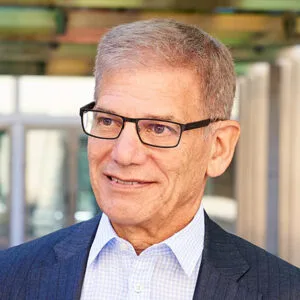
Big thanks to Bob Litterman for joining us today. To learn more about Bob and his initiative, visit Home insurance was built for the possibility of damage, not the certainty of it..
Doug’s Trivia
- What type of catastrophe did the government program created in 1968 seek to help homeowners and the insurance industry cover?
Have a question for the show?
Want more than just the show notes? How about our newsletter with STACKS of related, deeper links?
- Check out The 201, our email that comes with every Monday and Wednesday episode, PLUS a list of more than 19 of the top money lessons Joe’s learned over his own life about money. From credit to cash reserves, and insurance to investing, we’ll tackle all of these. Head to StackingBenjamins.com/the201 to sign up (it’s free and we will never give away your email to others).
Other Mentions
- U.S. Billion-Dollar Weather and Climate Disasters | Climate Central
- About | National Flood Insurance Program
- Innovative Black-Litterman Global Asset Allocation Model Is Developed at Goldman Sachs | Goldman Sachs
- Your Annual Insurance Check-up
- wildfire-checklist_IBHS.pdf
Join Us Friday!
Tune in tomorrow when we tackle what are the BIGGEST mind games we play and how do we better solve the investing puzzle?
Written by: Kevin Bailey
Miss our last show? Listen here: Meet the Family That Quietly Controls Your Retirement Money (SB1875) | Stacking Benjamins
Episode transcript
[00:00:00] opener: Ladies and gentlemen, we have a big show, a real big shoe
[00:00:08] Doug: Live from Joe’s mom’s basement, it’s a special episode of the Stacking Benjamins show
[00:00:24] Doug: I’m Joe’s mom’s neighbor, Doug, and on today’s show, why is your homeowner’s insurance bill so high? Heck, if you’re in some parts of the USA, you might be begging companies to cover you at all. So why is this happening? What’s the future look like? And what can you do today? Those are the questions we’re asking the co-creator of the model the insurance industry uses to price risk right now.
[00:00:47] Doug: It’s Bob Litterman. And just because it’s a special episode, I’ve brewed up some special insurance-themed trivia. You’re welcome. And now, here come two guys who feel especially lucky that Mom pays the insurance bill down here. It’s Joe and oh, J- J- G.
[00:01:13] Doug: Hey
[00:01:13] Joe: there, Stackers. And you’re right, not just rent-free for the win, but also insur- homeowners insurance for free for the win. Uh, welcome back to The Stacking Benjamins Show. You’re not used to hearing us on Thursdays. I’m super happy that we’re doing this special episode. Not only am I doing this episode, but the gentleman across the card table from me is here as well.
[00:01:35] Joe: Mr. OG, how are you, man?
[00:01:37] OG: I didn’t know that we had to work on Thursdays, but, you know, okay. It’s so great. Happy to be here. Uh, thanks for the invite. Boy, I sure hope we get to do this again someday.
[00:01:51] Joe: Where’s my time and a half, right?
[00:01:52] OG: Oh, yeah, no kidding. Where’s my- Double time. What are you talking about? Yeah, no, g- I’m, I’m, I’m feeling pretty good.
[00:01:57] OG: This is an interesting show idea, Joe, and obviously a, as outstanding guest. How did we, how did we land this dude?
[00:02:04] Joe: It’s … Well, what’s interesting is-
[00:02:06] OG: What did we have to bribe him with? That’s
[00:02:08] Joe: right. We offered him- How many donuts? We offered him … not our donuts. Some of Mom’s, you know. Oh, yeah. She’s … There’s one baker in this house, and we don’t compete.
[00:02:16] Joe: But no, we were approached by the Coalition for an Insurable Future. They’re a nonpartisan cross-industry group of experts. They come from business, from finance, from real estate, risk management, and what they deal with is the economic fallout of what we’ve all seen, this home insurance crisis, as things have changed around the nation.
[00:02:40] Joe: And we’ve seen, as an example, we’ve seen hurricanes hitting, like, Asheville, North Carolina. We have forest fires out west. We have unpredictable weather. They said, “Hey, would you do an episode about how do we price this in? How do, how do insurance companies look at this risk? How do they price it?” We don’t deal with climate.
[00:03:01] Joe: We don’t deal with, with, like, big scale economic stuff, but if there’s something we can do about it, OG, on our end when it comes to making your homeowners work better for you, I don’t want to speak for you, but I think you and I, we’re all about that.
[00:03:15] OG: Yeah. Yeah. Yeah.
[00:03:19] Joe: So with that ringing endorsement from OG, uh, let’s introduce our guest.
[00:03:23] Joe: Uh, Doug, you mentioned his name, Bob Litterman. This guy, this guy is a legend when it comes to pricing risk. He spent 23 years at Goldman Sachs running risk for the firm, heading up quantitative investing. He co-created the model that the financial industry still uses to price risk today, called the Black-Litterman model.
[00:03:45] Joe: He now chairs Capos Capital and chaired the CFTC subcommittee on climate related market risk. But most important for today, he’s built a career out of finding where markets are mispricing risk, and we’re gonna ask him a lot about this when it comes to your homeowners. What are the risk, where is it mispriced, and what can you and I do about this to get a leg up when it comes to our insurance policies?
[00:04:12] Joe: Let’s meet Bob Litterman.
[00:04:19] Joe: Coming down the stairs to mom’s basement, sitting down at the card table, Bob Litterman is here. How are you?
[00:04:24] Bob: I’m great. How are you, Joe?
[00:04:26] Joe: Fantastic. Even after the heat waves we had a couple weeks ago, you’re still doing all right.
[00:04:32] Bob: Well, I’m in California. It was nice and cool here, but the rest of the country, boy, they were sweltering.
[00:04:37] Joe: I know. I was in Boston over the Fourth of July. It got up into the high 90s in Boston, which you just don’t see, and that’s kinda what we’re, we’re gonna talk about. But before we get into all this, Bob, you spent 23 years at Goldman Sachs. As, uh, Doug so eloquently said as he introduced you, you co-created the model that the entire financial industry still uses to price risk.
[00:05:01] Joe: At what point did you decide, “You know what my resume needs? Insurance”? Like, walk us through that decision-making process, Bob.
[00:05:10] Bob: Yeah. Well, people call me a risk manager, but I, I’m not an expert in insurance. The group, the Coalition for the Insurable Future, reached out to me because of my expertise in risk management.
[00:05:23] Bob: You know, uh, climate risk is a risk management problem. We’re not dealing with it very well, and its impacts are showing up right now in the homeowners insurance market, and that’s why, uh, they asked me to join them and talk about what we can do to address this issue.
[00:05:39] Joe: It’s interesting because as a financial planner, a problem I’ve always had is that a lot of times people wanna just talk about insurance, but really it’s, it’s not about insurance, it’s about making sure that when bad things happen, that you’re covered.
[00:05:51] Joe: Managing risk really is the bigger, broader issue.
[00:05:54] Bob: Right. Right. Insurance is just one form of managing risk. It has some special properties which mean that it doesn’t work very well when you have changing probabilities of disasters, as we have today because of climate change.
[00:06:09] Joe: Well, that’s what’s fascinating to me is all these insurance companies, the actuaries dealing with all this changing data, like what do you do?
[00:06:17] Joe: So you’ve built a career, as you just mentioned, finding places where markets are mispricing risk, and I wanna talk about that for a second. What does it actually mean to misprice risk, and why should somebody who just wants to own a house actually care about whether risk is priced right or not?
[00:06:34] Bob: Yeah.
[00:06:35] Bob: First of all, pricing risk sounds very abstract, but in the financial markets it’s what we do. You know, when you hold an asset and it has an uncertain value in the future, that’s risk. And, uh, the more uncertain it is, in theory, the more you get paid for it. So you could imagine, for instance, government debt.
[00:06:56] Bob: People talk about that as the risk-free asset because the government will pay it back. Well, it’s not really totally risk-free because you could have inflation and that money might not be worth as much. But then you could think about owning, instead of a government debt, a, a corporate debt. Well, you get paid a little bit more because in addition to the interest rate risk you now have credit risk.
[00:07:17] Bob: Maybe that corporation won’t be around. If you own the equity of that corporation, you have even more risk because the credit holders get paid first and, uh, the equity holders get paid whatever’s left. So getting paid is the amount of money that you receive for holding that risk, and, uh, sometimes we call it an expected return.
[00:07:38] Bob: People talk about the expected return from the stock market. They get a positive return. But you never know for sure what’s gonna happen. The future is uncertain. Now, it gets even more complicated. Sometimes you’ll hear people in financial markets talk about beta. Beta is a covariance, it’s not a volatility.
[00:07:57] Bob: So the usual statistical measure of uncertainty is volatility. How wide is the distribution? What’s the likelihood of being far away from the expected value? When we talk about financial risk, it’s really not just the volatility, but also the correlation, what, what financial people call the beta. And it’s not any old beta, it’s the beta with marginal utility of folks in the economy.
[00:08:24] Bob: So now, you know, you’re deep into the terminology of economics and finance. The point is that when times are good, money is not as, as worth as much as when times are bad. If you can get that dollar during a depression, it’s worth a lot more to you than the dollar when times are good.
[00:08:42] Joe: It’s like you’re buying low.
[00:08:43] Bob: Yeah, it’s like buying low. It, it’s getting the money when you need it.
[00:08:46] Joe: Yeah.
[00:08:47] Bob: And money that pays off when you need it is worth more than otherwise. And insurance is a form of that for extreme events. When you have very, uh, unlikely events, uh, that happen every so often and would be really bad if you didn’t have insurance, you can get someone to come in and say, “Well, if you pay me in advance, I’ll take care of that.
[00:09:09] Bob: I’ll, I’ll pay you off when that bad event occurs.” And so that’s kinda y- you know, how you price, uh, risk in the insurance market. Now, there are certain conditions that have to be true or else it doesn’t work very well. One of those conditions is that it has to be a rare event You know, if this thing is happening every two months, uh, there’s no point in insuring it.
[00:09:32] Bob: You just, you, you, you know, it’s gonna happen, and so you save the money and you pay for it. But if it happens very rarely, but if also if it’s a predictable probability, then it’s easy for an insurance company to come in and say, “I’ll diversify across all these different policy holders, and I’ll have a relatively, uh, known, uh, number of events, and so I can price it in a way that I can make money.”
[00:09:57] Bob: So that’s kind of the insurance approach. But if the probabilities are changing so that the future is not like the past, then all of a sudden you get into a problem. Uh, the insurance company doesn’t know how to price it if we don’t know exactly what’s gonna happen in the future. And that’s kind of from a big-picture point of view what’s going on with climate change.
[00:10:20] Bob: The extreme events that are caused by extreme weather events that cause damages are becoming more common. And so- Yeah,
[00:10:28] Joe: hurricane in Asheville, as an example, comes up. Some of the wild places, we’ve had forest fires recently, we’ve had droughts recently, the extreme weather that we just had across the United States.
[00:10:39] Bob: You know, there’s a time series that really makes this clear. They call it the billion dollar events series. Uh, it used to be computed by the government, the US government, now it’s computed by a company or a nonprofit called, uh, Climate Central. But in any case, you go back to the 1980s and you had, you know, on average about three billion dollar events per year.
[00:11:02] Bob: Now it’s like 23 in the last couple- Wow … of years. Yeah.
[00:11:06] bumper: Wow.
[00:11:07] Bob: These are climate related. Now interestingly, they’re not all hurricanes or wildfires. A lot of them these days are tornadoes or just convective storms flooding in the Midwest. So it’s, it’s not everywhere that’s at risk, but there’s a lot of places that you might not think about.
[00:11:24] Joe: And it’s interesting, we talk about mispricing risk, which was my original question there, and why homeowners care about it. I think you answered why insurance companies care about it, Bob, because they wanna be able to price it so they stay in business. Our stacker’s first thought process is, “I don’t really care.”
[00:11:41] Joe: But truly we do. If I’m relying on them to make sure that my house is covered, I need to make sure that this company stays… It’s in everybody’s best interest to make sure that State Farm or wh- whatever the company is can withstand whatever the storm might be.
[00:11:59] Bob: Yeah. No, absolutely. And that’s the fundamental problem, that these insurance companies are not able to stay in business doing business the way they did.
[00:12:08] Bob: Here in California, up until recently, the state said you have to look back at historical events in order to price insurance. They mandated that you could only look backwards. Well, the future is not gonna be like the past, and so that, that they basically had to give up on. And that kind of phenomena is happening a lot of different places, and it means that insurance rates are going up almost everywhere.
[00:12:34] Bob: It’s a question of how much. A- and it’s also a question, to be fair, in some places there’s not a lot of climate risk. In other places, there’s a tremendous amount of climate risk. And so you’re seeing differentiation in different ZIP codes in different states. It’s a very, uh, local phenomena really. Uh, in California we worry about wildfires, in Florida they worry about hurricanes, in the Midwest it’s, uh, it’s hailstorms and tornadoes and floods and straight line winds.
[00:13:04] Bob: There’s a lot of different hazards, and it affects a lot of different people
[00:13:08] Joe: Well, and just from the homework that I did trying to keep up with you a little bit, Bob , it also looks like those locales are changing. Even the place where we should expect a tornado, maybe that range is different this year than it was last year.
[00:13:22] Bob: Oh, yeah. Absolutely. I mean, the weather is changing. Now, it’s changing in predictable ways. Some people act as if, “Well, I never saw this coming.” Well, that’s not true. Scientists have been talking about this for decades, and it’s kind of finally here is what’s happening. When the regulators say you can’t look forward, you have to look backwards, well, that’s not gonna work.
[00:13:45] Bob: And when we talk about the impact of storms, they’re getting bigger. Uh, the heat is, you know, heat waves are getting longer. There’s less snow. There’s less runoff. It, it, uh, there’s, uh, sea level rise. We could go on and on about the impacts. These were all predicted, and they’re now coming to pass.
[00:14:06] Joe: I think you made an important point that these insurance companies are regulated so that they have to work with these different state governments who are trying to protect individuals in that state, so there’s this check and balance system.
[00:14:20] Joe: The reason I would, wanna bring up the regulator and looking in the past, I feel like this is the same thing that happened with long-term care. Long-term care is something that we see a lot more now than we saw in the past. Long-term care insurance policies, Bob, I don’t know how much you know about this, but CFPs are really struggling with how do I solve it because insurance companies have gone, “We can’t do this.”
[00:14:42] Joe: But the friction isn’t that insurance companies didn’t see it coming. It’s that the friction was between regulators and the actuaries who said, “No, no, no, we got this avalanche of people who are gonna be using long-term care in the future. We didn’t have it in the past, and therefore, we saw people have to exit.”
[00:14:58] Joe: Is this kind of along a similar slant as what we’ve seen in long-term care?
[00:15:04] Bob: Yeah. I would, it’s from w- uh, you know, I’m not an expert in insurance altogether and certainly not long-term care, but it certainly sound like it. We expected these things to happen. They’re starting to happen, and we have to deal with it.
[00:15:17] Bob: Certainly, both government and insurance companies and homeowners, we all have to deal with it. The, the risk is real. It’s growing. In fact, it’s accelerating, and so the real question is how do we respond and, and who has to pay?
[00:15:32] Joe: I wanna go over some of the numbers before we get to how we solve it, ’cause as you’ve already alluded to, Bob, this, the,
[00:15:39] Joe: the solving it, I think is gonna be, uh, a little difficult. Let’s start off with the pain that people are actually feeling. Homeowner’s insurance up 24% is what my numbers say between 2022 and 2025. I wanna make sure that I’m hearing you right. You’re saying this is not just like eggs or whatever we’ve seen inflation…
[00:16:00] Joe: This isn’t an inflationary blip. You think this is going to continue.
[00:16:05] Bob: No, you’re absolutely right. It’s rising. Insurance rates on average are rising faster than inflation, and almost everyone is seeing this. Something like 95% of homeowners are seeing increases. Now, uh, different homeowners in different locations are seeing very different impacts.
[00:16:22] Bob: So some places are very risky, uh, you know, on the Florida coast. Uh, other places, you know, California Bay Area is not so risky. Now, some areas have wildfire risk in California, and you could be on the other side of a hill and be much more exposed than I am or something like that. Certainly with floods, that’s the case.
[00:16:42] Bob: And so it really comes down to being a very local question about what are the hazards you’re exposed to, and can you mitigate them or not? And then, uh, if not, yes, the insurance rates are gonna go up. The weather is becoming more volatile. Uh, one thing to point out is people often think about global warming as being the temperatures rising on average.
[00:17:05] Bob: Well, it certainly is, but that’s, that’s really the minor part here that affects insurance. What affects insurance is the extra volatility in the weather systems, the tail events we call them, the events that are extreme. It used to be, by the way, that people would say, “Well, you can’t blame any particular event on climate change.
[00:17:26] Bob: You don’t know whether that would’ve happened or not.” That’s kinda true, but it’s sort of the wrong question. What you can determine is would that have been more likely? And so you’re seeing events today that the extreme heat in the East Coast that we saw a few weeks ago, that is very… would’ve been very unlikely 50 years ago before climate change.
[00:17:49] Bob: Now, not so unlikely. So you can make a statement like, “That heat wave was five times more likely because of climate change.” Those are called, uh, posterior odds ratios. The relative probability of an event today, an extreme event, is much higher than it used to be, and those tail events are what lead to damages.
[00:18:09] Bob: Homeowners, uh, you know, not the normal weather, but the extreme. In fact, one way to think about it is that the infrastructure that we live in, our homes, the roads, everything, was built to a certain standard, and the standard is essentially a hundred-year event. We wanted to be able to withstand anything that’s gonna come along every five years or every 10 years, every 50 years.
[00:18:34] Bob: But if it’s so unlikely that it’s one in a hundred years, we’ll, we’ll take that risk The problem is that those one in 100 year events are now happening much more frequently. They’re happening every five years or every 10 years. Homes that were built for the 100-year flood, they’re getting that much more often.
[00:18:53] Bob: That’s really the problem.
[00:18:54] Joe: Yeah, insurers paid out nearly $80 billion in a single year from weather related events. And a lot of our audience wants to blame the insurance company when we hear about prices going up. And I just wanna, I guess, hit this nail squarely on the head. You’re saying the insurance company’s not to blame in this case.
[00:19:14] Joe: The actuaries are doing the best they can, but the risk is so difficult to place that the only way to cover yourself is to cover large swaths. Is that it? How do you… How are actuaries working to price this risk when you’re really not as sure today as you were yesterday where and when weather’s gonna hit, Bob?
[00:19:33] Bob: Yeah. Well, first of all, they do rely on models. Uh, there are climate models that make predictions about the likelihood of these events going forward that are different than what they were in the past. But of course, those models may be wrong, and so the insurance companies have a little bit harder time, uh, you know, relying on a model-based forecast of future losses relative to what had been a historically relatively stable period.
[00:20:01] Bob: That’s one source of uncertainty for those insurers. And then the other thing is insurer… You know, it’s a little bit more complicated because the way insurers work is they often buy re-insurance, which is to say, “I’ll take the risk of, you know, normal events, but if it’s a super large event, a hurricane that hits the whole coast or whatever, I’m gonna have another insurance company buy that.”
[00:20:22] Bob: Well, those re-insurance companies now are so full of risk that they’re saying, “Whoa, wait a minute. We can’t take anymore.” And when that happens, then the underlying insurers say, “All right, well, we’re full, and by the way, we may not wanna have as much as we already have,” and so they’re starting to not renew.
[00:20:43] Bob: So you’re having homeowners who are finding that either their rates are going up significantly or they’re being dropped. And, uh, you have areas like Florida, and now California’s moving in this direction where in certain areas it may be very hard to get insurance altogether.
[00:20:59] Joe: Yeah, I have a friend in a part of Colorado where it’s impossible to get homeowner’s insurance because of the risk of forest fire where they live.
[00:21:08] Bob: Yeah. That’s coming up in a lot of places, and there are things that can be done now. It- Sometimes a homeowner can take actions to remove debris around the house or harden the roof or something. If you’re in a neighborhood that’s surrounded by homes that may catch fire, it, it’s not just you, it’s also your neighbors, so you have to have the whole neighborhood work together.
[00:21:32] Bob: So that’s what some areas are doing, and insurance companies can certainly facilitate that, and we’re sort of moving toward risk-based pricing. And when the insurance companies pay you to harden your property or give you a discount on your insurance, more likely, that’s something that can help. But the rates are gonna go up.
[00:21:53] Bob: That doesn’t mean your rates are gonna go down, it just means they might not go up as much or you might be able to get insurance where you wouldn’t otherwise. But there are places where, as you say, it’s really almost uninsurable. If, if you’re, you know, on a hill where there’s no other homes and there’s brush around, it , it’s gonna be very hard to build a livable home there.
[00:22:15] Bob: You’re gonna have to build with concrete and glass and have a safe room underground and keep the vegetation a, a 100 yards away from the house. It’s just, at some point you say, “You know what? It’s not a great place to live.”
[00:22:28] Joe: It’s gonna be interesting though, too. I also think that based on what you’re saying, y- y- we may see insurance companies with the use of increased technology.
[00:22:37] Joe: I know that in some cases, uh, I went on a tour of, uh, USAA facilities, and they were talking about, you know, their increased use of drone footage and being able to look at your house versus your neighbors, different than looking at just one block or a square mile. Now they can look at house versus house versus house.
[00:22:55] Joe: I wanna make this clear though. Y- you know, we’ve talked a lot about Florida, about California. This is a problem, though, hitting Kansas. Yeah. This is an issue hitting Iowa. This is hitting these places that you wouldn’t, you wouldn’t think that there would be accelerating homeowners insurance prices. You expect that to be somewhere else, like the volatile places we’re talking about.
[00:23:16] Joe: This isn’t a micro issue, this is a national issue. Well, worldwide issue really.
[00:23:21] Bob: A couple of years ago we had that freeze in Texas. That was climate-related. It’s just more volatile. It’s not just heat
[00:23:29] Joe: We need to talk about something that you call, that I find fascinating. You call it the domino chain. We’re gonna talk about this later from an investment standpoint, how this hits financial markets.
[00:23:39] Joe: And as we mentioned earlier, Bob, your expertise is in mispriced risk areas. Walk me through this idea of a domino chain, because I really wanna make sure that our stackers understand how this goes from my premium went up to there’s a problem in the broader economy. Like step by step, pretend I’m a homeowner in middle America.
[00:24:00] Bob: Yeah. Well, I would say the domino is likely to happen where you have concentrated, what we would call correlated risk. So let’s take an example would be homes in the Florida coast. You know, they may have been terrific homes 20 years ago, but now with hurricane risk, the cost of insuring those homes is going up and up, and it may be, in some places, 2% or 3% or 4% of the value of the home per year as an annual premium for insurance.
[00:24:36] Bob: Well, you know, you just can’t afford that. When, when you bought the home, you weren’t thinking that it was gonna cost that much, and, and then it’s gonna cost more in the future, and what that ultimately does is it drives down the value of that home. So at some point, home values are, are going down, the cost of insurance is going up, and if there’s a big event there, you may not be able to rebuild that community.
[00:25:01] Bob: So far, we haven’t seen that. Where, where we’ve had big events, you’ve basically seen people come in and rebuild. But at some point it’s gonna not make sense to rebuild. You’re gonna have people retreating, and at that point, that whole neighborhood, that whole community or maybe even a region sees property values going down.
[00:25:21] Bob: People can’t afford to buy these houses because they can’t afford the insurance going forward. That’s where you can see a domino effect. And you may have banks that are heavily exposed to homes in that area, so they then can’t lend. You have the businesses that, you know, because the population is leaving.
[00:25:38] Bob: All of these things, uh, contribute to, uh, you know, the economy collapsing.
[00:25:44] Joe: You’re saying, I mean, y- you know, talk about risk management. Banks look at risk management every bit as much as insurance companies do. You’re saying that even the risk management areas of banks may not be as open to lending in these areas because of the fact that the home, the home insurance risk is so high?
[00:26:04] Bob: Yeah. Well, it, it could happen. Certainly regional banks that are, you know, have their lending focus in this region would be very exposed. Big banks, of course, are much more diversified.
[00:26:14] Joe: Sure.
[00:26:14] Bob: And we haven’t seen a lot of that, but this could happen. It’s, it’s a problem that’s getting worse, not better.
[00:26:20] Joe: A lot of our stackers were beginning to stack some Benjamins into- during the 2008 crisis, Bob.
[00:26:27] Joe: Uh, help me draw the line. What’s similar to this? What’s different? When I was doing my homework, you don’t think this is 2008 all over again, though?
[00:26:37] Bob: No, I don’t think so. Par- you know, 2008 was similar in some ways, but in some ways very different. You had mortgage risk, and banks thought that if we take these mortgages and kinda mess them all up and, you know, diversify so that we have some from Florida, and some from California, and some from all over, that it’ll all be independent and they’ll never all i, i- go south together.
[00:27:02] Bob: Well, it was a good theory, except when the whole economy starts to go south, then all of these homes everywhere start to go south. And so the diversification didn’t work. And these mortgage bonds that people thought were gonna be safe ended up not being safe, and it took down the whole economy. Now, climate risk is not messed up that way.
[00:27:23] Bob: We haven’t, uh, made it hard to sort out the way that homeowners were. So I don’t think you’re gonna get the same kind of countrywide impact that you had with the mortgage market. But you do have these insurance contracts that, as we said, you know, they’re gonna be hard to renew going forward. So there’s definitely real effects.
[00:27:44] Bob: I don’t think it’ll be the same kind of collapse that we saw in 2008.
[00:27:48] Joe: Yeah, I think most of us don’t even think about the fact that lenders require insurance, and if you can’t get insured or you can’t afford to be insured, you literally can’t sell your house. I mean, I could just imagine what that does to home values.
[00:28:02] Bob: Well, you, you certainly take a lot of people out of that market. So whoever would buy your house would have to self-insure. And what you’re seeing today is an awful lot more people who don’t have insurance. That used to be very rare, the homeowner that didn’t have insurance. Today, it’s something like one in seven homeowners who don’t have insurance.
[00:28:21] Bob: They, they self-insure.
[00:28:23] Joe: Wow.
[00:28:23] Bob: The next time you have a big event, that could be a major problem.
[00:28:27] Joe: Wow. We are halfway through this special episode. The second half, investing, real estate, and what aren’t markets pricing in yet. Plus, what can you do on your end? We’re gonna tackle all that. But it wouldn’t be a Stacking Benjamins episode if we didn’t bring in Doug sitting in the wings.
[00:28:43] Joe: He has some insurance-themed trivia you can regale your friends with. Doug, what do you got, man?
[00:28:53] Doug: Hey there, Stackers. I’m Joe’s mom’s neighbor, Doug Inok. It is my big moment. Bob Litterman sitting right over there, and I’m sure a great trivia question is my ticket out of here. I’m sure he can recommend me to some of his old Goldman Sachs friends, right? Isn’t it who you know? Well, Bobby boy, check out this piece de resistance.
[00:29:15] Doug: As Bob explained, insurance prices are on the rise, and there have been times when the US government got involved. Back in 1968, insurers struggled so much in one area that they created a public program to step in where insurance wouldn’t. And the reason? This type of insurance had claims so high that none of the insurers could cover them successfully, something it sounds like Bob is saying is happening right now.
[00:29:42] Doug: So here’s your question, Stackers: What type of catastrophe did this 1968-created government program seek to help both homeowners and the insurance industry? I’ll be back with the answer right after I go connect with Bob on LinkedIn. I’m sure now that he’s in mom’s basement, it’s my ticket to bigger and better things.
[00:30:02] Doug: Winning.
[00:30:11] fake ad: The thrill of the financial markets. Clicking the order on another day trading win. Introducing the perfect coffee for that perfect moment when you’ve just nailed an upside down candlestick all-in move Or that glorious time as the sun’s coming up and you’ve pushed through the nighttime hours, trading Tokyo, Hong Kong, Frankfurt, and London exchanges, and you just barely eked out that option harness that saved your ass before your 2450 call expired.
[00:30:44] fake ad: What’s the perfect coffee for that moment? Pour yourself some I got lucky again brew. Imagine, delicious trades and a fantastic taste. Sure, you might not sleep because that caffeine combines beautifully with your betting-the-farm lifestyle. But heck, it’s nearly worth it, because you found the perfect fix to keep you motoring, staring at that monitor, waiting to squeeze out another quarter point on the VIX.
[00:31:15] fake ad: Every time I push the button on another WisdomTree Coffee 3X daily leveraged out-of-the-money option, I sip on my I got lucky again brew and think, “I got lucky again.”
[00:31:27] fake ad: I haven’t gotten lucky in weeks, but I’m still up all night trading.
[00:31:32] Joe: Are you coming to bed?
[00:31:34] fake ad: Be there in a couple hours, honey. That doesn’t stop me from drinking a cup or three of I got lucky again coffee.
[00:31:42] fake ad: Sure, coffee won’t make you millions, but you’ll feel like a million while you drink I got lucky again brew. Available now.
[00:32:00] Doug: Hey there, stackers. I’m insurance trivia adjuster and guy who never raises the premium, Joe’s mom’s neighbor, Doug. One type of insurance the industry was struggling to get its arms around in the late 1960s, so the government stepped in. What type of catastrophe did this insurance program help cover? If you said hurricane, great guess, but unfortunately, we’ll need to give you another guess because the answer is flood insurance.
[00:32:28] Doug: The National Flood Insurance Program was created because the private insurance companies largely refused to cover flooding because they’d suffered so many catastrophic losses. And for insurance to work, you gotta keep covered, and there has to be a company there to do the covering. And here comes two guys back to keep covering the topic of insurance premiums.
[00:32:51] Doug: It’s Joe and Bob.
[00:32:57] Joe: Well, Bob, did you get it right?
[00:32:59] Bob: Yeah. Did you
[00:32:59] Joe: guess it was flooding?
[00:33:00] Bob: Yeah, it was flooding. You know, there’s something special about flooding, which is that, uh, it’s not something that private insurers like to cover. It’s because it’s concentrated, it’s hard to diversify, and it’s predictable that, you know, the same homes flood all the time, and these characteristics are a little bit like the impacts from climate change.
[00:33:21] Bob: That’s why insurers are now pulling back on a lot of climate related risks as well.
[00:33:26] Joe: In this case, the government stepped up with a program. I can hear a lot of our stackers just going, “Oh, God, no.” Like, uh, that w- that would be… But is this the same thing on a wider scale in slow motion?
[00:33:38] Bob: I’m afraid it has a lot of the same characteristics going forward.
[00:33:42] Bob: Climate related risks are gonna be hard for private insurers to cover. There’s definitely a role for the government. The real risk is going up. The real losses are going up. We talked about that. The number of billion dollar losses has just exploded, and it’s gonna continue to grow. So the question is really not, can we stop it?
[00:34:00] Bob: The question is, who’s gonna pay? That’s where I think you have to spread it out. You can’t expect homeowners to absorb all of this themselves. You’ve gotta have governments come in, y- uh, both state and local as well as federal, and, uh, you know, they have to work with the insurance companies to help people figure out how can we minimize the amount of risk.
[00:34:22] Bob: So how can we harden our homes, our communities, and so on, and thereby reduce the impact of these extreme weather events.
[00:34:31] Joe: I feel like, Bob, this is one of the old Bugs Bunny cartoons where the, there was a lion, and Bugs Bunny was asking the lion where he wanted to get hit, and the lion was… He’s like, “Do, do you wanna get hit on the paw or do you wanna get hit on the head?”
[00:34:44] Joe: He didn’t ask him if he wanted to get hit. You’re saying we’re getting hit no matter what. Would you rather be hit on the paw or be hit on the head? We got a lot of discussion around that that we’ve gotta solve.
[00:34:54] Bob: Yeah, and maybe we can pad ourselves a little bit and prevent some of the damages and, and build the infrastructure of the future that’s gonna be hardened Most likely, uh, a lot of people in rural areas are gonna have to move to cities where they have, you know, hardened infrastructure because it’s just hard to protect themselves out in the, in the rural areas.
[00:35:15] Joe: Let’s talk about over the short run what our stackers can do. Obviously, a lot of investors listen to this show. A lot of our stackers are rental property owners or they’re thinking maybe about buying rental property. What question about insurance should they be asking that maybe not enough people are asking?
[00:35:33] Bob: Well, it’s, insurance is very local, so first of all, you have to figure out, what is my situation? Am I at risk or not? And if your insurance company says you’re at risk, then, you know, you have to, first of all, figure out how much is it gonna cost, and then what can I do to reduce that? Can I harden, you know, my home?
[00:35:53] Bob: Can I reduce the brush around for wildfires or get a super strong roof if I’ve got, you know, wind or hail or whatever? So those are the kinds of things that individual homeowners can do. Basically, work with your insurance company, and if your insurance company isn’t giving you the answers, look for another insurance company or, or look for the state backup if that’s the only thing that’s available.
[00:36:18] Bob: It just… It’s hard to say, “You should do this,” because it depends so much who you are, where you are, what are the risks you’re facing.
[00:36:26] Joe: No, but you know what I like about your answer, Bob, it’s think about the area where you live, think about what the risk is. Don’t think about insurance. Think about what risk do I have, and then how can I solve it?
[00:36:35] Joe: Insurance might be one part of the puzzle, but like you said, cleaning out brush around your house or better storm drains or your roof, whatever it might be for your area. Think about risk, not about just insurance. I think… And I, and, you know, we opened up with that. I think too many people think about insurance, but we don’t think about managing risk, and there’s a lot of things we can do to manage risk on top of working with our insurance company.
[00:37:00] Bob: But you’re absolutely right. It’s, it’s working with your insurance company. They should give you a discount if you do these things. That’s absolutely something you should think about and talk to your insurance company about, if that’s the risk. You know, for some people it doesn’t matter, but for others, that’s a huge impact.
[00:37:17] Joe: There’s also something else there too, Bob, that I love, which is people that work at these insurance companies don’t wanna pay out claims, and I have talked to so many insurance people that know how to reduce risk. They know how to make sure that you don’t file a claim. It’s in your best interest and in their best interest.
[00:37:36] Joe: So they may have a program. They may have a… I’m thinking about some of the driving programs for kids as an example. It’s nothing to do with what we’re, what we’re talking about today, but, you know, insurance companies have already figured out that if your student gets great grades, th- they are less likely to be in a traffic accident.
[00:37:54] Joe: I don’t know how that correlates. I have no idea, but they figured it out. And so working with your insurance company on things like that I think is, I think is big. But you said something that I think is really important at this part of the conversation, which is… Well, you had written this elsewhere, and you mentioned it earlier.
[00:38:11] Joe: The math of catastrophic risk doesn’t care about averages, it cares about tails, and you’ve mentioned tails. It seems to me this idea of a tail, that something big happens, right? That this is what we’re really worried about. For somebody that doesn’t live in math, how do we unpack that word, a tail?
[00:38:33] Bob: Yeah.
[00:38:33] Bob: Well, it’s the extreme event. I guess, uh, the way to think about it is that, uh, as long as these events are within kind of normal range, they don’t create much damage, and it’s, it’s only when they get outside that… We talked about the 100-year flood, and it’s sort of when, when you go beyond that in some dimension, I mean, it’s a flood or it’s a heat wave or a drought or sea level rise.
[00:38:58] Bob: There are two different types of events too which we should talk about. One is the extreme event that happens at a point in time, the tornado. The other is the sea level rise kind of event that’s just slowly happening, but you see it year after year after year. Extended,
[00:39:15] Joe: like f- forever change. Yeah.
[00:39:16] Bob: And, yeah.
[00:39:17] Bob: And then you get a hurricane and all of a sudden it’s catastrophic damage because the sea level is a foot higher than it used to be. So that’s the kind of thing… And I remember I lived on the East Coast when Sandy hit and, uh, you know, there’s a barrier island off the coast of New Jersey, Long Beach Island.
[00:39:36] Bob: On the southern side, uh, there was three feet of water over the island, and the northern side, it barely got over the island at all, and that was all due to the timing of the event, uh, the way the wind was blowing and tides and so on. So i- there’s different kinds of events. You can’t always predict them, but the insurance companies are experts in risk management and, uh, you know, they have all these sophisticated models and, and they look at your property and say, “What are the risks for you and how can we mitigate them?”
[00:40:07] Bob: So it’s, it’s definitely something where homeowners should be working with their insurance company. And if their company isn’t providing that kind of service, find another company.
[00:40:16] Joe: Change companies. Yeah.
[00:40:17] Bob: Yeah.
[00:40:18] Joe: I wanna talk outside of insurance. It’s investors, as I mentioned earlier, that listen to this show.
[00:40:24] Joe: If I’m invested in REITs, real estate investment trusts, which for our brand new stackers are basically a mutual fund full of houses. It’s a little more technical than that, but a mutual fund full of properties. Or I’m in financial stocks. We talked about maybe the impacts to banks or the impact to insurance companies, or just plain index funds.
[00:40:44] Joe: Is climate risk starting to show up in the people that look at the risks of these different collections of investments, these different exchange traded funds and mutual funds, or is this still a known unknown that the markets are, uh, haven’t priced in yet?
[00:41:01] Bob: Well, I would say as an investor, uh, and someone trying to take advantage of mispriced securities, I would say most securities are, are priced appropriately, meaning that there is some premium built in depending on what they are.
[00:41:17] Bob: Take a, uh, an oil company, for instance. I’ve talked about oil companies as being stranded assets. They’re not gonna be around forever, but the uncertainty is for how long. Are, are they gonna be around for 10 years, for 20 years? How profitable are they gonna be? You know, is, is oil gonna go the way of you know, the horse-drawn carriage, or oil companies in particular, are they gonna find other ways to make money, and are we still gonna be burning fossil fuels 20 years from now?
[00:41:47] Bob: The… There’s a lot of uncertainty. These impacts of climate change are definitely hitting the valuations of securities, but it’s hard to say that they’re being mispriced because there’s so much uncertainty about the future. Y- you know, 10 years ago I was betting we would move much more quickly to addressing climate risk, and I was wrong.
[00:42:08] Bob: So if you bought companies that you thought were gonna be great investments 10 years ago because we were gonna address climate change and it was gonna be priced, well, you didn’t do so well. It’s… I would put it this way, there’s a lot of uncertainty about if and when we’re gonna price climate risk. Most everyone, I think, understands that climate risk is real, especially after some of these heat waves.
[00:42:32] Bob: They understand that we’re gonna move toward a, a low carbon transition. The question is how quickly is it gonna move? The problem there is that you have economic actors who it’s not in their interest to move quickly. You know, if, if you’re a petro state and 95% of your wealth is fossil fuels underground, you’re not in a hurry to move off of fossil fuels.
[00:42:55] Bob: Sure. And we know who the, those countries are. And in fact, the US is one of those countries. We have lots of fossil fuels. So, you know, it’s not necessarily in the US interest to move more quickly. It’s certainly in the interest of the world, and it’s certainly in the interest of some countries that are moving much more quickly than others.
[00:43:15] Joe: It is interesting, though, to see some of these companies. I just did a, I wouldn’t say a deep dive, but a medium dive into British Petroleum. The name petroleum, Bob, is in the name, and yet the, the amount of money and time and energy British Petroleum has spent on alternative energy over the past five years especially has been astounding.
[00:43:35] Joe: And maybe as an investor that’s the way I look, is I think, okay, if this, if a company like BP… And by the way, this is not a BP recommendation, it just happens to be I looked into them. But maybe we start looking with our dollars at these are companies that, uh, have the future in mind.
[00:43:51] Bob: Yeah, absolutely.
[00:43:53] Bob: Years ago I bet against, uh, coal industry saying, you know, it was gonna go out of business. And indeed for a while it did very poorly. But, you know, last five years it’s done very well, so- They’re
[00:44:05] Joe: back. Yeah …
[00:44:06] Bob: they’re back. And maybe not for long, but, you know, the valuation, it’s, it’s all a question of the valuation and how much profits over the next few years or however long they last.
[00:44:17] Bob: And it’s hard to say, broadly speaking, that certain assets are mispriced today.
[00:44:22] Joe: Sure.
[00:44:23] Bob: They might be, but it’s hard to say.
[00:44:25] Joe: For somebody buying a house right now, maybe it’s their first home. Let’s go away from investors to somebody who’s just trying to invest in a better life. I’m buying my first house.
[00:44:34] Joe: What’s an insurance question I should be asking that maybe the realtor’s not bringing up?
[00:44:39] Bob: Well, you certainly should ask about what’s the cost of insurance and make sure you can afford it, and not just today, but think about what might happen to that insurance going forward. And it’s not necessarily bad news.
[00:44:51] Bob: You may be in a house where there’s very little risk. As I mentioned, here in the Bay Area, you know, housing is incredibly expensive, so a brand-new starter home, you know, might cost you $2 million, but there may be very little climate risk associated with that home, so you might be able to buy that home with $1,000 a year insurance, and that’s not gonna be a problem for you.
[00:45:15] Bob: If you , if you can afford a $2 million house, the $1,000 insurance isn’t gonna be a problem. That’d be a big deal. The same house on the Florida coast might cost you $20,000 or $40,000 a year, and all of a sudden it’s a whole different equation. So I guess the point is you have to think not only about what’s the insurance gonna cost this year, but what’s it gonna cost in the future?
[00:45:36] Bob: And it may or may not be increasing rapidly. That’s a question, again, that’s very local.
[00:45:42] Joe: Which means one other tactical thing that, uh, you’ve pointed out that we should be doing is reading our insurance renewal letter. And, and I gotta admit, when I , when I knew that we were gonna talk about that, I realized I’ve been doing this forever, I barely read mine.
[00:46:00] Joe: What, what’s the information I’m looking for in my renewal letter?
[00:46:03] Bob: Right. Well, you certainly wanna see whether your rate has, you know, your premium has gone up, and most likely it has, so the question is how much.
[00:46:11] Joe: Well, it sounds like I wanna start tracking that too.
[00:46:14] Bob: You probably wanna start tracking it. The other thing that can happen, these insurance contracts, you know, they’re a little bit complicated, so has your deductible gone up?
[00:46:22] Bob: Your, your rate might not have changed, but your deductible might have gone up. Or maybe there’s a, a rider now that wasn’t there before or, uh, they’ve increased your earthquake insurance and you ask yourself, “Well, why did that…” You know, and nothing’s changed there, but it’s just a way of, you know, the insurance companies have to make a profit, and so they’re gonna move things around.
[00:46:43] Bob: So be very careful about any changes.
[00:46:46] Joe: Yeah. They’re legally required to tell you, and what you’re saying is that renewal letter is them legally informing you on the material change in your coverage.
[00:46:57] Bob: Right. Right. So definitely you wanna, you wanna read it, you wanna understand it, and you may wanna look for alternatives.
[00:47:05] Bob: B- but e- even though they’re at… You know, everyone’s raising their rates and they may or may not be competitive
[00:47:12] Joe: I find this fascinating. I find the intersection of pricing risk, insurance planning, and meteorology just all together just such a fascinating and difficult place. And I know for some of our stackers, Bob, today you put a pit in their stomach because they’re, they’re worried, and maybe rightly so.
[00:47:37] Joe: But as a guy who built a model that looks at pricing risk, if we look at this on a scale of don’t panic to we should all run panicking, where are we at right now really?
[00:47:51] Bob: Well, I don’t wanna tell people to panic, but on the other hand, uh, they have to be realistic. And there are a lot of things you can do.
[00:47:58] Bob: You, you don’t wanna, you know, move into a area that’s going to be a problem. So you wanna look for a safe area if you’re thinking about moving. If you’re in a house and you’re not gonna be moving and it’s at risk, uh, there are things that you can do as we talked about to try and mitigate that risk. You have to be aware, for sure.
[00:48:21] Bob: And, and more generally, I would say, you know, climate risk is a very serious risk. We don’t know what’s gonna happen, but we’re not managing that risk. And what we really need to do is we need to price it… You know, who’s gonna pay for this? Well, polluters should pay. They’re the ones that cause this. And the fundamental mispricing of risk is not the insurance market, it’s the pollution market.
[00:48:46] Bob: We should have a price on carbon dioxide and other greenhouse gases. I think everyone, almost everyone agrees with that. If you ask people, “Should we have an appropriate incentive to reduce emissions?” 80% of people would say, “Of course.” And yet, if you ask the same people, “Do you think there’s gonna be a carbon tax anytime soon?”
[00:49:09] Bob: They’re gonna say, “Oh no, that will never happen.”
[00:49:12] Joe: Not gonna happen.
[00:49:13] Bob: Oh, it’s not gonna happen. Uh, you know-
[00:49:15] Joe: Should we charge the polluters? Yes. Should we charge them? No …
[00:49:19] Bob: What, what it really is is do you think that we’ll ever do that? And then they say, “Oh, hell no.” No. Politicians- Yeah … they’ll never do it. Now I think that’s wrong.
[00:49:28] Bob: I think they will do it at some point, but they haven’t done it yet and, and that’s the problem. We really… You know, time is a scarce resource when you’re managing risk. We should’ve slammed on the brakes 20 years ago, and had we done that 20 years ago, you know, this problem would be going away now.
[00:49:45] Bob: Instead, we haven’t done it. The problem is huge. It’s accelerating, and you know, we’ve gotta do it. That’s what we’ve gotta do. We’ve gotta slam on the brakes. Now I say we, it’s a global problem, so I’m not gonna blame the US. It’s a global problem. Hopefully, uh, the world is gonna address it, and I, I think we’re probably getting to that point.
[00:50:07] Bob: In, in some ways, uh, if I can end on an optimistic note, I think this president, despite his best intentions, has really been the best thing for addressing climate risk in a long time. He pulled us out of the UN. As you probably know, that means that we’re gonna have to have a coalition of countries, not all countries.
[00:50:26] Bob: Well, that’s a good thing ’cause some countries, it’s definitely not in their interest to move, and that was blocking the UN. So I think that opens that up And then, you know, with these tariffs, all of a sudden he’s focused on border adjustments and, uh, that could lead to, uh, carbon tariffs. In fact, the US is already looking into that.
[00:50:46] Bob: And then, uh, finally, this war in Iran, everyone is realizing, “Oh my God, there’s a lot of risk associated with fossil fuels. Let’s move to a clean economy as quickly as possible.” So all of that, I think, has moved us forward in a way that President Trump certainly wasn’t intending.
[00:51:03] Joe: Shining a light on all of these issues.
[00:51:06] Joe: What I really love is that you also shine a light, though, that even though this is a global problem, there are things that we can do in our backyard, which I think we often listen to a show like this and we think, “Okay, that’s somebody else’s problem.” But there truly are things that we can do. Read your renewal letter, work with your insurance company, think about this more along the lines of risk management than just buying insurance, and that’s, uh, step one.
[00:51:28] Joe: Bob, I so value you taking the time with us today and, uh, sharing your expertise to help our Stackers make better insurance and better risk management decisions. Thank you so much.
[00:51:40] Bob: Thank you, Joe. It’s been a real pleasure. Anytime.
[00:51:44] bumper: Hey, it’s Matt in Gainesville, Georgia, and when I’m not delivering all this consumerism in a big brown package car, then I’m Stacking Benjamins.
[00:51:52] Joe: OG, let’s double down on one thing that Bob brought up. What’s your big takeaway?
[00:51:57] OG: Well, 100% you’ve got to read that renewal letter. Our property insurance just renewed not too long ago. Uh, you know, it’s an annual deal, at least ours is. I guess maybe some might be semi-annual, but, but maybe annual. You know, the first thing that you’re attracted to is the price, right?
[00:52:13] Doug: Right.
[00:52:13] OG: And I have mine monthly because it’s such a big premium, but it’s hard to discern what the differences are. So, uh, so you gotta go through kind of line by line and see what they’ve changed or proposed to change, because once you, you know, have that contract, that’s the one that you’re in. So I took my renewal policy documents and my existing policy documents, fed those both into Claude and said, “Tell me the differences,” and then do-
[00:52:39] Joe: Oh, that’s interesting.
[00:52:39] Joe: That’s really cool …
[00:52:40] OG: yeah, and then do an analysis of, like, where I’m overspending money, like what are some ideas to adjust based on the economics of what’s going on right now? Because- In our area, house insurance premiums are out of control.
[00:52:54] Joe: How do you prompt it to look at the differences? Do you have any specific wording that you use?
[00:53:00] OG: No, I don’t think so, not with this. I mean, obviously the prompts in AI are really the most important piece, but I think just, uh, I mean, just giving it the two PDFs and going, “Identify the differences,” I think that gets you kinda down the path of where you’re-
[00:53:13] fake ad: Where you’re
[00:53:13] OG: going, yeah … where you’re going first.
[00:53:14] OG: And then from that point forward, you can, you know, start putting in some other particulars, right? Like I’ve got X dollars of cash reserve. We talk about cash reserve on the show of being, you know, some people think it’s a waste of money, but it’s also useful in situations like this, right? Where you can say, you know, “I’ve got a six-month cash reserve.
[00:53:30] OG: I can increase my homeowner’s insurance premium to that next tier, because I can self-insure now $5,000 instead of 2,500, or 10,000 instead of 5,000.” That’s gonna radically change your premium from your property casualty stuff. So you can kinda give it that intel and say, “Hey, here’s the position I’m in. You know, what do you think about these changes?”
[00:53:49] OG: I’ll tell you, it identified a bunch of stuff for us. We saved some money, and it gave me some to-dos that I haven’t done, like, you know, things with, um, jewelry and that sort of thing, that you just kinda go, “I’ve got the jewelry rider, I’m good,” and it’s like, well, you’re not unless you document each piece individually.
[00:54:05] OG: So we’ve got a to-do of kinda inventorying, that’s inventorying- I like
[00:54:09] Doug: when you said upload both, say, last year’s and this year, the last renewal and this renewal, whatever the timeframe is, and show me the differences. ‘Cause there could be a lot of things hidden in there that are not just cost differences- Oh, yeah, 100%
[00:54:22] Doug: that could be important for you to know. Yeah. So I think that’s a key thing.
[00:54:25] Joe: 100%. I mean, Bob was all about, “We used to cover this, we’re no longer covering this anymore.” The roof coverage is different than it used to be if you live in Kansas, where you might get a tornado like he talked about, or, you know,
[00:54:36] Doug: the- We’re now giving ourselves permission to use satellite imagery to look at your house and decide if- Right
[00:54:41] Doug: we’re gonna cover you or not, because we see one branch that’s extending over your roof
[00:54:47] Joe: Well, and what I like about that, I really like, Doug, that, uh, Bob covered that. And I, and I like that he started with he’s not an expert in insurance, he’s an expert in risk. And what do we say all the time, guys? We’re like, “You don’t wanna think about buying insurances because that’s the insurance company’s game.
[00:55:02] Joe: You wanna think about managing risk.” And managing risk might be as much as, Doug, to your point, getting rid of that limb that’s over your roof, clearing out brush if there’s fire potential where you’re at. Whatever it might be, thinking about what the risks are and how do I cover those in a much broader way than just insurance is as well.
[00:55:23] Joe: Hey, big thanks to the Coalition for an Insurable Future about helping us make this episode. They are a nonpartisan group of independent experts, finance, insurance, government, academia, who all agree, and we’ve all seen it in our premiums, right? With climate changing, getting worse, it helps us bring all of this to a reality.
[00:55:43] Joe: And really what I like is while we can’t control any of that, what we can control is what we do about it. And hopefully we, uh, we’re able to help all of our Stackers, all of you, and us do better with our homeowners decisions. And, and by the way, you’ll find more on the Coalition at coalitionforaninsurablefuture.com.
[00:56:02] Joe: All right, Doug, bring it home for us, man. What should we have learned on today’s special episode?
[00:56:06] Doug: Sure thing, Joe. So what’s on the old to-do list today? First, don’t just check what you pay. Verify what insurance you actually have. That way you’re clear on what you can expect if disaster strikes. Second, I’ll say it, too.
[00:56:22] Doug: Who knew about reading your renewal letter from your insurance company? I’m gonna make sure Joe’s mom reads hers. But the big lesson, don’t stack your career aspirations on knowing Bob Litterman. Sure, he’s a big deal, but that guy’s already upstairs begging Joe’s mom for first taste of the brownies that just came out of the oven.
[00:56:41] Doug: Stay focused, Bob. I thought we had a connection, man. Those are my… Hey, those are my corner pieces. Thank you to Bob Litterman and the team from Coalition for an Insurable Future for making today’s special episode a reality. I learned a ton. Find out more about the Coalition at coalitionforaninsurablefuture.com.
[00:57:05] Doug: And while this is an important topic for all of us, Stacking Benjamins received compensation for participating in this episode. Wait, I can read between the lines here. You guys all got cookies, didn’t you? It’s time for a team chat This show is the property of SP Podcast, LLC, copyright 2026, and is created by Joe Saul-Sehy.
[00:57:28] Doug: You’ll find out about our awesome team at stackingbenjamins.com, along with the show notes and how you can find us on YouTube and all the usual social media spots. Come say hello. And oh yeah, before I go, not only should you not take advice from these nerds, don’t take advice from people you don’t know.
[00:57:47] Doug: This show is for entertainment purposes only. Before making any financial decisions, speak with a real financial advisor. I’m Joe’s mom’s neighbor, Doug, and we’ll see you next time back here at the Stacking Benjamins show

Leave a Reply