
The same mental patterns that cause investors to panic-sell during a downturn, chase validation through status purchases, or freeze up when facing big financial decisions — those are the exact patterns performance coach Jim Murphy has spent decades helping elite athletes overcome. His framework isn’t about trying harder. It’s about getting aligned. And today he brings it down to the basement to help Stackers apply it to the one game that matters most — the one you play with your own money and your own life.
What You’ll Walk Away With
- The three pillars of extraordinary performance — belief, freedom, and focus — and why chasing results instead of these three things is costing you more than you know
- Why the score, the portfolio balance, and the quarterly statement are all distractions — and what elite performers focus on instead
- The resonance framework that helps you recognize when you’re making decisions from alignment versus anxiety
- Four daily goals that reorient your attention from outcomes you can’t control to the process that actually produces them
- Why the same ego patterns that derail pro athletes — always comparing, never satisfied — show up identically in how most people handle money
- The homeless harpist story: what Jim did with his last $100 when he was $90,000 in debt — and what happened next
- Why retiring from a career you’ve tied your identity to can feel exactly like getting cut from a team — and how to prepare for it before it happens
- Five questions to ask yourself before any high-stakes decision to know whether you’re operating from fear or from genuine conviction
- The AI warning hiding in this episode — why an assistant that never disagrees with you might be the most financially dangerous tool in your arsenal
- What a cancer diagnosis in January taught a performance coach about what the best possible life actually looks like
Why This Matters Now
In your 40s, the financial pressure is real — but so is a quieter kind of pressure that rarely gets named. Am I building the right life? Am I making decisions because they matter to me, or because of what other people will think? Jim Murphy’s work sits at the intersection of those two questions, and the answer he keeps arriving at is the same one the best investors, the best athletes, and the most contented people share: stop optimizing for the scoreboard and start arranging your days around what actually makes you feel fully alive.
From the Basement
Jim Murphy joins Joe and OG to walk through the framework behind his new book, The Best Possible Life — including the desert solitude, the FedEx job, the homeless harpist, and the cancer diagnosis that field-tested everything he teaches. Joe and OG close out the episode with a Psychology Today headline on AI and financial trust — and OG’s story about nearly committing accidental tax fraud because Claude was being extremely encouraging about a box he absolutely should not have checked. Doug arrives with McDonald’s trivia in honor of Tax Day and Ray Kroc’s first store. Whether the basement scoreboard survived the week is a question best answered with your earbuds in.
Resources Mentioned
Stacking Benjamins Meetups — find a group at stackingbenjamins.com/bad
The Best Possible Life by Jim Murphy — available wherever books are sold
Inner Excellence by Jim Murphy — also available wherever books are sold
Jim Murphy on Substack — live Q&A coaching sessions and weekly newsletter; find him at interexcellence.com
Jim Murphy on Instagram — @InterExcellence
Mental Toughness Training for Sports by Dr. Jim Loehr — referenced by Jim as a foundational influence
Psychology Today article on AI and financial trust — linked in show notes at stackingbenjamins.com
Stacking Benjamins Guides — updated monthly at stackingbenjamins.com/guides
Stacking Benjamins Vault — budget and net worth tracking at stackingbenjamins.com/vault
Deeper dives with curated links, topics, and discussions are in our newsletter, The 201, available at https://www.stackingbenjamins.com/201
Enjoy!



Our Mentor: Jim Murphy
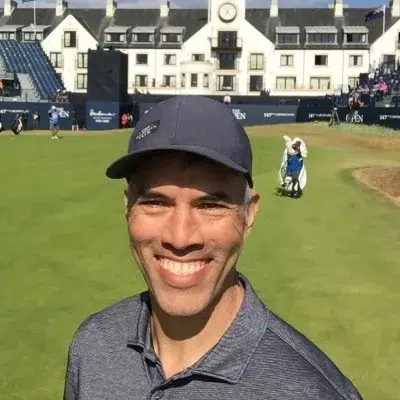
Big thanks to Jim Murphy for joining us today. To learn more about Jim, visit Inner Excellence | By Jim Murphy. Grab yourself a copy of the book Inner Excellence: Train Your Mind for Extraordinary Performance and the Best Possible Life
Our Headline
- Would You Take Money Advice From AI? (Psychology Today)
Doug’s Trivia
- The original McDonald’s mascot was a burger with a chef’s hat. If it were McDonald’s bestselling burger, which burger would it be?
Have a question for the show?
Want more than just the show notes? How about our newsletter with STACKS of related, deeper links?
- Check out The 201, our email that comes with every Monday and Wednesday episode, PLUS a list of more than 19 of the top money lessons Joe’s learned over his own life about money. From credit to cash reserves, and insurance to investing, we’ll tackle all of these. Head to StackingBenjamins.com/the201 to sign up (it’s free and we will never give away your email to others).
Other Mentions
- Stacking Benjamins – Tucson | Facebook
- Benjamins After Dark » The Stacking Benjamins Show
- Personal Finance Guides to Help You Make Smarter Money Moves
- The Best Possible Life: How to Live with Deep Contentment, Joy, and Confidence―No Matter What
Join Us Friday!
Tune in on Friday for a special episode when Paula Pant joins Joe as co-host for a live Q&A at Texas A&M. What questions do our next great generation of savers have?
Written by: Kevin Bailey
Miss our last show? Listen here: Geopolitical Risk Is Spiking. Here’s Why You Should Do Nothing. (SB1828)
Episode transcript
[00:00:00] opener: What’s your name? Well, my name is Jim, but most people call me Jim.[00:00:12] Doug: Live from Joe’s mom’s basement. It’s the Stacking Benjamin Show.
[00:00:27] Doug: Am Joe’s mom’s neighbor, Doug, and are you ready to live your best life? Today we welcome a guy whose strategies are so important. You’ll even see pro football players reading his book on the sideline. If you’re hoping to live your best life, he’ll show you. It’s bestselling author of Inner Excellence, Jim Murphy.
[00:00:46] Doug: And when it comes to ai, where does it fit in your financial plan? We’ll share some new data and I’ll also share the best data you’ll need to make it through your week. The answer to today’s trivia question, and now two guys who have the party hats on because they’re celebrating Justin’s birthday. It’s Joe and o Ju ju g.
[00:01:15] Joe: Hey there, stackers. Happy Wednesday. And man, Doug, as you explained, we got an action packed show today, so og, we just gotta get it rolling. Speaking of Roland. Happy birthday to your brother. Super day. I think that’s the biggest thing going on today for people that Miss Monday’s show, they may not know that, uh, Americans around the nation OG are celebrating your brother’s birthday.
[00:01:37] OG: Absolutely. They’re, yep. It’s a annual celebration and um, you know, like I said, on Monday, if you ever have like a, a party and you say in lieu of gifts. You know, the family is requesting, or you know, or, or OG is requesting that you make a donation in his honor to the Alzheimer’s Association or something.
[00:01:56] OG: Right. This is the same thing. You’re making a donation in honor of Justin’s birthday to the US Treasury Department.
[00:02:02] Joe: Wonderful.
[00:02:03] OG: It’s quite a gift. It’s so
[00:02:04] Joe: wonderful.
[00:02:04] OG: It’s quite a gift. An honor of my brother who, you know anyway, but, um, but yeah,
[00:02:12] Joe: great guy. The warms my heart to see people lining up at post offices around the nation.
[00:02:16] Joe: Just, yeah. To
[00:02:17] OG: ostensibly to mail cards to him.
[00:02:19] Joe: It’s Anne gifs in lieu of
[00:02:22] OG: gifs. In lieu of, that’s right.
[00:02:23] Joe: Just absolutely wonderful. That is one big thing going on. Another guy celebrating is Jim Murphy, who is a performance coach, og. You read his book, inner Excellence.
[00:02:33] OG: Inner Excellence was my nickname in college.
[00:02:35] Joe: Of course. Yeah. Well, uh, the guy who wrote the book that you now embody, Jim Murphy is, uh, upstairs talking to mom right now. If you don’t know who this gentleman is, as Doug said in the intro, AJ Brown during the Super Bowl. Imagine you’re playing in a Super Bowl game and you get photographed on the sideline reading this guy’s book, reading Jim Murphy’s book.
[00:03:03] Joe: You’re playing in the biggest game maybe of your career and you’re busy reading Inner Excellence, which is
kind
[00:03:08] Doug: of, I’ve heard of Gorilla Marketing tactics, but that guy’s PR firm needs a raise ’cause that’s impressive.
It
[00:03:14] Joe: was. So, so, so impressive. Jim is a very, what, what, what you’re about to hear is a very mild mannered, unassuming guy who makes points that if you’re solving the retirement game, the more living game, the more Benjamin’s game, where you’re using Benjamin’s as a fuel to get more life.
[00:03:36] Joe: Jim Murphy’s gonna help you achieve all that. So he’s coming up next. We have a couple sponsors who help us keep on keeping on and also the vault, which is coming soon. Stackers way to track your net worth and your budget, among other things. Stacky Benjamins dot com slash vault right now. It also, it’s such a Swiss Army knife privacy protection.
[00:03:59] Joe: Get rid of subscriptions. So many of those things you do in 15 different apps all in one place. Stack you. Benjamins dot com slash vault. We’re gonna hear from our sponsors and then the Jim Murphy helping you live your best life.
[00:04:23] Joe: I am super happy this gentleman’s finally made his way down to the basement. Jim Murphy’s here. How are you man?
[00:04:30] Jim: Hey Joe. Thanks for having me.
[00:04:31] Joe: I am so happy that you can help our stackers today because. You’ve coached elite athletes, people performing under some insane pressure, but you know, a lot of our listeners, they are, they are not.
[00:04:44] Joe: And, and even our viewers, they’re, they feel pressure too. Maybe it’s not in a stadium or on a golf course. But in their finances, their careers and life decisions. You talk about this state called resonance, and I think this might be a good concept to begin with. What is resonance and how do we know when we’re getting closer to it?
[00:05:06] Jim: Yeah, maybe I can start with a story. There’s a pro golfer who just got his dream. He was in his thirties and he made it to the PGA tour, you know, every golfer’s dream. He finally makes it. And this is this year, one of my clients, and he missed the first six cuts in a row.
[00:05:20] Joe: Oh no,
[00:05:22] Jim: he wasn’t feeling so good.
[00:05:23] Jim: And, you know, to get your dream and you’re so excited and, and just wanna do so well and you’ve been your whole life dreaming about it. And then miss the cut, miss the cut, miss the cut. And, and now he’s at his seventh event. And, uh, he’s understandably down. He calls me on a Tuesday. He’s like, can we talk?
[00:05:39] Jim: And so we talked and, and I said, I know that you think you need to make the cut and you need to get more birdies and less bogies. That’s not what you need. You don’t need to make the cut. That might be a distraction. What you need is to get an alignment. There’s a certain energy that you have when you’re at your best.
[00:06:01] Jim: When you’re out there and you’re loving golf and you’re just, you have this creativity that’s freedom, this joy, this gratitude, whatever you need to do to get that. That’s what you need. You don’t need to make a cut. In fact, if it takes you months to get it all year to get it, I wouldn’t think about care about making a cut.
[00:06:19] Jim: That that would just be a distraction. The only thing you need is to get that. Once you get that, then you’re gonna have some, you’re gonna get more of what you want. And so he missed the next 10 cuts in a row. So I was a little disappointed. Just kidding. Um, so that was Tuesday of his, uh, seventh event and then Thursday he goes out and shoots eight under leading the tournament, first round leader, and he finishes solo, second one stroke off of a playoff, uh, amazing event.
[00:06:50] Jim: And going into the weekend, you know, he is missed all these cuts and all of a sudden now he’s got a chance to win. And I said, look, when it’s your time to win. I didn’t say the word winning. We don’t talk about results like that. I said, when it’s your time to hold a trophy, it will be your time. We don’t know when that is.
[00:07:09] Jim: What we do know is that I want you to go out there and fully experience the day, all the different feelings you’re gonna get all these different sensations and feelings and mind’s gonna have all these thoughts, and we don’t wanna resist it. We wanna feel it because we wanna get better at handling all these feelings because he knows.
[00:07:27] Jim: The most important thing is we wanna continually expand what you believe is possible with inter excellence. There’s three pillars of extraordinary performance, belief, freedom, and focus. That pillar is about continually expanding what you believe is possible to get the sense that anything is possible.
[00:07:44] Jim: This is kind of the what’s in common of all three freedom, the feeling that anything’s possible. Focus. When you’re fully present, there’s a sense that anything’s possible and the belief. He was like, yeah, I know that’s, that’s exactly what I need to do. And the score is just a distraction. And so he is like, yeah, I’m just gonna focus on my energy and being present and being grateful using the tools that, that we’ve learned and worked on together.
[00:08:09] Jim: And, um, that’s what he did. So resonance is that energy. Like he is like, I’m a Christian, but I tell people like I work with atheists, Muslims, it doesn’t matter. I don’t give people advice unless they actually ask me. I help people clarify what they want most and I help ’em get it. Said, I don’t care if you’re what you believe or don’t believe, there is a power beyond yourself that if you want to achieve great things, you have to connect to that power.
[00:08:37] Jim: You have to get rid of your self-protection, self concern, self-reliance, and connect with that power beyond yourself. That power that grows the grass and spins the earth and holds the stars in place. That power, when you connect with that, that’s what I call resonance. It’s this freedom, this joy, this flow.
[00:08:56] Joe: I want to dive definitely into how we realign to get there, but I also wanna make sure people understand that you’ve actually walked this journey toward residence yourself. You begin your newest work, the best possible life by recounting again, your journey. You were. In the Chicago Cubs organization, you get cut Jim, on the worst possible day, you really get caught on April Fool’s Day.
[00:09:24] Jim: Yeah,
[00:09:24] Joe: that’s just what a what a horrible career
[00:09:27] Jim: over
[00:09:27] Joe: horrible day to not have it be a joke. And so you begin this next. Path, I guess, this next journey beyond baseball, and it sounds like that wasn’t going very well. And in 2010, you’re, you’ve got a ton of debt. You are in this, uh, spiral. Tell our stackers what was going on in Jim’s head at this point in your life.
[00:09:53] Jim: Yeah, when I lost my career as a pro athlete, I felt like I lost everything. It was my whole identity wrapped up in, into being a superstar. And I had one story for, singular story for my life. And, um, that was the only option. And when that story ended, I felt like my life ended. So I get a job delivering packages for FedEx downtown Seattle.
[00:10:13] Jim: I get asked to coach a high school baseball JV team, inner city Seattle. Never coached before, never considered it, but it just worked with my schedule. It didn’t have anything else to do. So I said Okay. And then they had a losing record the year before and we went undefeated. Wow. And had so much fun. So I was like, oh, I kind of like this coaching thing.
[00:10:30] Jim: So then I go and get my master’s in coaching science. My plan was to, I wanted to get a master’s degree so I can get a job teaching PE and pay the bills. ’cause they paid me $500 for the year. Then I would coach a team, high school team, win a championship, get a job in college, do the same thing, then get a job in the pros, work my way up, and then I would be managing the New York Yankees to win the World Series.
[00:10:49] Jim: That was the plan. And not just win World Series, just so you know.
[00:10:52] Joe: Of course,
[00:10:53] Jim: the pool of,
[00:10:53] Joe: right.
[00:10:53] Jim: Yeah.
[00:10:54] Joe: Yeah.
[00:10:54] Jim: So that’s what I had planned. I get my master’s degree and I, I end up doing my master’s paper that the master’s degree was on how to build a championship team. And my master’s paper was interviewing major league baseball managers and GMs on how to build a championship team in person.
[00:11:10] Jim: ’cause I knew I had to get to know them. So then when I graduate I’m like, Hey, now I’m looking for a coaching job. Which is exactly what I did. I get a job coaching with the Texas Rangers two weeks after graduation Dream come true, but I quit. Midseason in Tears was a box I couldn’t fit into at the time. I was devastated again, like you just, you went to grad school for two years just so you can get this job and work your way up to the big leagues and now you’re leaving.
[00:11:33] Jim: And so devastated. Again, my whole, um, identity, I was. Somebody as a pro athlete, then nobody. And now I’m somebody again, pro athlete, coach, and then nobody again and get asked to coach, um, be the hitting coach for South Africa, the 2000 Sydney Olympics. It was extraordinary experience. We had one of the biggest subset victories in Olympic baseball history.
[00:11:51] Jim: Got to meet Nelson Mandela marching opening ceremony. So it was, it was really great. So that was in Sydney 2000. And then 2003, I decided to give up the majority of my possessions, move to the desert to live a life of solitude, to figure out what to do with my life. This is where the journey of inter excellence really got started.
[00:12:06] Jim: I mean, I, I’ve always been interested in sports psychology. When I was a teenager, my coach, baseball coach said, Jim, he told me about sports psychology and, and I had this book called. Mental toughness training for sports by Dr. Jim Lahr carried it with me everywhere for years and years. It’s a great book.
[00:12:21] Jim: The one of the quotes I always remember was, 75% of the solution to a problem is your, uh, emotional response. The, the proper emotional response to a problem is 75% of the solution. And so, I mean, I’ve been saying that in my mind for years and years. Let’s see, where was I? Um,
[00:12:39] Joe: you move into the desert, which by the way fascinates me that you make that decision.
[00:12:43] Joe: ’cause there was a time in my life, Jim, where Cheryl, my spouse, and I. We decided to sell our house, sell our stuff, and become just nomads, like we Oh,
[00:12:51] Jim: wow.
[00:12:51] Joe: I realized I didn’t, I didn’t need anything. What I needed was inside me and to know more about me, which is a start of a whole different thing, but I’m just wondering what makes a guy decide to go out to the desert to just go, you know what?
[00:13:06] Joe: I’m getting rid of it all. I’ve managed all these teams. Yeah. I’ve marched in the Olympics, and now I’m gonna go out to the desert by myself. It feels like walls closing in.
[00:13:16] Jim: Yeah, it’s, um, I had on my laptop, um, this was back in the days when, if you remember, screens needed saving. I had a screensaver that went across the screen repeatedly and said, those destined for greatness must first walk alone in the desert.
[00:13:29] Jim: And then one of my teammates in pro baseball, rookie shrugs, calls me and says, I’m starting a baseball academy in Tucson, Arizona. Can you come for the weekend and help me launch it? I was just really getting restless. And I remember my girlfriend said, Jim, what are you doing with your life? You know, I know you’re restless.
[00:13:42] Jim: And I was a personal trainer, it was great, but I just wanted to have more of an impact on people’s lives. And I just said, Hey, why don’t I come down there and help you out part-time and, uh, I’ll move there and live there. And so I did one of my first New Year’s Eve, I’m, I’m in this empty house and I hear a noise.
[00:13:57] Jim: I go outside and I see fireworks. And that was the first time I learned it was New Year’s Eve. So it was a lonely time. I was there for two and a half years. I, I spent five years full-time writing and researching inner excellence. But the way the book came about was I decided I wanted to become a personal coach to pro baseball players and teach ’em how to have peace of confidence under pressure.
[00:14:13] Jim: And my first two athletes did extraordinary. One was one of the biggest rookie stories of Major League baseball. And when, when I started with him, he was a career minor leaguer and immediate success.
[00:14:23] Joe: It strikes me, Jim, that you’re writing one of the foremost books on inner peace, and yet you’re not feeling inner peace yourself.
[00:14:32] Jim: Yeah. Yeah, I had a lot of anxiety, a lot of, a lot of fear. I had a very obsessive, um, personality. Just always wanted to be a superstar.
[00:14:40] Joe: And this, by the way you write about this, this isn’t just you. I mean, this is all of our stackers, Jim, like we are. We are born you. Right? And nearly immediately we’re taught to compare ourselves to other people.
[00:14:52] Jim: Yeah. That’s human nature. We all have an ego that’s, uh, always, uh, threatened and always comparing, never satisfied. And, and that’s one of the biggest things that we need to master if we want to have a great life. And so in, when I went to the desert, one of the things that I learned, like, um, two big things I learned to say.
[00:15:07] Jim: One is that the heart is the key to your life, your spirit, your will, and your working with your subconscious mind. We’re far more than thinking machines. We gotta get to your greatest fears, your greatest dreams, and understand the human heart. ’cause everything you think, say and do comes from your heart working with your subc.
[00:15:26] Jim: The other thing that was so important for me to learn was that the path to training your, your heart and mind for the most poised under the most pressure is the same path for training for the best possible life, a life of deep contentment, joy, and confidence no matter what. And that training is to, is to train your heart, to be wholehearted and to love most.
[00:15:44] Jim: What’s most empowering, to redefine success to something that’s meaningful to you.
[00:15:49] Joe: It’s interesting that you find this, partly not just in the desert, but a friend of yours gives you some advice. You’re telling him about all of your problems, and he tells you to do something, which, which? A, I didn’t see the advice coming, Jim, and then B, I can’t believe you took it.
[00:16:08] Joe: When you had no money, can you tell everybody about the advice he gave you and you
[00:16:12] Jim: Yeah.
[00:16:12] Joe: Acting on it.
[00:16:13] Jim: So, five years, um, full-time writing, researching the book through a series of little miracles. I get a New York City literary agent. I get a major publisher and get some bookstores around the world. And so dream come true for authors.
[00:16:24] Jim: I’m in Barnes and Noble, but I’d spend my life savings. I’m $90,000 in debt. I had isolated myself for five years. I was in downtown Denver, and I’m thinking, okay, you put all your eggs in one basket. You’ve got no money to hire someone to market the book. You don’t know how to do marketing, and you don’t like promoting yourself or talking about yourself is not a good marketing plan.
[00:16:45] Jim: And if no one hears about the book, no one’s gonna buy the book. And if no one buys the book, then Barnes Noble will pull it off the shelves. And this could happen in a few weeks. And your whole dream, all that five years, that a hundred thousand dollars plus down the drain because you’re gonna be a total failure.
[00:16:58] Jim: Everyone will know it. No pro athlete will hire you because that’d be stupid to hire a failure to coach them, so then you’re gonna have to get a regular job. But this is a recession in 2009, end of 2009, so you’re not gonna get a job anywhere. You’re gonna end up homeless on the street. You’re gonna die alone in the street.
[00:17:13] Jim: This was my mind spiraling outta control on this day in February, 2010,
[00:17:18] Joe: and we’ve all been there. By the way,
[00:17:19] Jim: this is what happens when you don’t have someone to tell you the truth and you isolate yourself. We’re created for a relationship. We need people in our lives to tell us the truth about who we are and what’s possible for us.
[00:17:30] Jim: I called my friend and said, tell me what to do. I believed in God, but I was lost, and he is like, find a homeless person and help him. It’s not your common advice. Like, okay, you really need, I need something right now. Uh, I mean need, I need to make some money. I need to make some phone calls. Like, get me somebody, something that’s gonna leverage.
[00:17:47] Jim: And he is like, go to the least leverageable person in the world, a homeless person, and, uh. I turned around the corner and there’s the homeless guy playing a harp. You know, it’s not a common site. I don’t know how many homeless harpists you’ve seen, but I’d never seen one before.
[00:18:02] Joe: I’ve never ever seen a homeless harpist.
[00:18:05] Jim: Yeah. So I listen to him play this beautiful music. I’m sitting on the curb. I still remember his holy shoes, and he got a grocery cart full of stuff. And I look at my wallet and there’s a hundred dollars, which means I must’ve taken a cash advance out. Most of my credit cards were maxed, but I didn’t have any money, and so I must’ve taken a cash advance somehow to, I have a hundred dollars.
[00:18:22] Jim: I gave all that money to him and I left and I end up sitting in the Starbucks and I’m just staring off into the Biss.
[00:18:27] Joe: Can we stop there, Jim, for just a second? Because I was wondering this when I was reading it, what’s going through your mind as you’re handing him your last a hundred bucks?
[00:18:38] Jim: It is very emotional for me to, um, to recall this story because of the miracles that happened.
[00:18:45] Jim: You know, I mean, when you’re $90,000 in debt and you’ve got no money, um. A hundred dollars is nothing, you know, it’s like, it’s not gonna save me. It’s not, it’s not gonna do anything. And so I was willing to do anything.
[00:19:01] Joe: So you go to a Starbucks and then this is when the, in my mind, this is when the Miracle Train begins.
[00:19:08] Jim: Yeah. So I’m sitting there, my, I’m just staring off into the distance. I’ve got no. Way too much anxiety. I can’t do anything. I’m just sta staring, waiting for the day to end. I’m just sitting there and then the homeless guy walks in, stops in his tracks, turns around and says, are you the guy that gave me that money?
[00:19:23] Jim: And I said, yes. And he said, you gonna be here for a little bit? I, I’m gonna go and I’m gonna be right back. And I said, sure. And he, he leaves and comes back with a box of chocolates and, uh, card that he got for me. And, uh, a bracelet that he made for me and gives all three to me. This girl from my church had.
[00:19:38] Jim: I said, can you read this manuscript and make sure it lines up to the Bible? I just wanna make sure it’s filled with truth and nothing that’s false. And so she reads it, she says, um, I read inner excellence. Have you ever heard of the word Zoe? And I said, um, no. And she said, it’s a Greek word means life.
[00:19:52] Jim: Fullness of life. I think that’s what your book is about. And I said, yeah, exactly. I, I, my whole life felt obsessed about being a superstar when what I’ve always really wanted is to feel fully alive. And so I started to orient the book around if you want to have the most peace and confidence in your life.
[00:20:08] Jim: Pursue fullness of life to be wholehearted, and then everything else will be added to you. Everything you need will come. And so I started to orient the book around that concept of Zoe. And then, uh, I’m in this, uh, coffee shop in the Starbucks. And then I opened up this guy’s card to the homeless harpist and said, thank you so much for caring for me.
[00:20:26] Jim: No one’s cared for me like that before. Love Zoe. The homeless Harper’s name was Zoe. I’m like, your name is Zoe. And he is like, yeah. And I said, do you know your name means? He said, no. I said, it means absolute fullness of life. I spent five years writing a book about it, and so I grabbed a book. I wrote.
[00:20:40] Jim: Dear Zoe, thank you so much for sharing your beautiful music with me today. Love Jim. I give him the book, never see him again. That was the start.
[00:20:46] Joe: That’s incredible. And then you go on to explain that there is just these weird, fantastically weird experiences that happen to you. Then beginning then, almost like once you opened up to it and said, you know what, I’d a hundred dollars to your point is not gonna save me.
[00:21:04] Joe: I need something bigger to save me. So give it away. Like once you start giving it away, good things start happening. What also struck me was. You then see through this that the big problem that you are having, and maybe the word right word’s, not problem, Jim, but it’s, it is this misalignment where you are the centerpiece.
[00:21:27] Joe: Mm-hmm. And instead of you being the centerpiece and this spiral of, of emotions going on in your head, serving something bigger than you serving something different. Really then opens up all of these possibilities and I just, you know, in, in, in finance we see it all the time. You know, where, where we’re at the middle of the, we’re at the middle of the story and we really need to move away from the middle.
[00:21:54] Joe: How do we begin that process? Is it give it away? Is it beginning to focus on other people? Like how do we change our mindset so that we are not. Luke Skywalker in, in this show.
[00:22:09] Jim: I’m in New York City right now and, and, uh, I just spent some time with one of the local basketball teams and I told them, when you’re at your best, there’s a certain way that you feel that resonance.
[00:22:19] Jim: When you’re at your best. First, we need to define that. Be clear on what that is when you’re at your very best, how it feels for most people. Athletes are non-athletes. It’s very similar. Clear mind, unburdened heart, sense of freedom, sense of joy, so you can be creative and confident, calm, all those things.
[00:22:35] Jim: So we lock in on that and then we redefine success. It’s gotta be something beyond a side of your, uh. Your results, your tangible results, there’s far too much outta your control to focus on, on what you can’t control. And so, um, we redefine success. And, and one way we do it is with four daily goals. One is to give the best of what you have each day.
[00:22:55] Jim: Two is to be present ’cause there’s no fear in the present moment. Um, three is to be grateful. Gratitude is directly linked to inner peace. And inner peace is linked to inner strength and mental toughness. And they’re all linked to beauty. And so essentially you need to get more beauty in your life. And, uh, fours.
[00:23:12] Jim: Focus on your routines and only what you can control. And so this is kind of a start for anybody. If you want to live an extraordinary life, we need to redefine success because the problem is the more talent you have, the more likely you’re gonna get sucked into a cycle that you may never get out of.
[00:23:30] Jim: And that cycle is, I get some sort of worldly success and make some money, or something that, you know, I talk about in the book, an Inner Excellence about the Palms, the symbols of success, the acronym, P-A-L-M-S, positions, achievements, looks, money and status. The problem is the more of that you have, then the more you’re gonna want it.
[00:23:49] Jim: Because our deepest need is for love and and acceptance. And our greatest fear is, is rejection of that. And so the more money I have, more Benjamin’s. Then the more chances I get more friends and more love, I can get a really nice house and invite people over and have dinner parties, and then they can come and gimme some love.
[00:24:06] Jim: I can make this putt and win the PGA tour championship and then, uh, I’m gonna get a lot of love and people are gonna cheer. But the problem is there’s so much outta your control. And then what happens if you miss the putt? And, uh, what if there’s a worldwide pandemic and everything shuts down? And so we need something beyond our transactions.
[00:24:25] Jim: If you wanna live a meaningful life.
[00:24:27] Joe: Well, and this is why also jib. I think that when people retire, no matter what you retire from, if you attach a lot of meaning to the love that you got from your work, when that retirement happens, it’s the same thing as you in baseball. You know, it’s very easy then to be lost if you were craving the accolades of your boss and your coworkers.
[00:24:47] Jim: Yeah, it’s um, what I told this, uh, local basketball team, I said, Hey. We gotta get everyone to understand what are we really pursuing? What do you want most? What is it that you should be focusing on? Most pro athletes are focusing on the wrong thing. They just want to get buckets. Uh, they just want to get birdies or hit home runs, and that’s a mistake.
[00:25:10] Jim: Way too much outta your control. You gotta focus on the process of getting better every day. Especially with inter excellence, there’s five, five skills that we wanna improve on every day, and that’s to be able to believe that anything is possible. Belief is the skill that you can learn. Beliefs are feelings, and, uh, to compete with freedom and passion.
[00:25:28] Jim: Passion is, uh, literally means to suffer the willingness to sacrifice. And then there’s, uh, the ability to focus and be fully present. Inter excellence is really an in-depth system of how to be fully engaged in your life, fully present, so that you have the sense that anything is possible. And then four is to be able to control your physiology and relax under pressure.
[00:25:46] Jim: And then five is, is, uh, to be able to adapt to any situation. These are things that are helpful for all of us.
[00:25:51] Joe: We spend a lot of time hearing focus on yourself more, right? You deserve it. You deserve the, uh, whatever the thing is. Build your brand, optimize your life. Like you hear all these things and yet when you keep saying to be present, our devices really make it harder, Jim, for us to be present.
[00:26:14] Jim: For sure it’s the biggest addiction in the world right now.
[00:26:17] Joe: What’s a sign that we’re making a decision for validation instead of alignment? Like how can we kind of see that from afar? See it coming? So we, we ward against it.
[00:26:26] Jim: Well, most people never reach their potential. Pro athletes, pro athletes that that I meet Olympic athletes that I meet, they don’t reach their potential unless they do this one thing, and that’s, they need to learn to expand what they believe is possible.
[00:26:40] Jim: You need to be able to do things you’ve never done before, which means you have to be willing to have feelings you’ve never had before. There’s five daily, um, five questions rather that, um, I want everyone to ask when they’re, when they have some big event that makes ’em really nervous. And you’re building up like, we got March Madness right now.
[00:26:58] Jim: We got the NBA playoffs. Coming up, mastering the egos is one of the most important things anyone will ever do. If you want freedom, you have to master the ego. There’s no, no choice. The part of our mind that’s always threatened, always comparing. And so these five questions are, one, are you willing to face your fears?
[00:27:14] Jim: Two, are you willing to fail? And, uh, three, are you willing to look foolish? Four, are you willing to face any feeling? That’s a really big one. Most people never achieve their potential. Vast majority of people will never reach anywhere near their potential because they’re come to the edge of their beliefs, which is the edge of their feelings.
[00:27:32] Jim: They’re too uncomfortable and they shy away. And half the time they shy away, they get tentative and they, they perform anyway and it was, the results really poor and they feel terrible about it. And so that really locks in that they’re not gonna be good enough. And that the, can
[00:27:44] Joe: we stop on that one for a second?
[00:27:46] Joe: Yeah. Because something that struck me in your writing about this was you have a whole section talking about death and about how Spoiler alert. None of us get outta here alive. We fill our days with noise so we don’t. Think about the fact that we’re gonna have this moment, we’re all gonna have this this time in our life, and we’re afraid to face that fear.
[00:28:10] Joe: I thought that was very. Not just universal, but something that I see myself doing a lot. You know, it amazes me how often I’ll turn on Netflix just to have some noise going in the background. Tell me another story, Jim, just so that I don’t have to hear my own self-talk.
[00:28:29] Jim: So I have this mantra, this idea about, um, this rule of life and this, I want to be able to fully live at a given any given moment to be able to fully experience an extraordinary moment, heart, mind, and body.
[00:28:40] Jim: I want to be able to give up my life in a moment’s notice if it’s called upon, I feel that every human life has equal value. I’m all created on God’s image, my life, my spiritual life, that like this book is about the spiritual life. You know, if you wanna be a great athlete, it’s gotta be a spiritual path.
[00:28:56] Jim: Any life, that’s great. It’s gotta be a heart led path. That’s spiritual path. It can’t be a transactional path. This is kind of this rule of life that I have to fully experience it. Part of that is I want to be able to recognize wisdom. Whether it’s from an 8-year-old, an 88-year-old, or a homeless person.
[00:29:14] Jim: And, uh, I define wisdom as, um, to know who God is and therefore who you are, what he’s doing in the world, and how you can join in. Or, um, another way you think about it is to have unobstructed views of beauty, connections and possibilities or opportunities. So I had a chance to put this to the test because I was diagnosed with cancer January 20th, and that’s what this is.
[00:29:39] Joe: For people that are listening. Right at the base of Jim’s neck, there’s a, uh, is that a port gym?
[00:29:45] Jim: Um, it’s, it’s just a bandaid. Um, it’s
[00:29:47] Joe: just a bandaid.
[00:29:47] Jim: Yeah. But I had thyroid surgery. They took out half my thyroid, so I was diagnosed with thyroid cancer January 20th, so two months ago. So I still remember it as 8:00 AM in Manhattan where I’m at now.
[00:29:58] Jim: Meeting with the, uh, surgeon in, in Istanbul and a series of miracles that, that was really extraordinary. I went to Istanbul to do a checkup for, mostly for research and for clients to see if it was a place that I would recommend for clients. I had no symptoms, and so it was 60% for them and maybe 40% for me.
[00:30:15] Jim: And then my flight got canceled the night before, so I, oh, I’m not gonna go. It was two and a half hours to go to the other airport in Madrid. I was in Spain. And then my friend said, you know what? I can take you to the train station. It’s an easy train ride, and this is kind of where that resonance comes in.
[00:30:28] Jim: And that connection to a higher power is you really wanna learn to trust your intuition and, and really sense, like for me, what is God telling me right now? And I felt God saying go. So I was like, okay, I’ll go. ’cause if I didn’t go then, you know, I might not be here today Anyway, I go and they do all this testing and then they said, we found a three centimeter nodule on your thyroid.
[00:30:48] Jim: We need to do a biopsy. So that was January 9th, and then January 20th was the results. And they said, um, carcinoma. And I was like, um, cancer. He’s like, yeah, we need to take out your whole thyroid right away and you’re gonna need to do two days of, uh, radioactive iodine. That was January 20th of this year.
[00:31:06] Jim: That was a very surreal moment coming face to face with death. And then two days later, a series of miracles. Again, you know, God has done so many miracles in my life. I, I can’t even, wouldn’t be able to tell you all of ’em, but this one was really cool. The CEO that had done an in interactions retreat a few months earlier, I was gonna go do some work with him and his team first weekend of February of this year.
[00:31:28] Jim: And, and, uh, I called him and said, Hey, I might need to take a rain check. I’ve just got this little thing to deal with. He’s like, um, let me call my doctor. Let me call you back. And then so ends up, because I thought I was gonna have to go to Spain or Istanbul to do this treatment. And he sets me up with a Clayman Thyroid center in, in Tampa, flies me there in his private jet.
[00:31:46] Jim: He says how much it’s gonna cost and I didn’t have regular insurance. And he is, and I said, 30 grand on the jet. He hands me a $30,000 cash and flies me to Tampa. And his private jet pays for it. They, they take out all the cancer. Right after the surgery, they said, and they only took out half and they said they’re gonna take out the whole thing.
[00:32:05] Jim: So it was, it’s a miracle they able to save half afterwards. I’m groggy. And then the surgeon was talking to me about it and all I remember her saying was, was perfect and really good. So what I like to tell people is she could have been, ’cause I was so groggy that I only heard three words out of everything she said.
[00:32:21] Jim: She could have been talking about how she walked her dog. How she tied her shoelaces. Perfect. And the dog walking the dog was really good, but I think she was talking about my thyroid surgery. And so they said they got all the cancer, margins are clear, you’re good to go. And then the final miracle was zero pain.
[00:32:37] Jim: This was, this is like a three in sipper I got right here.
[00:32:39] Joe: Wow.
[00:32:40] Jim: Zero pain.
[00:32:41] Joe: It looks like the most painful place possible to have a surgery
[00:32:44] Jim: when they told me they’re gonna do a biopsy on my throat. Like the Adams apple. I was picturing that, and I heard biopsy means it’d take a big needle. Thankfully, God gave me some skills as a mental skills coach to be prepared for it mentally, emotionally, spiritually, but yeah, miracles.
[00:33:01] Joe: I have one more question to wrap up. Frankly, what I hope is the beginning of a lot of our stackers journey toward exploring the best possible life. You said something powerful that. You’ve always wanted the best possible life, but your definition has changed. It used to be home runs and millions of dollars.
[00:33:19] Joe: What is it now?
[00:33:21] Jim: Well, I think on my phone there’s a, the wallpaper on my phone for a long time it’s been. This rule for life that says, arrange your days so that you’re experiencing deep contentment, joy, and confidence in your daily walk with God. And I was like, yes. That’s how I wanna live every day. I want deep contentment, joy, and confidence and your environment is so huge, it shapes us so much.
[00:33:47] Jim: And so I really like that friend. And so this was from a guy named Dallas Willard. I was like, man, I need to remember that every single day. And so how am I gonna arrange my days so that I’m experiencing deep? I need to, I need to spend time with certain people. I need to read certain books. I need to listen to certain podcasts.
[00:34:05] Jim: I need to make sure I’m clear on who I want to become and, uh, um, I need to have faith and courage.
[00:34:12] Joe: Jim, thank you so much for mentoring our stackers today to live their best life. Your new book is called, well, you Already Know It. Our Stackers, don’t you know what the name of the book is? Our Stackers Don’t.
[00:34:23] Joe: The book is the Best Possible Life, how to Live with Deep contentment, joy, and Confidence no matter what, and it is available everywhere.
[00:34:31] Jim: Yeah, it should be, uh, at most bookstores. You can also, uh, I have a, a newsletter blog that I write. It’s about once a week. I also give live q and a coaching sessions that’s on Substack, or you can go to inter excellence.com and find that I’m also on social media Inter Excellence, Jim Murphy, uh, and Instagram.
[00:34:49] Joe: And we will link to all those on our show notes stackers at stacky Benjamins dot com. Jim, so great to meet you. Good luck with the treatments as they come, and, um, thank you so much.
[00:35:00] Jim: Thanks, Joe. Thanks so much for having me.
[00:35:02] bumper: Hi, I’m Jamila Suran, and when I’m not helping people launch to financial freedom, I’m Stacking Benjamin’s.
[00:35:13] Doug: Hey there, stackers. I’m Joe’s Mobs neighbor Duggan. Today’s the birthday of one Leonardo da Vinci. Not only was he a turtle with lethal hand-to-hand combat skills, but he was a dude who created lots of cool inventions, but nothing quite as innovative as the other thing. We’re celebrating today, tax day, I mean, Justin’s birthday.
[00:35:34] Doug: Duh. Imagine how. Imagine how beautiful our tax code would be. Da Vinci had gotten his hands on it. You know, something as beautiful as anything Da Vinci’s created and something not taxing at all is a trip to McDonald’s. It’s the anniversary of Ray Croc opening his first store in 1955 and. Walking home at the end of the day with a cool 355 bucks in profit.
[00:35:59] Doug: What did he do with that money? Apparently he reinvested it because now there are McDonald’s across the world. Here’s today’s question. The original McDonald’s mascot was a chef’s hat on top of a burger. If it were McDonald’s bestselling burger, which burger would it have been? I’ll be back right after I go ask Joe’s mom for a stamp time, for me to take some advice from Jim Murphy and start living my best life, which.
[00:36:24] Doug: Starts by staying in good graces with the IRS. Am I right?
[00:36:35] Doug: Hey there, stackers. I’m income tax filer and guy who’s always excited about getting a refund. Joe’s mom’s neighbor, Doug. You know Jim Murphy talked about having joy in your life, and I’d submit. For at least 45 minutes after you eat it, nothing brings you more joy than a McDonald’s burger. Then again, after those 45 minutes are up, there’s no greater joy than a Tums.
[00:36:56] Doug: Before the break, I asked you this question. The original McDonald’s mascot was a burger with a chef’s hat. If that burger were McDonald’s bestselling burger, which burger would it be? That’s a lot of burgers. The answer while the Quarter Pounder and basic cheeseburger are great, nothing sells at McDonald’s more than the Big Mac.
[00:37:17] Doug: And now let’s get you back to two guys who are ready to live their best. Second half of the podcast, it’s Joe and og.
[00:37:26] headlines: Hello Darlings, and now it’s time for your favor. Part of the show, our Stacking Benjamins headlines
[00:37:33] Joe: well stackers. Quick question. If you had a big money decision to make investing debt, retirement, who would you trust more?
[00:37:44] Joe: Your partner or a robot, and that’s what a new piece in Psychology Today asked, which was exactly that. Your partner or a robot when it comes to your money and the answer might, uh, surprise you. Which one, Doug? You think it’s gonna be people trust their partner more with, uh, money advice or a robot.
[00:38:06] Doug: Robot.
[00:38:07] Joe: And that’s why, uh, yeah. Yeah, that, that says a lot. Researchers actually found that while people are using AI for everything, just to kind of summarize this, and I’ll link to it in the show notes at stacky Benjamins dot com, so we’re using it for therapy, fitness, medical advice, these things that maybe AI can help out with and money.
[00:38:31] Joe: When it comes to finances, people trust the romantic partner much more than ai.
[00:38:38] Doug: You’ve literally just sat there on the couch next to your partner and watched them. Eat an entire bag of crunchy Cheetos. That’s who you’re not trusting them with your financial stuff. You know what an idiot they are? They can’t find, they’re looking all over for the remote, like between the cushions, like that’s not who you’re trusting the robot.
[00:39:01] Joe: To me, I get the fact that we would trust our partner. But og, what’s interesting about this piece is not that people trust their partner now, it’s this, we trust AI more, and this is kind of the hook in this entire piece. You kind of referenced this on Monday, show a little bit. We trust AI more the more it begins to act like a human when it acts like.
[00:39:24] Joe: It’s your buddy when it acts like it’s your friend. That’s when people begin to warm up to AI more. It’s less about the advice and more about AI becoming kinder and gentler in their approach, which this piece points out could potentially be dangerous.
[00:39:43] OG: You know, I have a love hate relationship with all of these tools and I, I use it a ton and I find a lot of great value for strategic thinking and project management, and I love the fact that I can like, literally stop a train of thought, go do something else, come back and go.
[00:39:59] OG: Tell me where I was on this. And it will instantaneously remember every single solitary aspect of whatever project we were working on and exactly what the next step is. But it is also a wild cheerleader when sometimes cheerleading doesn’t need to happen. And I’ll give you a perfect example of this. So bike racing, doing this bike thing.
[00:40:20] OG: I have a new bike trainer, so like a device, not a person. And so I’m learning this stuff on the fly. I don’t know, I’m not a mechanic. I I, I can change a tire if I absolutely need to or change oil if I absolutely need to, but I don’t know the first damn thing about any of this stuff. And, and so when I took the back wheel off to put my bike on the trainer, it didn’t work correctly.
[00:40:43] OG: AI solved it. It was like, okay, try this, try this. It’s probably this. Okay, cool. It worked. Then I take the back wheel. Now I take it off the trainer, put the back wheel back on and something’s a little off. I can’t figure out what the deal is, but the back wheel’s not spinning as freely as it should. So I play with it a little bit, take it off, put back on.
[00:41:01] OG: I try the things I don’t know. The long story short is I ended up with a DoorDash delivery of a ratchet and a screwdriver set that I didn’t own. A high five from chat GPT of like, oh, this is totally simple to fix. This is the problem, this is what’s happening. And now I have. A bike that doesn’t work because the brakes are broken.
[00:41:26] OG: Because I unscrewed them too much. Because chat was like, you got this bro, you can do it. And really what I should have done is taken it to the frigging pro at the bike shop and gone it no work. Good. And he would’ve been like, oh yeah, we just, okay, there you go. You’re good.
[00:41:44] Doug: OG can’t fix you. Make
[00:41:47] OG: better.
[00:41:47] OG: Yeah. And like. That would’ve saved so much time and energy. Instead, it’s this like unrelenting cheerleader of like, oh, you got it, dude, you could totally do this. And I’m like, well, I don’t know. This doesn’t look like an Alan wrench that I have. Oh, it’s not an Alan wrench. You need a T, Trex 25, whatever thing.
[00:42:05] OG: And I’m like, cool. How do I get one of those? Here’s the link to Lowe’s. They’ll deliver it to you like, all right, I’ll get one of those. Torx Treks. Torx Torques, right? Torques. I know
[00:42:14] Doug: you need to. Yeah, it’s Torx T Os.
[00:42:16] OG: Who cares? I got a hundred of them now because they didn’t have one. I did buy the whole set and
[00:42:20] Doug: I have a whole set of scalpels.
[00:42:21] Doug: ’cause Chad told me I could just make a subcutaneous cut. Three eighths of an inch long. Exactly.
[00:42:26] Joe: Well, and this is why, how often do we have a headline that comes from Psychology Today? Right? We never do. But the reason I think this is important, OG, is when it comes to fixing your bike, like what’s, what’s the cost of it?
[00:42:37] Joe: Sending you stuff and you can’t fix it. It’s not huge
[00:42:41] OG: anger. The
[00:42:42] Joe: cost is anger, right? But the psychology of a human being, and it goes deeply into the research. If something sounds confident and seems like it understands your situation, like AI seems to every question you ask it, I totally get what you’re asking.
[00:42:59] Joe: Oh, that’s a super question. You’re right on. But the psychology of a human is, we’re more likely to follow it. So what the broader research says. Is that the cost of it with your bike? Maybe a little, you know, a little nuisance, little problem. You’re gonna have to take it somewhere else. You might have to watch a couple videos, whatever.
[00:43:18] Joe: But people increasingly are relying on ai, this piece as for financial advice, but this is the kicker. Og. There’s no safety net. When you break it, when it’s completely wrong and you follow it, even the, it sounds human. It feels human, man. If it’s wrong, the stakes can be really high.
[00:43:37] OG: Yeah. Especially with money.
[00:43:38] OG: I’ll, I’ll give another personal example, and this is something that I actually know a little bit about, so I felt more comfortable in using this for information. I took my business tax return and. My year end p and l and year-end balance statement, balance sheet from the business, dumped it into Claude and I went, anything that my CPA missed question mark, what should I know?
[00:44:07] OG: You know it said, okay, it looks like this reconciles correctly and it did like a bunch of stuff. And then it goes. One thing to note, you’re missing out on a tax deduction worth x dollars. Um, looks like they didn’t check this box. Uh, you should call your CPA and check this box and bada boom badabing. You just save yourself a whole bunch of money.
[00:44:25] OG: And I looked at it and it’s a particular, uh, election on a business return about what type of business you have. And I literally wrote, I was like, I don’t think we qualify for this, this election. We, you know, we’re specifically in the ex excluded category. Financial services companies are excluded from checking this box.
[00:44:43] OG: And it goes, yeah, but do you really do financial services? Maybe you just really do like consulting. And I’m like, yeah, that’s not what we do. We really do financial services stuff and it specifically says in the tax law, this excludes these businesses.
[00:45:01] Joe: Wait a minute, AI’s trying to help you cheat on your taxes.
[00:45:04] OG: It’s like, Hey, cool. Just call Matt over at your CPA firm and see if he’ll get, he’ll check the box anyway. And I’m like,
[00:45:12] Joe: wow,
[00:45:13] OG: okay. So I happen to know just like that much about taxes, right? So I know, okay, this is BS and I’m not gonna te check this box. And I know that would be bad. I don’t know whether or not I’d get audited.
[00:45:24] OG: I don’t know. Maybe I would save 20% of my taxes and like it’d go across the plate, but it’s not a gamble I’m, I’m gonna take right? That’s stupid. And it’s fraud. I know enough about this, but now fast forward this same problem to the person who’s loading their stuff into TurboTax, who doesn’t have a CPA who knows absolutely nothing about taxes and clot or chat or whatever your favorite tool goes.
[00:45:49] OG: Hey, you’re missing a 20% tax deduction. This is 50 grand, bro. Check this box. You go, hell yeah. Ing. Check the box, bang. Save 50 grand. Sweet deal. AI for the win High five.
[00:46:02] Doug: I’m absolutely doing that.
[00:46:03] Joe: Let’s go through here intent, because I think this is a really important thing, og, because what people are doing, you said, you know, I, I look at it for my business.
[00:46:11] Joe: I look at it to see if maybe there’s some shortcuts that I’m missing. Right? If somebody put into, if your intent is, let’s see if I can find a shortcut. And you make the bad decision to go. Let’s see if there’s another way to characterize what I do so I can get some tax breaks and maybe, you know, uh, maybe, yeah, maybe, maybe judge over like what I do.
[00:46:36] Joe: The problem that I have with ai, it’s not that the answer’s wrong, it’s that AI can be overly agreeable and reinforce the bad decision that you ask at that question in the first place. ’cause AI’s not gonna tell you not to do it. AI’s gonna go, Ooh, yeah. Hey, you know what? If you just call yourself this, you can.
[00:46:56] Joe: You can do that. I think this overly agreeable feature of AI can be a problem. It
[00:47:02] Doug: sounds exactly like my Uncle Gary.
[00:47:04] Joe: Right? Right. Except Uncle Gary’s gotta look you in the eye, Doug. You know what I mean? Well, I mean’s like, my bad. Hey, we’ll get you next time after you’re in the orange.
[00:47:13] Doug: He, he was usually half in the bag.
[00:47:15] Doug: He could, he didn’t know which one of me he was looking at,
[00:47:18] Joe: but that is a problem, Moji. ’cause we’re asking, we’re asking ai and sometimes the intent’s not yours. Sometimes the intent is, is there a loophole? Is there a tax break that I should be taking that I’m not?
[00:47:31] OG: Well, I mean, the usefulness of it right now is research.
[00:47:36] OG: It’s a very enthusiastic 20-year-old who can do 80% of your research tasks. But my cautionary tale on this would be if you don’t know anything about the topic, I’m not entirely sure. That submitting yourself entirely to the output of whatever it is that you’re searching for is the right course of action.
[00:47:57] OG: I think. I think using it as a tool to evaluate it is totally fine. But to say like, I don’t know. I lemme put it this way, with the tax stuff, when you go to tax court and the lawyer for the prosecutor, the tax lawyer goes, do you have any reason for why you lied on your taxes? And you go. Chad, GBT said it was cool to check that box.
[00:48:20] OG: Like that is not a defense that will hold up. You are gonna be penalized on your form like that is. They just, they will laugh at you and go, well, you should have had a CPA, and that’s all there is to it. Just like Doug’s surgery, you know, just like my bike thing. Like, I’m gonna go, I know what’s gonna happen.
[00:48:38] OG: I’m gonna go in there and go, Hey, this thing. And I had to, and I then they’ll go, well, yeah, did you squeeze the brake without the tire on? I’ll go, yeah. And they’ll go, well, you screwed up your brakes. And I’ll go, okay, cool. Well, and then you jam the, the, the rotor into the brakes. And then you bent that I go, yeah.
[00:48:53] OG: I’ll go like, what? Well what did you do to, like, how did it get worse? And I’ll go, well, ’cause the internet AI told me to get this tool and loosen it. And they’ll say, okay, well you know, you stripped the screws ’cause you tried to use an Allen wrench first. And you know they’re gonna be like, why didn’t you just come in here and we would’ve done this?
[00:49:09] OG: This was a five, it was a five minute project, a five minute fix. You turned it into a $500 fix.
[00:49:14] Doug: The internet bullied me.
[00:49:17] OG: He did, and I bitched back at it. I was like, you suck. I’m going to Claude. It’s like, okay, I understand you’re mad, but I’ll be here whenever you wanna come back.
[00:49:28] Joe: I’ll leave the light on. I think to wrap this up, I think it’s great. It’s fantastic for explaining concepts, brainstorming, running scenarios. Buyer beware. I think for final decisions, personalized judgment, emotional trade-offs, I think the best advice still comes from somebody who knows your goals and understands your behavior and who challenges you.
[00:49:51] Joe: And I think the takeaway here, OG, is if it never disagrees with you, which a I, I’ve never had a AI like openly disagree with me. You gotta be careful.
[00:50:04] OG: Agreed.
[00:50:05] Joe: Let’s wander out on the back porch before we say goodbye. We got a couple things happening in our stacker communities. We’ve got a Benjamin’s after dark group that goes live tonight.
[00:50:16] Joe: Speaking of putting the lights on, the lights are going on in a community, maybe stacker near you.
[00:50:24] Doug: Yeah, well, you know what, I, if you’re anywhere in the desert Southwest, get to Catalina Brewing Company tonight in Tucson from at least six to seven. Uh, it’s probably gonna go longer ’cause they’re gonna just completely rage.
[00:50:39] Doug: Have a massive personal finance party there. But look, you’re anywhere in the Tucson area. It’s in your backyard, you’re in Phoenix. 90 minutes max. I’ve done that drive countless times. You can do it with your eyes closed. There’s one turn in the road between Phoenix and and Tucson, so that’s easy. Yuma, you’re like three hours away.
[00:50:58] Doug: Hell, Las Cruces. Las Cruces is four hours away, so it’s like nine 15 in the morning. You’re listening to us. Look at your watch, like I could make it, dude. Like, make a road trip to Catalina Brewing Company in Tucson, six to seven tonight. Help kick off the Tucson group.
[00:51:14] Joe: So, great. Kevin Scott. I’ve worked really hard on setting up the group.
[00:51:18] Joe: Can’t wait to see what our Tucson friends do. If you’re looking for a group near you, by the way, you’re like, Nope, I’m, I’m, I’m more than, uh, five hours away. Which if, if you’re less than five hours away, Doug, I think there’s no excuse.
[00:51:30] Doug: Got no excuse.
[00:51:32] Joe: But if you’re more than five hours away, stacky Benjamins dot com slash bad.
[00:51:35] Joe: BAD. Benjamin’s After Dark. And that will list all of our groups around the country. Second, the guides were updated this week. I’ve mentioned this. On Monday, we update our guides, our guide to, uh, Justin’s birthday, AKA, your taxes, uh, your guide to Justin’s birthday. We put in new ways to celebrate new ways to celebrate less.
[00:51:57] Joe: Actually, Justin’s birthday. If you want, we have a guide also to your benefits, a Guide to College planning, which it’s big time for college planning. Also now, stackers Stacking Benjamins dot com slash guides. We update them every month. You pay four ’em once. Update them every month. On Friday, a special episode.
[00:52:17] Joe: We are live at Texas a and m Texarkana, Paula Pant flew down to Texarkana and joined me and a bunch of young stackers, some brilliant students at Texas a and m Texarkana, who ask us questions. And you’re gonna hear that on Friday show, Doug, you got it from here, man. What should we have learned? On this one.
[00:52:38] Doug: Well, Joe first take some advice from Jim Murphy. Dump Outside validation and work on becoming the best version of yourself. You’ll hoist trophies when you’re ready for them. Second, ai, it’s a great tool, but remember that skin in the game makes advisors better and AI will always have. But the big lesson, going back to our trivia question about McDonald’s, don’t ask Joe’s mom to split fries with you at the McDonald’s.
[00:53:05] Doug: Her idea of splitting is two for me and all the rest for her. Even the loose ones in the bag. Thanks to Jim Murphy for joining us. You’ll find his new book, your Best Life, wherever books are Sold. We’ll also include links in our show notes at Stacking Benjamins dot com. This show is the Property of SP podcast LLC, copyright 2026 and is created by Joe Saul-Sehy.
[00:53:32] Doug: You’ll find out about our awesome team at Stacking Benjamins dot com, along with the show notes and how you can find us on YouTube and all the usual social media spots. Come say hello and oh yeah, before I go, not only should you not take advice from these nerds, don’t take advice from people you don’t know.
[00:53:51] Doug: This show is for entertainment purposes only before making any financial decisions. Speak with a real financial advisor. I’m Joe’s mom’s neighbor, Doug, and we’ll see you next time back here at the Stacking Benjamin Show.

Leave a Reply